Through improved lifecycle management of network equipment, Ericsson and Umniah are enhancing value recovery while minimizing the environmental footprint of their network modernization efforts.
Coinciding with Earth Day 2026, Ericsson and Umniah by Beyon announce the expansion of their collaboration under the Ericsson e-Waste Program to support responsible end-of-life handling of electronic and electrical equipment, reinforcing their commitment to responsible network evolution and environmental sustainability.
Since 2024, the collaboration has delivered recycling of over 130 metric tons of decommissioned electrical and electronic equipment, reducing landfill waste, supporting resource recovery, and advancing circular economy practices through structured collection and certified recycling processes.
The program aligns with both companies’ climate action and environmental sustainability strategies. Through improved lifecycle management of network equipment, Ericsson and Umniah are enhancing value recovery while minimizing the environmental footprint of their network modernization efforts.
As Umniah continues to strengthen its position in the Hashemite Kingdom and accelerate its transformation following its rebrand to Umniah by Beyon, sustainability remains embedded within its network modernization strategy. The responsible retirement and recycling of legacy infrastructure plays a critical role in building a high-performance, future-ready network.
Ericsson launched its global e-Waste Program in 2005 to minimize its products’ environmental impact and ensure proper end-of-life handling. Ericsson offers the program to customers in 180 countries worldwide.
“Network leadership demands continuous evolution. As we enhance capacity, speed, and reliability across Jordan’s Best Mobile Network, we are equally deliberate about how we retire legacy infrastructure. Through our collaboration with Ericsson, we are ensuring that modernization delivers both technical excellence and measurable environmental responsibility. Performance and sustainability are not trade-offs. They are design principles.”
– Yusuf Sater, Chief Technology Officer, Umniah by Beyon
“Ericsson’s e-Waste Program supports responsible end-of-life handling for electronic and electrical equipment. Working with Umniah enables the application of circular economy practices through take-back, recycling and final disposal processes. This aligns with Ericsson’s climate action and environmental sustainability strategy.”
– Kevin Murphy, President, Ericsson North Middle East
Through this partnership, Umniah and Ericsson seek to put the environment at the forefront of its business operations and raise awareness about the best e-waste disposal and recycling practices while they continue to collaborate on sustainability initiatives.
The acting Director-General of the Cyber Security Authority, Mr. Divine Selase Agbeti, has called for stronger collective action to protect children online as Ghana marks the Africa Safer Internet Day 2026 in the Central Region.
Speaking at the Central Regional Cybersecurity Competition held as part of the celebration, Mr. Agbeti warned that while the internet had created enormous opportunities for education, communication and entrepreneurship, it also introduced significant risks for young people.
Addressing students, representatives of traditional leaders and government officials including the Central Regional Minister, Ekow Panyin Okyere Eduamoah, and the secretary to the Oguaa Omanhene, Osabarimba Kwesi Ataa II, he stressed that Ghana was witnessing a rising number of online threats affecting citizens, especially young people.
According to him, between January and December 2025, the Authority received 23,363 contacts from the public, out of which 4,604 were confirmed cyber incidents, while 18,759 involved advisory support to citizens seeking guidance on potential threats.
“These figures remind us that behind every statistic is a human story, a story of pain, betrayal and loss,” he said.
Mr. Agbeti highlighted dangers such as cyberbullying, online exploitation, identity theft, misinformation, fraud and deep fake manipulation, warning that criminals increasingly targeted young internet users.
He noted that under the Cybersecurity Act, 2020 (Act 1038), offences such as cyberstalking, online grooming, sextortion and the non-consensual sharing of intimate images carry severe penalties of up to 25 years imprisonment.
“The internet is not a lawless space. Ghana will not allow criminals to turn the digital environment into a hunting ground for our children,” he said.
The cybersecurity quiz competition was organised among selected Senior High Schools in the Central Region to promote digital safety awareness among students.
In the boys’ category, Adisadel College emerged winners with 36 points, followed by St. Augustine’s College with 33 points, while Mfantsipim School placed third with 30 points.
In the girls’ category, Mfantsiman Girls’ Senior High School won the competition with 39 points, ahead of Holy Child School with 32 points, while Wesley Girls’ Senior High School secured 26 points.
Mr. Agbeti encouraged students to report suspicious online activities and reminded them that the Cyber Security
Authority’s support line 292 remains available 24 hours a day.
Ericsson ConsumerLab has released a new study exploring consumer attitudes toward differentiated connectivity and guaranteed network performance in Saudi Arabia. Surveying over 1,500 smartphone users in the Kingdom, the research reveals a notable willingness among consumers to pay for assured 5G experiences during critical moments. This indicates a shift in how mobile connectivity is valued, emphasizing reliability over standard speed.
According to the study, half of Saudi consumers identify specific moments when guaranteed network performance is important. More than half of these consumers are willing to pay extra for this assurance, highlighting a clear opportunity for service providers to move beyond best-effort 5G offerings and monetize premium network experiences.
“Saudi consumers are telling us very clearly that reliable, guaranteed performance matters more than ever, especially as digital experiences become more immersive, mobile and AI-driven.”
– Håkan Cervell, Vice President and Head of Customer Unit Saudi Arabia, Ericsson Europe, Middle East & Africa
The findings show that consumers are increasingly evaluating mobile networks on reliability during key activities such as live events, gaming, streaming, travel, and AI-driven interactions, rather than solely on speed. Ericsson ConsumerLab estimates that capitalizing on this willingness to pay could generate up to two additional months of average revenue per user (ARPU) annually for operators in Saudi Arabia.
Assured Performance Influences Mobile Plan Choices
This preference for guaranteed connectivity is reflected in consumer behavior when selecting mobile plans. Nearly two-thirds of 5G users in Saudi Arabia indicate a willingness to pay more for improved network quality over lower-cost, best-effort options. The study shows that assured network performance now accounts for 53 percent of the factors influencing plan choice, outweighing perks or content bundles.
Brand Perception and Customer Loyalty Benefit from Guaranteed Connectivity
Global benchmarks suggest that offering enhanced or assured network performance significantly improves brand perception and customer satisfaction. Ericsson ConsumerLab found that users on premium plans scored 46 percent higher in brand perception and 18 percent higher in satisfaction compared to standard 5G users. These results underscore the commercial and branding advantages of differentiated connectivity.
Flexible Business Models Enable Wider Adoption
The study highlights consumer preferences for accessing premium experiences. While 37 percent of respondents prefer to purchase enhanced performance directly from service providers, over a quarter would like guaranteed connectivity embedded within apps via network APIs. This points to opportunities for operators to expand their role in the digital ecosystem through innovative business models.
AI Adoption Will Drive Further Demand for Reliable Networks
Looking forward, the demand for assured network performance is expected to rise alongside AI adoption. By 2030, one in three consumers in Saudi Arabia anticipates using AI across multiple devices, with multimodal AI adoption projected to nearly double from 19 percent to 36 percent. The proportion of AI use outside the home is also expected to grow from 38 percent to 48 percent, increasing the need for consistent, high-performance connectivity on the go.
The study was conducted between June and August 2025 and included more than 1,500 smartphone users, of whom 1,300 were active 5G users, as part of a broader global research program spanning 27 markets.
Telecel Ghana climaxed its annual SME Month with the Telecel Business Runway 2025 — a dynamic forum held at the Labadi Beach Hotel under the theme “Gen Z Impact: Skills, Money and Mindset.” The event equipped young entrepreneurs with practical skills, financial insights, and digital tools to scale their businesses.
Opening the programme, Ing. Patricia Obo-Nai, CEO of Telecel Ghana, urged participants to focus on “skills, money, and mindset” as the core pillars of business growth. She reaffirmed Telecel’s mission to support young entrepreneurs with training, networks, visibility, and digital resources.
The event featured expert sessions led by Sam Rodgers (Wild Fusion Ghana), Kojo Junior (content creator), Jahzara Agyemang (JTE Business Consult), Nelson Amo (Innohub), and Edward Mawudem (Absa Bank). Discussions centered on content strategy, authenticity in storytelling, funding opportunities, and investor readiness.
Government support was expressed by Mohammed Saani Adams, Deputy Director at the Ministry of Youth Development and Empowerment, who emphasized the Ministry’s commitment to institutionalizing SMEs to drive Ghana’s economy.
Participants benefited from on-site business registration services by the Registrar-General’s Department, tax orientation by the Ghana Revenue Authority, and a vibrant vendor market for small businesses. Entrepreneurs also explored three new SME-focused connectivity products launched by Telecel Ghana — Boss Plan, One Business Mobile, and Your Business Online — designed to enhance digital presence and operational efficiency.
Entrepreneur Genevieve Dzifa Akpalu, founder of The AG Shop, shared that she left the event with a registered business, a clearer understanding of tax filing, and new customers from the vendor market.
Now in its ninth year, Telecel SME Month remains a key initiative supporting Ghana’s entrepreneurship ecosystem — empowering young innovators with the tools, knowledge, and confidence to thrive.
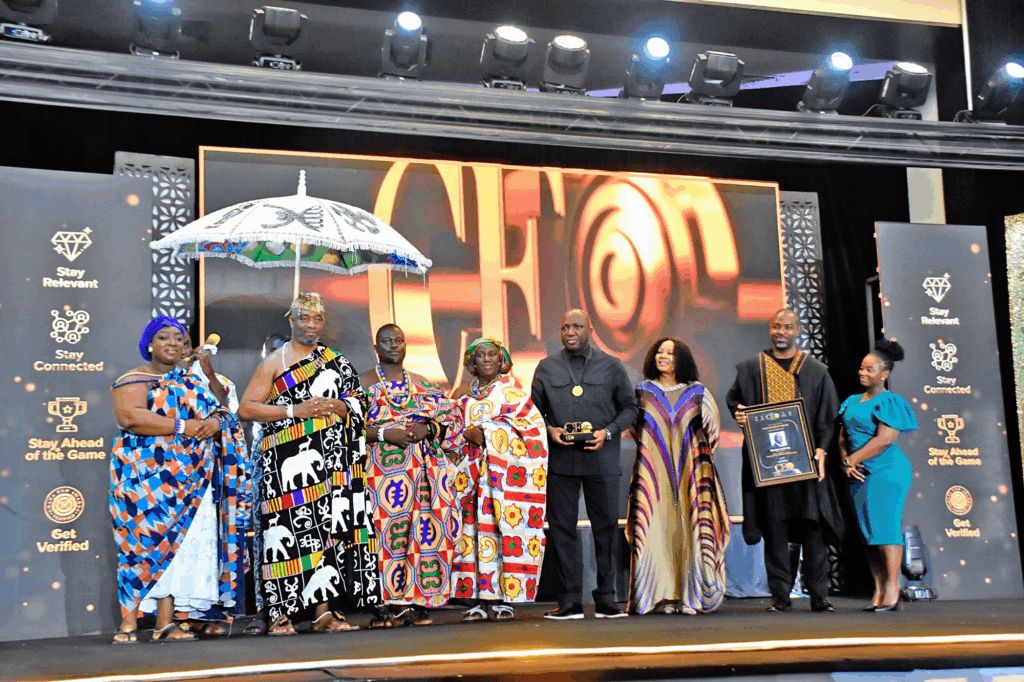
The CEO of MobileMoney Limited, Shaibu Haruna, has been awarded the CEO of the Year – Fintech at the prestigious 4th Ghana CEO Vision and Awards, held at the Kempinski Hotel in Accra.
The award recognises Shaibu’s outstanding leadership, innovation, and transformative impact within the Fintech sector.
Under his leadership, MobileMoney Ltd has strengthened its position as a digital finance leader, accelerating financial inclusion and driving customer-focused innovation across Ghana.
Expressing his appreciation after receiving the award, Mr Haruna said, “This recognition is a testament to the incredible work of the MobileMoney Ltd team and the entire MTN Ghana team.
“We remain committed to delivering cutting-edge digital financial solutions that empower individuals, businesses, and communities across Ghana and beyond.”
He dedicated the Award to MoMo customers and the various stakeholder groups whose partnership, loyalty and commitment in using the MoMo platform have contributed to deepening financial inclusion in Ghana.
Shaibu Haruna is a seasoned executive with over two and a half decades of commercial experience in
His expertise spans Fast Moving Consumer Goods (FMCG), Automobile, Financial Services, E-Commerce, and Telecoms.
The past 18 years of his career has been in telecoms/digital services where he led channel and business transformation/turnaround in Ghana, Uganda, South Africa, and Saudi Arabia markets.
A greater part of his telecommunications career has been with MTN, where he spearheaded the highly rated distribution model for MTN in Ghana, which has since been replicated across the majority of MTN Group markets.
In 2022, Shaibu was appointed the Chief Executive Officer of MobileMoney LTD, a subsidiary of Scancom Plc (MTN Ghana) and market leader of digital financial services.
Since its launch in 2009, MobileMoney LTD has remained committed to driving financial inclusion and contributed significantly to shaping the future of digital payments and unlocking economic opportunities for its customers.
The Ghana CEO Vision and Awards is organised by Globe Productions Ltd to celebrate top-performing chief executives across more than 30 sectors to project their visionary leadership and measurable impact.
Residents of Tsito in the Volta Region have expressed appreciation to MTN Ghana for making time to directly engage with them through a dedicated community forum aimed at deepening relationships and addressing customer concerns.
Participants described the initiative as timely and commendable, noting that MTN remains one of the most accessible and widely used networks in the area.
They acknowledged the company’s ongoing investments in network infrastructure and digital services that have supported personal, business, and financial transactions across the community.
“We are happy MTN came to sit with us, not just to talk, but to listen. It shows they care about what we go through as customers,” one resident shared during the open forum.
The event, held over the weekend, brought together MTN’s leadership team, led by Kennedy Kofi Ofosuhene, Corporate Services Advisor for Southern Ghana, and Alex Acheampong, Territory Sales Controller for Ho West. The session formed part of MTN’s wider customer engagement strategy to connect with communities at the grassroots level.
MTN Assures Community of Continued Support and Service Enhancements
Addressing participants, Mr. Ofosuhene thanked the residents for their loyalty and acknowledged the important role the community plays in MTN’s success in the region.
“You have been with us for many years — using our network, supporting our business, and trusting us with your most important connections. We are here because your voice matters,” he said.
He explained that the purpose of the forum was to provide a platform for open dialogue where customers could share their experiences, challenges, and expectations, while MTN also provided clarity on service-related concerns.
“This engagement is part of our culture of listening, learning, and acting. Every concern raised here will be taken seriously and followed up on. We have a team on the ground to assist you immediately, and others will be escalated to the appropriate departments,” Mr. Ofosuhene assured.
Mr. Alex Acheampong added that customer feedback remains one of the most important tools in shaping MTN’s operational decisions, especially at the regional and community levels.
“Your suggestions help us to improve our services and tailor them to your needs. We are committed to walking this journey with you,” he noted.
Key Issues Raised by the Community
While residents praised MTN for the outreach, they also raised a number of issues for consideration, including:
Network Quality and Internet Stability: Some users noted intermittent challenges with voice calls and internet speed and called for network optimization in specific parts of Tsito.
Mobile Money Functionality: There were reports of delays when sending money to other numbers, while self-deposits typically go through faster. Users also requested upgrades to the MoMo App for improved performance during high-volume transactions.
Customer Service Accessibility: Community members appealed for the establishment of a local MTN Customer Service Point to make it easier to resolve service issues without travelling to Ho.
Clarity on Services and Offers: Residents expressed the need for better communication on MTN services such as “Mashap ” and “Jara,” to better understand their benefits and usage.
Claiming MoMo Funds of Deceased Account Holders: A participant, Abla, respectfully sought guidance on how next of kin can access Mobile Money accounts of deceased relatives. MTN promised to follow up and make the process clearer and more accessible to the public.
Commitment to Action
MTN officials assured the community that the feedback provided would guide internal reviews and customer support improvements.
Dedicated customer service agents were available on-site during the event to assist attendees with immediate concerns, and others were directed to the appropriate support channels for resolution.
“Our goal is to serve you better — and that starts with listening. We appreciate your trust, and we will keep engaging you regularly,” Mr. Ofosuhene concluded.
The Tsito forum is one of many ongoing engagements MTN is undertaking across Ghana as part of its broader strategy to place customers at the centre of its operations.
The Minister for Communication, Digital Technology and Innovations, Mr Sam George, has announced key interventions aimed at improving the quality of telecommunications services across the country, amid rising complaints from consumers over poor network performance.
Speaking at a press briefing on Wednesday, April 9, 2025, the Minister acknowledged widespread public frustration over the deteriorating quality of service by mobile network operators.
“I have noted several complaints about the quality of service of almost all the network providers in the country,” he said.
To address the situation, Mr George disclosed that the government has taken decisive steps, including the approval of technology neutrality for MTN Ghana. This move allows the telecom giant to deploy existing spectrum bands more flexibly to enhance network performance. Empowering Women through Skill Development
Additionally, the National Communications Authority (NCA) has been authorised to provide more spectrum resources to both MTN and Telecel Ghana.
“I have taken decisive policy to approve technology neutrality for MTN and additional spectrum for MTN Ghana. I have also directed the NCA to make an additional spectrum offer to Telecel Ghana,” the Minister stated.
He explained that the policy shift is aimed at equipping telecom providers with the resources needed to address network challenges and enhance the overall user experience.
“This will provide operators with more resources to improve their service offerings and quality of services,” he added.
Mr George also issued a firm caution to the service providers, making it clear that the days of unchecked underperformance were over.
He revealed that the NCA will begin strict monitoring within three months of the spectrum allocation, with sanctions to follow any failure to improve service quality.
“I wish to serve notice that the NCA will, within three months of the assignment of this additional spectrum, begin a rigorous enforcement of quality of service on the providers. Failure to provide an improvement and quality of service by the network operators will result in stiff fines,” he warned.
The Minister’s announcement marks one of the first major regulatory interventions since he assumed office earlier this year and signals a tougher stance on the telecom sector’s responsibility to provide reliable services to consumers.
The move is expected to be welcomed by millions of mobile phone users and data subscribers who have long complained about dropped calls, slow internet speeds and general network unreliability.
Spectranet leads Nigeria’s ISP market with 105,441 subscribers, while Starlink follows with 65,564 users, reflecting increasing competition in the internet sector.
The Nigerian Communications Commission has released the latest subscriber data for internet service providers, highlighting market competition.
Spectranet Ltd leads with 105,441 subscribers, while Starlink Internet Service Nig. Ltd follows closely with 65,564 users.
The figures reflect the growing adoption of diverse internet options in Nigeria as demand for reliable connectivity rises.
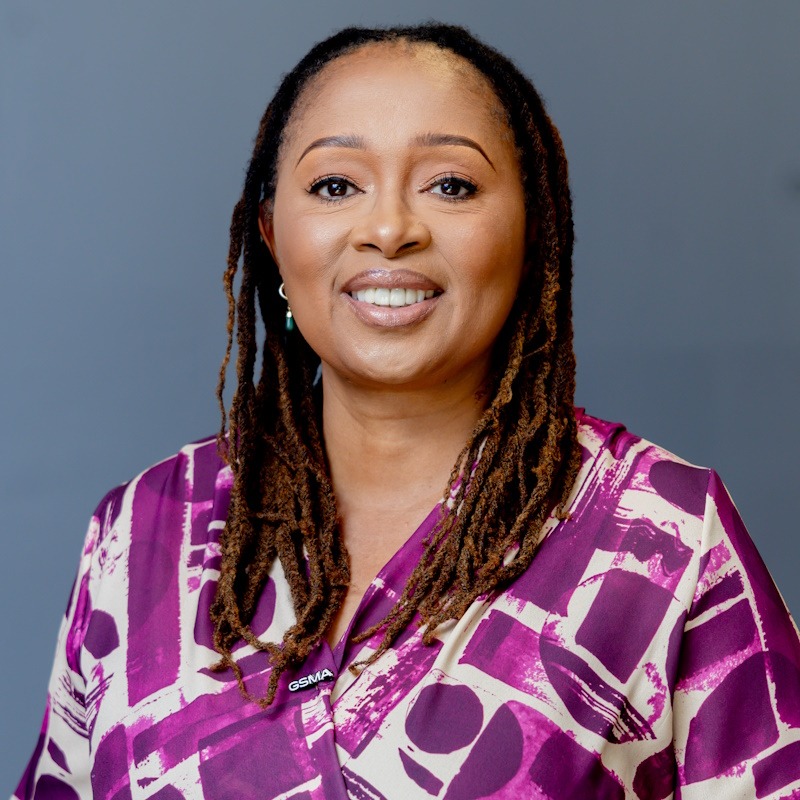
Angela Wamola, Head of Sub-Saharan Africa, GSMA. (Image: Supplied)
As African leaders gather in Tanzania for the Mission 300 Africa Energy Summit, the continent stands at a crossroads. Nearly 600 million Africans—roughly half the population—lack access to electricity, representing 83% of the global electricity access deficit.
This energy gap is not just a barrier to development; it is a missed opportunity to leapfrog traditional energy systems and embrace a sustainable, digitally enabled future.
The Summit, hosted by the Government of the United Republic of Tanzania, the African Union, the African Development Bank Group, and the World Bank Group, is a pivotal moment to address this challenge.
But achieving the ambitious goal of providing 300 million Africans with electricity access by 2030 will require more than just infrastructure investments.
It will demand innovative thinking, cross-sector collaboration, and a recognition of the synergies between energy and digital connectivity.
The Dual Challenge: Energy and Digital Inclusion
Africa’s energy gap is deeply intertwined with its digital divide. Mobile networks are the backbone of connectivity, enabling access to education, healthcare, financial services, and commerce.
Yet, these networks rely on reliable and sustainable energy to function. In rural and underserved areas, where energy access is most limited, mobile operators often depend on diesel generators—a costly, polluting, and inefficient solution.
The report reveals that while Sub-Saharan Africa has immense potential for renewable energy, only about 10% of mobile operators’ energy consumption in the region comes from renewables.
This is despite the fact that renewable energy solutions, such as solar and mini-grids, are not only environmentally sustainable but also economically viable in the long term.
The Energy Inefficiency of Africa’s Mobile Networks
One of the key findings of our report is the energy inefficiency of Africa’s mobile networks, which are still heavily reliant on 3G technology.
Transitioning to 4G and 5G is not just a matter of improving connectivity; it is also a key step toward reducing energy consumption and operational costs.
By modernising their networks and adopting energy-efficient architectures, mobile operators can play a leading role in Africa’s energy transition.
However, this transition requires more than just technological upgrades. It demands a fundamental shift in how we approach energy access and digital inclusion.
Mobile operators, governments, and development partners must work together to create an enabling environment for renewable energy adoption and digital transformation.
Innovative Financing Models: Unlocking Renewable Energy Potential
One of the most promising avenues for scaling renewable energy solutions in Africa is through innovative financing models. Two models, in particular, stand out.
The first is the Energy Service Company (ESCO) Model, which allows mobile operators to outsource their energy needs to specialized companies.
These companies provide renewable energy solutions through long-term power purchase agreements (PPAs), reducing upfront costs for operators while ensuring reliable and sustainable energy supply.
The second is the Anchor Business Customer (ABC) Model, where mobile operators or tower companies act as anchor tenants for mini-grid projects.
These mini-grids provide a stable demand base for renewable energy, which can then extend power to surrounding communities, creating a virtuous cycle of energy access and economic development.
These models have already shown promise in countries like the Democratic Republic of Congo (DRC), Ethiopia, and Nigeria, where mobile operators are partnering with renewable energy providers to power their networks and support rural electrification.
A Blueprint for Action: Recommendations for Stakeholders
To accelerate progress toward universal energy access, we need a concerted effort from all stakeholders.
Governments can play a crucial role by zero-rating import duties on green energy equipment, offering tax incentives and subsidies for renewable energy projects, and designating telecom infrastructure as critical national infrastructure.
Reforming energy market designs to speed up permissions for renewable energy projects and grid expansions is also essential.
Mobile operators, for their part, must modernize their networks to improve energy efficiency and transition from 3G to 4G and 5G.
Collaboration with international development financial institutions (DFIs) to secure funding for renewable energy projects is another critical step. Sharing tower location data to guide integrated energy planning will ensure that renewable energy investments are directed to areas with the greatest need.
Development partners can scale blended finance models that combine public and private funding to de-risk renewable energy investments.
Supporting capacity-building initiatives to train local communities and businesses in renewable energy technologies, as well as promoting cross-sector collaboration between the energy and digital sectors, will maximize impact.
The private sector, too, has a role to play. Investing in renewable energy solutions that align with corporate sustainability goals and ESG commitments is a start.
Exploring partnerships with mobile operators to leverage their infrastructure and customer base for energy access projects, and adopting innovative business models such as pay-as-you-go (PAYG) systems, will make renewable energy affordable for low-income households.
Civil society organizations can advocate for policy reforms that support renewable energy adoption and digital inclusion. Raising awareness of the benefits of renewable energy and digital connectivity for rural communities, and monitoring and evaluating the impact of energy and digital projects, will ensure they deliver tangible benefits.
The Path Forward: Collaboration for a Sustainable Future
The Mission 300 Africa Energy Summit is more than just a gathering of leaders; it is a call to action.
To achieve the ambitious goal of providing 300 million Africans with electricity access by 2030, we need to think differently. We need to recognize that energy is central to achieving digital objectives, and digitalization is central to achieving energy objectives.
This is particularly true in countries like DRC, Nigeria, and South Africa, where both energy and digital infrastructure gaps are significant.
At the GSMA, we are committed to supporting Africa’s energy and digital transformation. By leveraging the power of mobile networks and renewable energy, we can unlock new opportunities for economic growth, improve quality of life, and ensure that no one is left behind in the digital age.
We urge all stakeholders—governments, development partners, private sector players, and civil society—to join forces and take concrete steps toward a future where every African has access to reliable, affordable, and sustainable energy. Together, we can power Africa’s future.
The Nigerian Communications Commission (NCC) is already eyeing the launch of the sixth generation (6G) mobile technology, which it estimates could generate $1 billion in revenue for the state. The move was revealed last week by Aminu Maida, the telecoms regulator’s executive vice chairman while presenting the institution’s 2025 budget to the National Assembly’s Joint Committee on Telecommunications.
“6G promises ultra-fast data speeds with reduced latency, significant power efficiency and increased reliability. While its precise applications are yet to be defined, this next generation aims to achieve global connectivity, sensor-based connectivity, immersive communications and mission-critical services, among many other potential use cases, through a hybrid and diversified technology approach,” said the Global Association of Mobile Phone Operators (GSMA).
It is worth remembering, however, that the technology is still in its development stage. At the moment, the priority for regulators, ministries, operators, suppliers and researchers is to define the spectrum policy for 6G. The GSMA estimates that 6G will become the main mobile technology only in the 2030s.
Meanwhile, 5G accounted for only 2.46% of the 164.9 million mobile subscribers recorded in the country by the telecoms regulator as of December 2024, just over two years after the technology was launched. 4G accounted for 47.20%, compared to 8.75% for 3G and 41.59% for 2G. In terms of coverage, 2G, 3G, 4G and 5G covered 94.1%, 89.4%, 84.2% and 11.8% of the Nigerian population respectively by 2023, according to the International Telecommunication Union (ITU).
Operators will need to invest to expand 4G and 5G, among other things. According to Swedish equipment maker Ericsson, the initial cost of deploying 5G in a country is between $3 billion and $8 billion, with an additional investment of 20 to 35 percent for network expansion. Additionally, operators will need an additional $150 million in investments to extend 4G coverage to 94 percent of the population, reaching 9 million people, according to the GSMA. This is expected to be facilitated by the 50 percent increase in telecom service tariffs recently approved by the NCC.