
The Minister of Communication, Digital Technology and Innovations, Samuel Nartey George, has called on stakeholders to invest more in artificial intelligence (AI) for accelerated development of the country.
“The government cannot build the country’s AI future alone. We need the ingenuity of researchers, creativity of startups, investment from the private sector, and wisdom from civil society and international partners. Collective action will determine our progress,” he said.
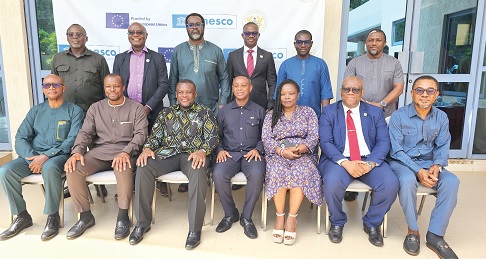
The minister was speaking at a national validation workshop on UNESCO’s Artificial Intelligence Readiness Assessment Methodology (AI RAM) in Accra yesterday.
The AI RAM is a diagnostic tool used to evaluate a country’s capacity in governance, infrastructure, data and skills for AI development. It seeks to identify gaps and guide policy actions.
Participants would review findings, confirm priorities and build consensus for implementation.
Mobile penetration
Mr George said mobile penetration in the country exceeded 110 per cent, with over 38 million subscriptions, and a growing ICT sector contributing significantly to the economy.
He said the nation’s AI strategy, which would officially be launched on April 24, 2026, would drive AI adoption in agriculture, health care and finance to help farmers improve productivity, support medical diagnostics and expand financial inclusion.
“Throughout history, successful nations have prepared early, they have invested boldly, and they have governed wisely.
“Now it is Ghana’s moment to lead once again by building a dynamic, responsible, and inclusive AI ecosystem that drives economic growth and national prosperity.
Together, we can build a digital Ghana that works for every single citizen,” the minister said.
Significance
The UNESCO Representative to Ghana and Director of UNESCO Accra Office, Edmond Moukala N’Gouemo, described AI as a present-day force, shaping societal systems and governance.
He emphasised the need for strong institutions, inclusive policies and human-centred approaches to manage its impact.
While stressing the importance of bridging digital gaps, building skills and ensuring transparency, Mr N’Gouemo called for accountability and collaboration across sectors to achieve sustainable and inclusive AI-driven development.
“AI is not a generic tool to be imported. It must be homegrown, reflecting the local context while adhering to global ethical standards,” he said.
Safeguard
The Executive Director of Data Protection Commission (DPC), Dr Arnold Kavaarpuo, also said that AI was reshaping how societies determined truth.
He said strong data protection frameworks, accountability systems and institutional capacity were essential to safeguard rights, while allowing innovation to advance responsibly.
For his part, the Secretary General of the Ghana Commission for UNESCO, Dr Osman Tahidu Damba, said the country was playing an active role in shaping ethical AI adoption within global frameworks.
Source : www.graphic.com.gh