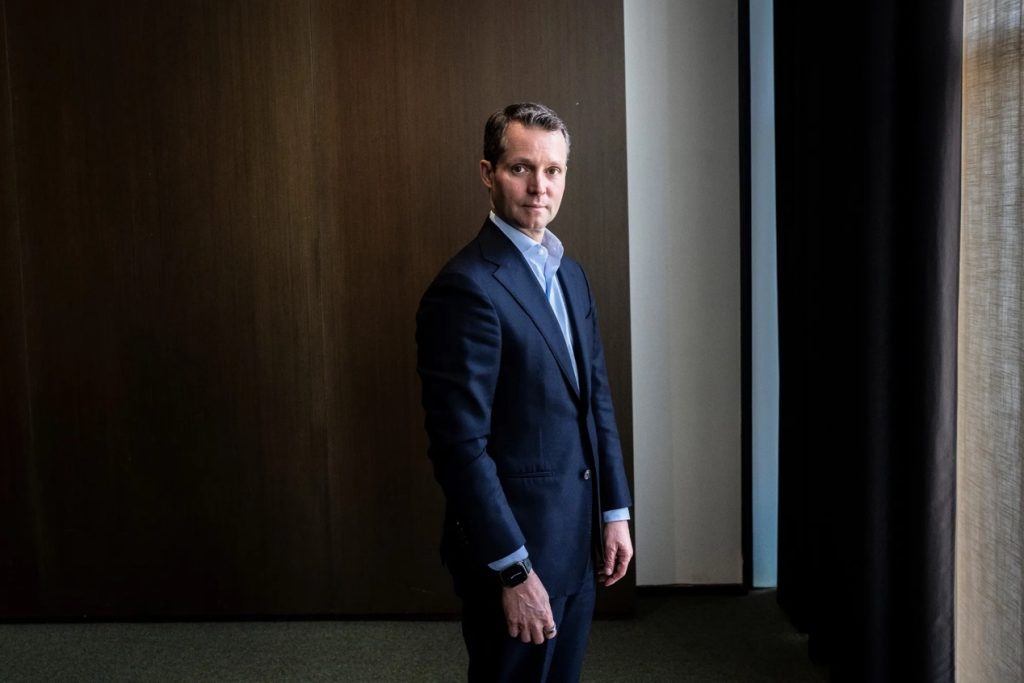
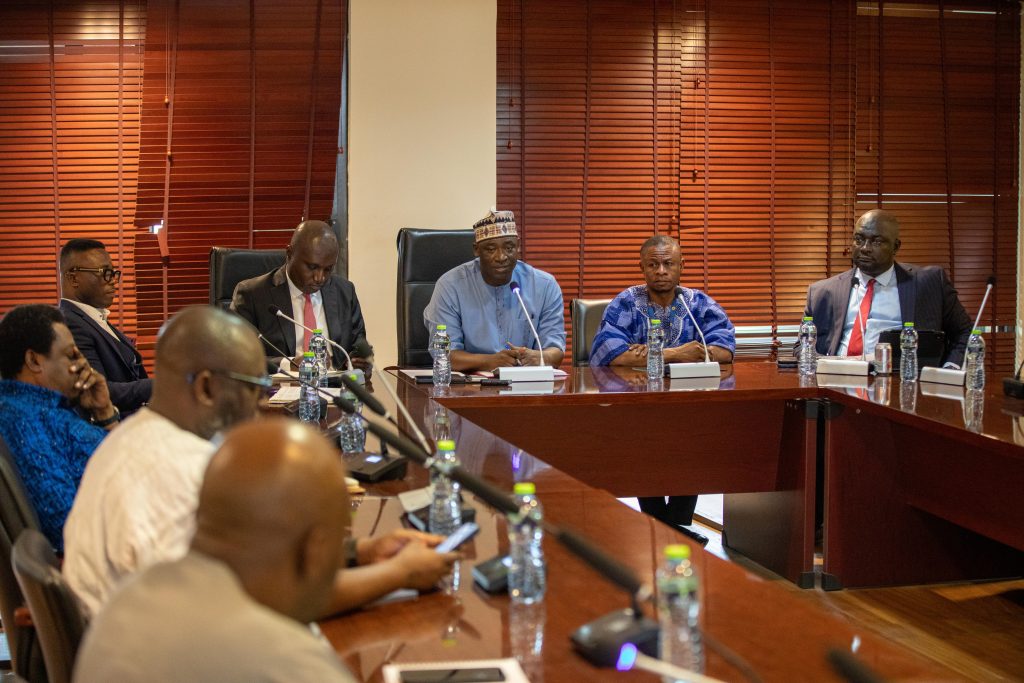
Emmanuel Kwabena Owusu, Chief Technology Officer of AT (formerly AirtelTigo), has been named one of Africa’s 12 Most Influential Telecoms Leaders by the Africa Tech Festival 2025. He is featured in the festival’s annual 100 African Leaders in Tech and Telecommunications report, which celebrates pioneers driving innovation and digital transformation across the continent.
Emmanuel’s recognition highlights his visionary leadership and technical expertise. At AT Ghana, he has championed the expansion of 4G and the rollout of Multi-Operator Core Networks (MOCN) and national roaming—key advancements improving connectivity in underserved areas.
Previously, he served as AT’s Director of Network Planning (2020–2022), where he led a major network integration project. His earlier work at Tigo Ghana included overseeing the first-ever Airtel-Tigo network merger—an industry first in Africa. His career also spans senior roles at Vodafone Ghana, Ericsson, and Huawei.
In a LinkedIn post, Emmanuel thanked his Networks Team, writing: “I am greatly humbled by this recognition… Let’s continue to push boundaries together.”
The Africa Tech Festival praised the honorees as “catalysts for inclusive growth and innovation.” AT Ghana called the award a shared success, saying, “Leadership is never a solo journey.”
This accolade places Emmanuel among a distinguished group shaping Africa’s digital future and reflects AT Ghana’s commitment to inclusive connectivity and innovation.
Several mobile money providers (MMPs) now consider credit and savings as core use cases. According to the GSMA’s State of the Industry Report on Mobile Money 2024, “savings is now the second most popular adjacent financial service, with more MMPs offering savings products compared to 2022.” Between September 2022 and June 2023, the number of unique mobile money customers who saved money grew by 38%. The number of mobile money providers that offered savings sub-accounts had grown from 39% in 2022 to 44% in 2023. Providers’ ability to offer savings depends on whether regulations in a particular market support this – particularly paying out interest.
According to the World Bank’s Global Findex 2021, around 15% of adults in Sub-Saharan Africa, or 39% of all mobile money account owners in the region, saved using a mobile money account. While mobile money is being used to save money more than before, regulations in many countries do not permit MMPs to pay out interest earned on these balances. This has not necessarily deterred people from saving using mobile money; if anything, mobile money has entrenched a culture of savings in many markets. In Botswana, for example, mobile money is used to save money – despite no interest paid – due to the low density of banks countrywide.
Regulatory approaches to interest on trust accounts
The GSMA has published a new report, Regulatory Approaches to Managing Interest on Mobile Money Trust Accounts, which outlines regulatory frameworks for paying out trust account interest. The report found that since 2018, more countries have permitted mobile money providers to earn interest on their mobile money trust accounts. At least 39 countries allowed this by 2021, albeit with certain restrictions – such as mandating that the interest be used for customers’ benefit. Around 15 countries also allowed interest to be earned, with no limitations on how the interest could be used or distributed.
Most regulations across the countries studied require non-bank MMPs to set aside an amount equivalent to the total mobile money issued. These funds have to be stored in a float account, known in some countries as a “trust account”. This regulation is necessary to safeguard mobile money customers’ funds, in case of a mobile money provider going bankrupt. Float accounts are typically held at fully regulated commercial banks. In some cases, float accounts can be held at a central bank. In the 10 countries studied in the report (Ghana, Jordan, Kenya, Mexico, Pakistan, Paraguay, Rwanda, Tanzania, Uganda and Zambia), float accounts typically earn interest.
Data from the GSMA Mobile Money Regulatory Index shows that many countries in the study had restricted how interest earned on trust accounts could be used or distributed. Fewer than 10% of regulatory frameworks considered by the Index bar MMPs from generating interest on trust account balances. Many regulators do not permit non-bank entities to pay interest in the same way as savings accounts – a bank licence is required for this. Mobile money providers in several markets have been affected by this, leading to a debate on whether interest should be earned from trust accounts (and subsequently used).
Benefits of interest-bearing accounts
Importantly, the study found that paying interest can have several benefits. For all mobile money users, interest payments can offer a passive income – this can be particularly beneficial for low-income users. Beyond encouraging people to save money, interest-bearing accounts can be used to create stickiness and reduce customer churn for the providers. By paying out interest, providers can enhance trust among customers – both in their services and in the wider financial services ecosystem. In turn, this could prompt customers to take advantage of other financial use cases on offer.
MVola, an MMP in Madagascar, exemplifies how interest-bearing savings accounts can create stickiness. MVola offers a savings sub-account within its mobile money wallet, which is free for customers to transfer money into. Customers can earn an annual interest rate of 4% over a one-year period, which is calculated daily and paid every quarter. In December 2023, MVola raised the interest rate from 2% to 4%. This led to an increase in savings account balances in excess of 25%, driven by double-digit growth in unique customers transferring money to the savings sub-account. The ripple effect was felt six months later, with active mobile money users growing faster than registered accounts.
To learn more about mobile money-enabled savings, register here for the launch of the GSMA State of the Industry Report on Mobile Money 2025.
By: Rishi Raithatha
Director, Data & Insights, Mobile Money
Source: www.gsma.com
Note: The cover picture was sourced from www.gsma.com.
Huawei South Africa has inaugurated a 14,000-square-meter smart warehouse in Johannesburg, positioning the facility as a benchmark for modernizing Africa’s logistics infrastructure.
The project integrates automation, renewable energy, and artificial intelligence to address longstanding inefficiencies in regional supply chains while aligning with global trends toward sustainable operations.
The warehouse, part of Huawei’s broader strategy to upgrade logistics systems across the continent, employs automated guided vehicles (AGVs) and forklifts (AGFs) to transport goods directly to workers, reducing manual labor and accelerating order processing. According to company officials, these innovations enable staff to complete up to 110 tasks per hour, nearly doubling traditional productivity rates. A unified digital platform coordinates all operations, reportedly increasing individual employee output by 37%.
At the core of the facility’s design is Huawei’s GEM framework, which emphasizes green energy, enhanced security, and modernized logistics. A 150-kilowatt solar power system, equipped with Huawei’s SUN2000 inverters, supplies 90% of the warehouse’s daytime electricity needs. Herman Fourie, a senior solutions manager at Huawei’s Digital Power division, noted the setup not only reduces energy costs but allows potential surplus sales to South Africa’s national grid.
Security systems leverage AI-powered cameras capable of full-color monitoring in darkness and real-time threat detection, eliminating the need for large control rooms. Meanwhile, paper-based workflows have been replaced by handheld PDA scanners linked to an automated inventory management system.
“This facility reflects the transformation underway in Africa’s logistics sector,” said Will Meng, CEO of Huawei South Africa, during the launch event. He cited projections showing South Africa’s warehouse and logistics market growing from $93 billion in 2024 to $157 billion by 2032, driven by demands for faster, more resilient supply chains.
The Johannesburg hub arrives as African nations grapple with supply chain vulnerabilities exposed by global disruptions, from pandemic-related delays to rising fuel costs. While Huawei’s investment highlights the potential of smart technologies to mitigate these challenges, it also raises questions about the scalability of such high-tech solutions in regions with uneven energy access and digital infrastructure.
Industry analysts note that Huawei’s push into African logistics aligns with its broader ambitions to expand beyond telecommunications infrastructure. The company has increasingly positioned itself as a partner in Africa’s digital transformation, with projects ranging from data centers to urban surveillance systems. However, the long-term impact of this warehouse model will depend on its adaptability to diverse markets and collaboration with local stakeholders to address infrastructure gaps.
As African economies seek to strengthen intracontinental trade under the African Continental Free Trade Area, investments in logistics modernization could prove pivotal. Huawei’s Johannesburg project, while still in its early stages, offers a test case for whether technology-driven efficiency gains can translate into broader economic benefits across the region’s supply chains.
Ghana Investment Fund for Electronic Communications (GIFEC) has opened a two-week training in Information and Communication Technology (ICT) for 30 female teachers in the Northern Region.
It is to equip the teachers with the needed skills in basic coding and ICT to help in the teaching and learning of ICT in basic schools in unserved and underserved communities in the region.
After the training, GIFEC will give each of the participating teachers a laptop installed with educational softwares to help them in impacting the knowledge to their students.
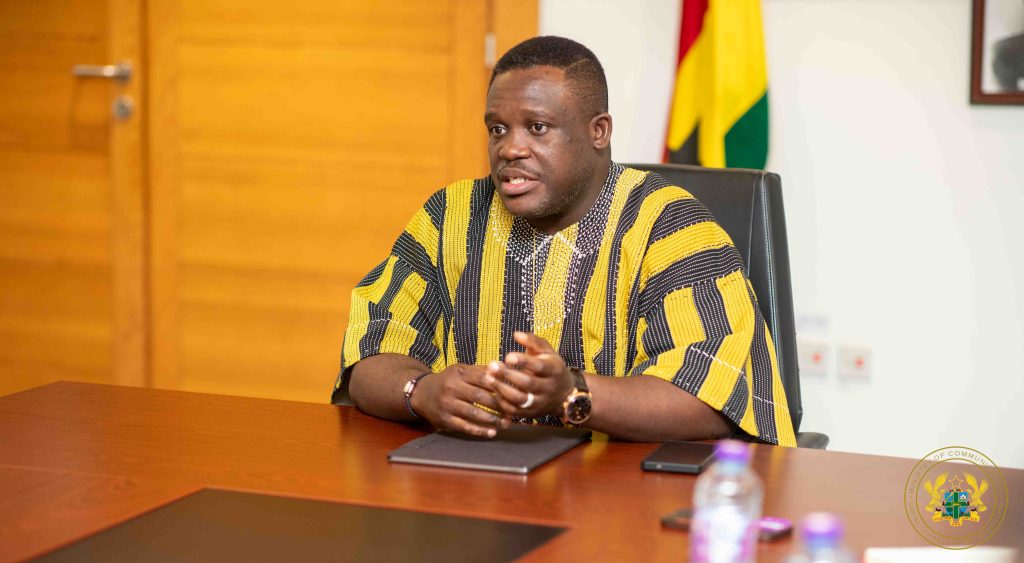
Dr Sofo Tanko Rashid-Computer, Administrator, GIFEC, speaking during the opening of the training at Sagnarigu, near Tamale, said it was to bridge the digital divide between urban and rural areas of the country.
He said the initiative would be expanded to other unserved and underserved parts of the northern parts of the country including the North East and Savannah Regions. He said the government was reviving and retooling community information centres as well as rebranding GIFEC to bring digital skills to the doorsteps of the ordinary citizen, especially in rural areas to propel the country’s digital economy agenda.
Dr Rashid-Computer said the beneficiary trainees were carefully selected in collaboration with the Ghana Education Service and urged them to focus on the lessons to help achieve the intended purpose.
Some of the beneficiary trainees narrated the difficulties they faced teaching ICT without the necessary facilities and equipment and expressed gratitude to GIFEC for the opportunity.
Huawei plans to test a new AI processor, the Ascend 910D, targeting customers as a potential alternative to Nvidia’s H100 chip, which was banned from export to China in late 2023, The Wall Street Journal reported. The first samples of the 910D are expected next month.
The Chinese tech giant also plans to start shipments of its 910C AI chip to domestic customers in May.
Despite its advances, Huawei is expected to remain limited to 7nm chip production with Semiconductor Manufacturing International Corp (SMIC), according to Richard Windsor of Radio Free Mobile. He noted that Huawei’s accelerated product development reflects China’s urgent push to reduce reliance on Western technology amid growing US-China tensions.
In 2023, Huawei stunned the industry by unveiling the Mate 60 Pro smartphone powered by its in-house Kirin 9000s chipset, produced on a 7nm process by SMIC—a move celebrated in China as a breakthrough against US export restrictions.
Since then, the US has tightened controls on AI chip exports to China, even requiring licences for lower-end models like Nvidia’s H20.
MTN Group has confirmed a cybersecurity breach involving unauthorized access to customer data in certain countries where it operates. The telecommunications company, however, has not yet disclosed which countries have been affected.
In a statement released on April 24, 2025, MTN said the incident involved an intrusion by an unknown third party, who claimed to have accessed parts of its systems. The company emphasized that there is currently no evidence suggesting that customers’ accounts or mobile money (MoMo) wallets have been directly compromised.
“An unknown third party has claimed to have accessed data linked to parts of our systems,” MTN said, adding, “At this stage, we do not have any information to suggest that customers’ accounts and wallets have been directly compromised.”
MTN assured customers that its critical infrastructure—including its core network, billing systems, and financial platforms—remains secure and fully operational.
Following the breach, MTN activated its cybersecurity protocols, informed law enforcement agencies including the South African Police Service (SAPS) and the Directorate for Priority Crime Investigation (Hawks), and began cooperating with investigations in affected countries.
The company is notifying impacted customers in line with local legal and regulatory requirements and has also issued general security advice. Customers have been urged to stay vigilant, use strong and unique passwords, enable multifactor authentication, and avoid sharing sensitive information like PINs, passwords, and OTPs via phone, SMS, or email.
MTN reiterated its commitment to transparency and customer protection, stating that safeguarding customer data remains its top priority. “We will continue to contain and manage this matter carefully,” the company said. “MTN remains committed to protecting the integrity of our systems and the trust placed in us by our customers and stakeholders.”
MTN Group has reassigned MTN Rwanda’s Mapula Bodibe and MTN South Sudan’s Ali Monzer as part of a leadership reshuffle to support succession planning and advance its Ambition 2025 strategy.
Ali Monzer, formerly CEO of MTN South Sudan, now heads MTN Rwanda, bringing over 21 years of telecom experience. MTN Rwanda Chairman Faustin Mbundu highlighted Monzer’s leadership through challenging conditions in South Sudan, including war and economic instability.
Mapula Bodibe, who led MTN Rwanda since 2022, moves to MTN South Sudan. Her tenure saw notable milestones, including the launch of MTN Rwanda’s own 4G network, the country’s first live 5G demo, and the affordable Ikosora smartphone initiative. She also oversaw major network upgrades in Kigali.
Mbundu praised Bodibe’s impactful leadership and welcomed Monzer’s appointment to build on her legacy.
As part of a broader study tour to explore the use of Mobile Phone Data, Big Data, and Data Science for official statistics in Ghana, a delegation from the Gambia Bureau of Statistics (GBoS) and the Public Utilities Regulatory Authority (PURA) has paid a working visit to the National Communications Authority (NCA) in Accra.
The delegation was accompanied by officials from the Ghana Statistical Service (GSS), who provided introductory remarks to outline the purpose of the visit. Dr. Peter Takyi Peprah, Director for Methods, and Standards at GSS, highlighted the importance of cross-sector collaboration in unlocking the potential of non-traditional data sources. He noted that the collaboration between GSS and NCA has been instrumental in advancing data innovation in Ghana and expressed confidence that the study visit would foster similar partnerships in The Gambia.
The European Union is intensifying its regulatory efforts against major U.S. tech companies under the Digital Markets Act (DMA), with Alphabet’s Google and Elon Musk’s X (formerly Twitter) potentially facing significant fines. This follows recent penalties totaling €700 million ($797 million) imposed on Apple and Meta for anti-competitive practices. AP News+8Reuters+8Cryptopolitan+8
Despite criticisms from U.S. President Donald Trump, who views these regulations as de facto tariffs on American companies, EU antitrust chief Teresa Ribera has emphasized the EU’s commitment to enforcing its laws and values without yielding to external pressures. The DMA aims to reduce the dominance of tech giants and enhance competition by facilitating user mobility between platforms. Medial+2Reuters+2AP News+2
While recent fines are relatively modest compared to past penalties, EU regulators are focusing more on ensuring compliance than imposing heavy sanctions. Observers note that political factors could influence future enforcement. A potential landmark move involves forcing Google to divest parts of its adtech business due to concerns over its monopolistic control—a decision supported by a recent U.S. court ruling. Financial Times+3Reuters+3Medial+3
Meanwhile, an investigation into X under the Digital Services Act is ongoing, with a decision expected soon. EU officials stress that effective regulatory change should prioritize market competition and behavioral adjustments over punitive fines. Reuters
The U.S. tech industry has labeled these penalties and accompanying operational requirements as “tariffs,” aiming to draw former President Donald Trump’s attention amid his ongoing trade agenda. Meta’s global affairs officer criticized the EU measures as economically damaging and detrimental to service quality, claiming they amount to economic extortion. Tech lobbyists argue these actions represent a new escalation in transatlantic trade tensions. Medial+2Politico+2Reuters+2
A Nobel Prize-winning MIT economics professor has advocated for Europe to follow the U.S. lead in taking strong antitrust actions against Google. The article argues that decades of regulatory failure have allowed tech giants like Google, Amazon, and Apple to monopolize markets and gain immense power, undermining innovation, competition, and democratic institutions. The professor calls on the EU to build upon its Digital Markets and Digital Services Acts and take bold steps beyond fines—including potentially breaking up monopolies—to restore competitive balance. Financial Times
The Digital Markets Act, implemented in 2022, aims to curb the dominance of major tech companies, including Google, by designating them as “gatekeepers” and enforcing rules to foster competition and give users more options. These regulations facilitate interoperability between platforms, prevent default application bundling, and restrict data usage for personalized advertising without clear consent. Non-compliance could result in hefty fines or even a mandatory company breakup. AP News
In summary, the EU’s steadfast approach to regulating Big Tech under the DMA reflects its commitment to fostering a competitive digital market, despite potential geopolitical tensions and industry pushback.Medial+1Reut
South Africa’s MTN Group has made a net gain of R564 million ($29.76 million) from selling 1.57 billion shares in its Ugandan subsidiary, despite offering them at a discount to meet Uganda’s 20% local ownership rule for foreign telecoms.
According to MTN’s 2024 audited financials, the sale generated R1.03 billion ($54.67 million) after taxes and costs. This latest transaction, completed in June 2024, reduced MTN’s stake in MTN Uganda from 83.05% to 76.02%.
The discounted offer, priced at Ush170 ($0.04) per share versus the original IPO price of Ush200 ($0.05), included an incentive of 30 free shares for every 140 purchased. The deal was oversubscribed 2.3 times, attracting three billion share requests.
This follows MTN’s initial public offering in Uganda in November 2021, which sold a 12.97% stake. Together, both offers helped MTN meet Uganda’s regulatory requirement to localize at least 20% of telecom ownership.
The move reflects broader pressures in Uganda, where the government seeks to curb profit repatriation by foreign-owned telecoms. Airtel Africa, facing the same rule, also plans to offload an additional 9.11% stake in Airtel Uganda after only partially meeting the requirement in its 2023 IPO.
MTN has also pursued localization elsewhere, including the sale of 686 million shares in MTN Ghana, reducing its stake to 73.99%. Meanwhile, the company continues to navigate operational challenges, such as a R11.72 billion ($618.66 million) impairment in Sudan due to conflict and inflation.
Additionally, MTN reported gains from subsidiary sales in Afghanistan and Guinea-Bissau (R1.3 billion) and a loss of R1.9 billion from exiting Guinea-Conakry in 2024.