
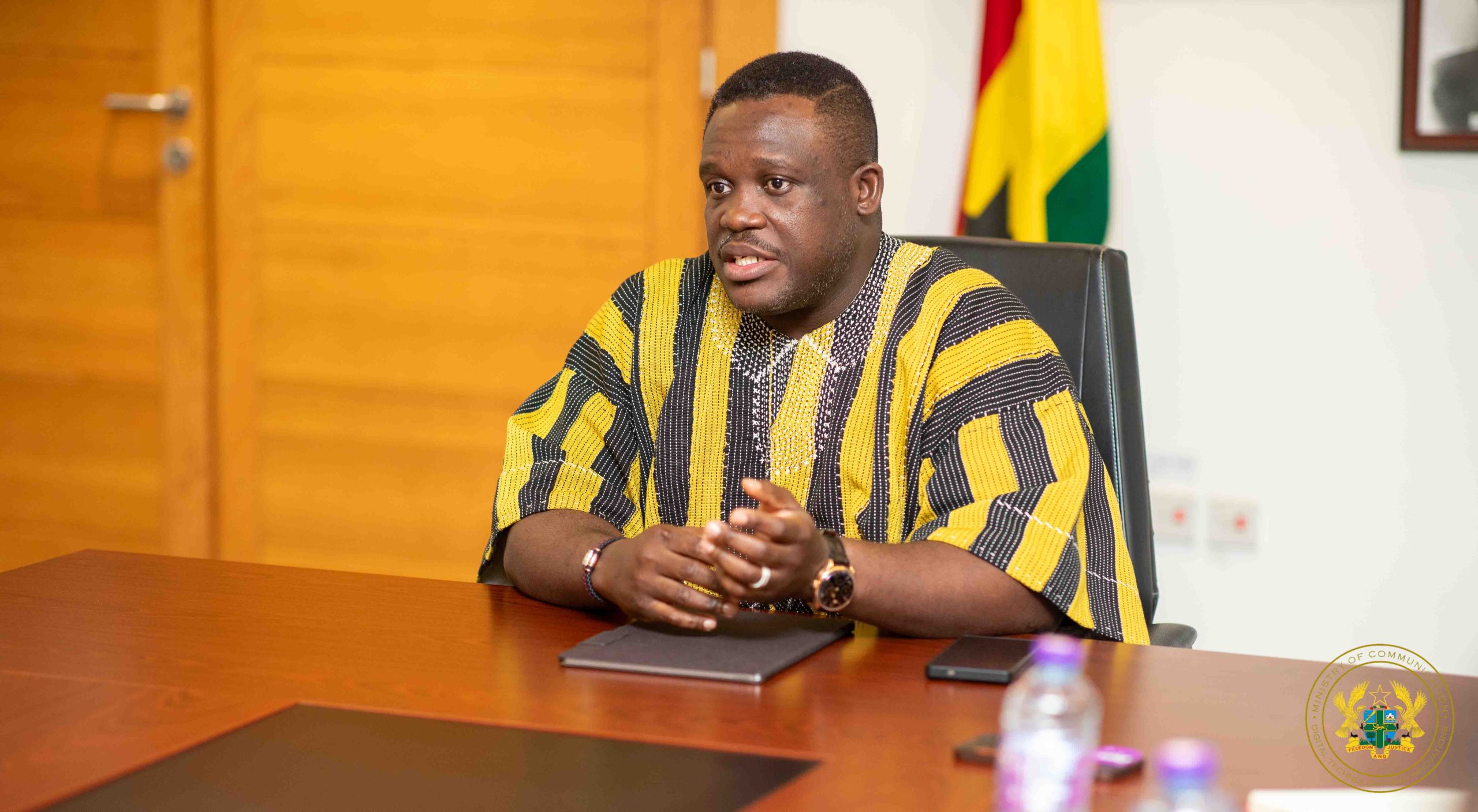
Ghana’s Communications Minister Samuel Nartey George has secured a commitment from Huawei Technologies to provide free artificial intelligence training for 3,000 girls enrolled in the government’s Girls in ICT Programme, following talks at the Mobile World Congress (MWC26) in Barcelona, Spain.
The minister met with Steven Yi, Senior Vice President of Huawei, on the sidelines of the annual MWC Barcelona 2026 congress, which opened on Monday, March 2, with Huawei among the prominent technology firms showcasing their latest products and AI solutions.
According to the minister, Huawei expressed strong interest in Ghana’s technology investment pipeline, including the planned $250 million AI Compute Centre, the rollout of 5G infrastructure, and rural telephony expansion. Nartey George said he made it clear to the company that access to those opportunities came with an expectation of social investment in return.
“With Huawei coming on board, we are going to have a crash programme in AI skills,” the minister said, explaining that girls who complete the training would then be channelled directly into the government’s One Million Coders Programme for further development. “This means we are catching them young.”
The minister said Huawei’s Senior Vice President had already directed the company’s Ghana office to work with the Ghana Investment Fund for Electronic Communications (GIFEC) and the ministry to roll out the AI training module for this year’s cohort of participants.
The Girls in ICT Programme has trained 17,981 girls and 1,792 teachers since its inception in 2012, with current modules covering basic computing, coding, animation, web development, and cybersecurity across a two-week residential format. The addition of an AI skills component marks the most significant expansion of the programme’s curriculum since its launch.
Huawei is already a key partner in Ghana’s One Million Coders Programme, where the company has committed to training 100,000 individuals over four years, covering the full cost through a blend of online learning, university-based sessions, and in-person training at Huawei’s headquarters in China.
Nartey George also disclosed that separate discussions were held with Huawei about the possibility of setting up a handheld device assembly plant in Ghana to produce affordable smartphones for the local and West African markets. He said Ghana’s political stability, gateway position, and investor-friendly environment made a strong case for hosting such a facility and that he had made clear to Huawei that quality and affordability would not be compromised.
The minister noted that despite Ghana having 4G coverage exceeding 90% of the population, actual 4G usage remains below 60%, largely because many Ghanaians cannot afford smartphones and continue to use feature phones incapable of accessing the network.
source : www.newsghana.com.gh