
MTN Ghana to invest $1bn in network expansion, cybersecurity

MTN Ghana has announced plans to invest more than $1 billion over the next three years to expand its network, strengthen cybersecurity systems and improve service delivery across the country.

The investment forms part of the company’s long-term strategy to enhance infrastructure, meet growing data demand and strengthen its resilience against evolving cyber threats in the telecommunications sector.

The Chief Executive Officer of MTN Ghana, Mr Stephen Blewett, disclosed this at the company’s 2026 Media and Stakeholder Forum held in Accra on Friday.

He explained that a significant portion of the investment would go into network expansion and upgrades of IT systems to ensure efficiency and resilience as the business continues to grow.

“As your business grows, you need more robust systems. With the increasing number of cyber-attacks globally, it is important to invest in resilience to ensure consistent service delivery,” he said.

Mr Blewett said the company remained committed to improving customer experience while maintaining secure systems capable of supporting Ghana’s digital transformation agenda.

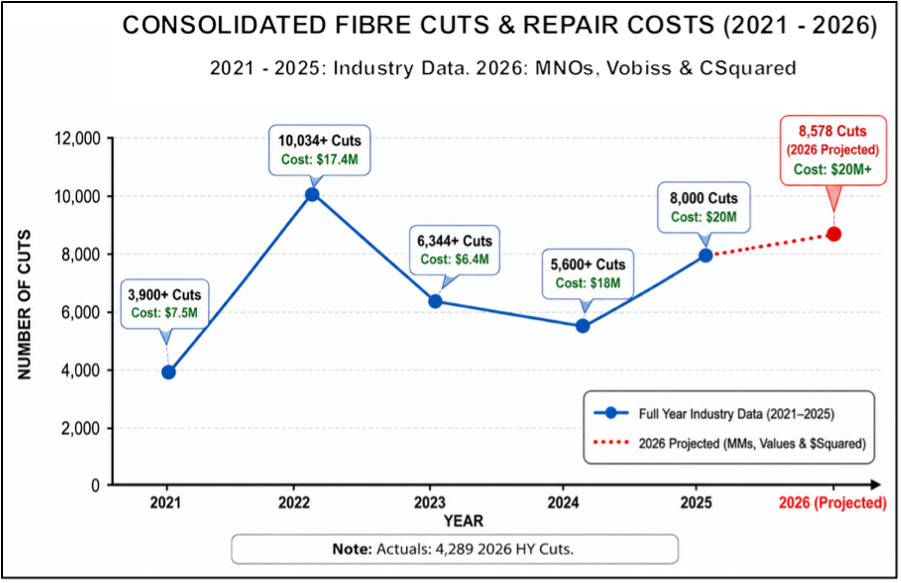
He identified fibre cuts as a major operational challenge affecting service quality, attributing the problem partly to road construction works and human interference.

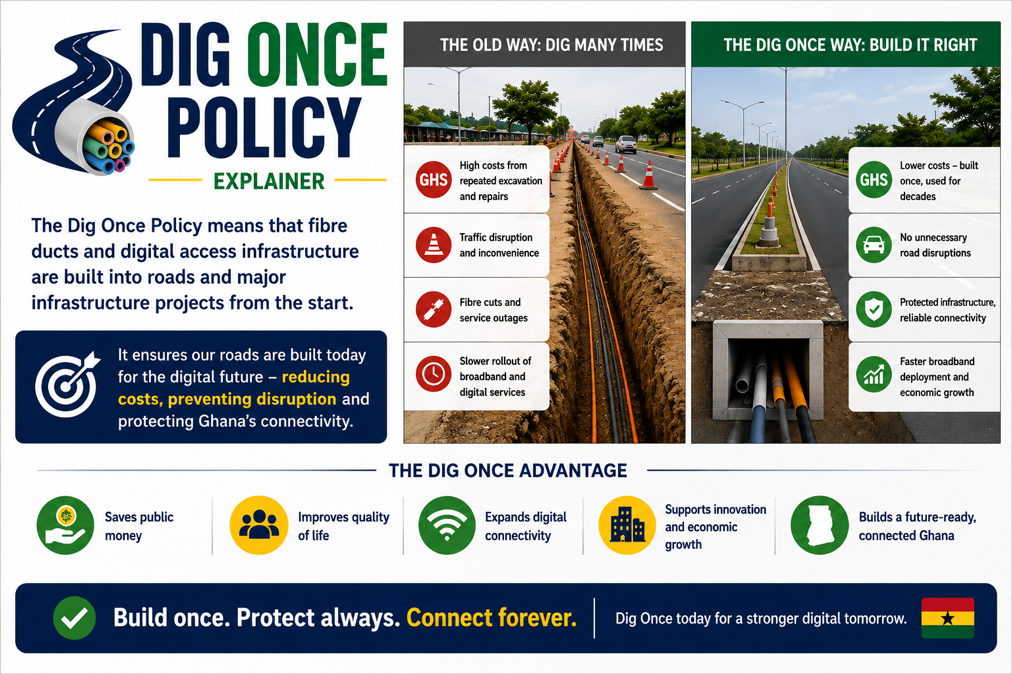
According to him, while the company collaborates with relevant authorities during planned infrastructure works to relocate fibre installations, uncoordinated activities and deliberate damage continue to disrupt services. “We are experiencing many fibre cuts, some due to construction and others due to lack of awareness. In some cases, people even set fire near fibre installations, which is dangerous because it affects critical national infrastructure,” he said.

Mr Blewett called for stronger public education and stricter enforcement measures to protect telecommunications infrastructure, stressing that damage to fibre networks had nationwide implications.

The forum, held under the theme “MTN Ghana @30: Connecting Ghana, Shaping the Digital Future,” formed part of activities marking the company’s 30 years of operations in Ghana.

It brought together media practitioners, regulators, partners and other stakeholders to review the company’s performance and future outlook.

Mr Blewett described Ghana as a strong and attractive market, noting that MTN continued to record significant growth in subscriber numbers and data usage.

He revealed that MTN Ghana currently has over 31 million subscribers, while data usage has grown by about 48 per cent, driven by increased demand for video streaming, social media and other digital services.

“We are pleased with our performance, but we remain focused on sustaining growth and delivering value to our customers,” he said.

He identified digital services, particularly mobile gaming and entertainment, as emerging growth areas, especially among young people.

“Gaming is becoming a major opportunity. Many young people who did not have access to traditional gaming consoles can now access games on their mobile phones,” he said.

Mr Blewett added that MTN aims to support local developers to create and export digital content globally.

On infrastructure, he announced plans to roll out more than 800 new cell sites in 2026 to improve coverage and network quality nationwide.

He stressed that network performance depended on spectrum availability, coverage and fibre connectivity, adding that sustained investment was essential to meet customer expectations.

Mr Blewett also outlined the company’s sustainability efforts, noting that more than 50 per cent of its operational sites are powered by solar energy, with ongoing plans to increase the use of renewable energy.

He further said MTN was working towards achieving gender balance, with a target of 50 per cent female representation in its workforce.

Meanwhile, the Chief Executive Officer of MobileMoney Fintech Limited, Mr Shaibu Haruna, disclosed that all 10,000 agents whose accounts had previously been blocked due to suspicious activities had been reinstated after a review.

He explained that the accounts were initially suspended in line with regulatory requirements to protect customers and ensure compliance.

Mr Haruna assured that the company would continue to monitor transactions closely and take decisive action against any agent found engaging in fraudulent activities.

Source : www.ghanaiantimes.com.gh

Taxation of Electronic Commerce activities in Ghana

Ecommerce

    SourceDr. Alex Moyem Kombat  

    The Electronic Commerce (e-commerce) has become a crucial part of global retail including Ghana. Section 15 (4a) of the Value Added Tax (VAT) Act, 2025 (Act 1151) defines “Electronic commerce” to include a business transaction including a digital service that takes place through electronic transmission of data over communication network such as internet. Although e-commerce businesses have existed in Ghana for long, it was during the covid 19 pandemic and post covid 19 pandemic that e-commerce activities became eminent with many people buying and selling online.

    Statista, an international statistics platform projects that by 2027, the e-commerce sector would account for 23% of all retail sales worldwide, up from 21.2% in 2025. Furthermore, it is anticipated that global e-commerce sales will increase from US$6.42 trillion in 2025 to US$7.89 trillion in 2028. By 2029, the African e-commerce market is expected to grow to a value of $56.03 billion, according to the Statista estimates. In Ghana, there are now 825 registered e-commerce

    businesses (consisting of 659 residents and 166 non-residents) as opposed to 204 (made up of 142 residents and 62 non-residents) in 2022. Additionally, VAT revenue from the e-commerce sector increased tremendously from GH₵ 209,434,800.14 (consisting of GH₵ 103,580,593.69 from residents and GHc 105,854,206.45 from non-residents) in 2022 to GH₵ 1,366,808,844.61 (i.e. GH₵ 871,324,420.29 accruing from residents & GH₵ 495,484,424.32 accruing from non-residents) in 2025. Cumulatively, Ghana Revenue Authority (GRA) earned GH₵ 3,213,522,482.70 (GH₵ 2,080,024,591.90 from residents and GH₵ 1,133,497,890.80 from non-residents) in VAT revenue from e-commerce/digital services from 2022-2025 averaging GH₵ 803,380,620.68 (GH₵ 520,006,147.98 from residents and 283,374,472.70 from non-residents) every year over this period.

    A study by the Research Unit of GRA revealed that, about 20% of students, 45% of people in formal employment, 30% of self-employed and 5% of unemployed people engaged in e-commerce in Ghana. The research showed that Groceries and household items accounted for the highest percentage of revenue at 47.5%, followed by clothing and beauty products at 20% with the rest of the items (including home and garden products, sports products, pets and animal products, electronic products, building materials and agricultural products) accounting for 32.5%. Again, of the entities studied, 29.2% of them did not have integrated payment platforms. In contrast, 70.8%, accepted cash on delivery. Among the businesses using payment platform services, 71.4% of them used Mobile Money, while the remaining 28.6% used Trans flow and Visa Cards. Generally, online retail platforms in Ghana include Jumia Ghana, Melcom, Shopwice, Electromart, MyGhMarket, Goodpappa, ShopAfrica.com, Tonaton, Carmudi.com.gh, Lamudi, Jumia, Jiji, baahe.com, Tisu, Zoobashop, Kaymu, Ahonya, Ghanacar24.com, Cheki Ghana, Shopadollar, Hellofood, VIVIA, Dzifa.com and several others.

    Despite the vital role e‑commerce plays in Ghana’s socio‑economic development, the GRA continues to encounter several obstacles in effectively taxing activities within the digital marketplace. Key challenges include operational limitations within existing online registration platforms, gaps in staff training on the taxation of e‑commerce and digital services, limited logistics, and the absence of a robust system for revenue assurance in the digital space. Nevertheless, these challenges have not prevented the GRA from making notable progress in revenue mobilisation, strengthening administrative processes, and advancing the development of appropriate legal frameworks to support the taxation of e‑commerce.

    GRA has embarked on vigorous programmes in the short and medium terms to get its fair share of the huge revenue potential of this industry covering the following areas: (1) streaming and digital entertainment such as Netflix, Spotify, online gaming, (2) E-learning platforms including online courses and virtual tutoring, (3) Business Software and SaaS (e.g. Cloud tools like Microsoft 365, Adobe subscriptions), (4) Cross-Border Retail, (5) Gig Economy Payments, (6) Digital Advertising including Facebook Ads, Google Ads., TikTok Ads, (7) Online Travel Bookings (e.g. Airbnb, Booking.com, Expedia etc.), (8) Virtual Goods and In-App Purchases, (9) Digital Marketplace Facilitators, (10) Cryptocurrency and Virtual Asset Transactions, (11) Ride-Hailing and Mobility Platforms, (12) E-Commerce Logistics and Fulfilment Services, and (13) Social Media Monetization and Influencer Payments.

    Additionally, GRA has constituted a committee to (1) identify and onboard all non-resident digital service providers operating in Ghana’s tax jurisdiction by tracking digital platforms and service providers offering remote services to Ghanaian consumers, ensuring they are registered for VAT, and establishing monitoring mechanisms for sustained compliance, (2) enforce accurate VAT Compliance by developing and implementing strategies to ensure non-resident suppliers charge, collect, and remit VAT to GRA, and (3) recommend and assess gaps in current laws, administrative structures, and international cooperation frameworks related to digital taxation.

    Besides, GRA has deployed technology such as an e-Commerce Compliance Tool — an advanced digital compliance system designed to: (1) discover and flag unregistered non-resident suppliers by monitoring payment transactions and customer purchase patterns, (2) integrate with banks, card schemes, and mobile money operators to trace cross-border digital payments,  (3) ensure that all qualifying transactions attract the correct VAT, which is collected and remitted to GRA, and (4) provide GRA and policymakers with a real-time compliance dashboard showing registered verses unregistered suppliers and transaction volumes.

    Furthermore, GRA has collaborated with both local and international stakeholders to ensure successful implementation of e-commerce in Ghana. These include Relevant Regulatory bodies (e.g. National Communication Authority-NCA), International Organizations (e.g. African Tax Administration Forum-ATAF, Organisation for Economic Co-operation and Development-OECD, Foreign Commonwealth and Development Office-FCDO), The Technology Partners (e.g. Huawei Technologies Ghana) Ltd), Banks & Payment Processors (e.g. Bank of Ghana), Telcos and Mobile Money Operators (e.g. MTN, Telecel), Local E-Commerce Platforms and Associations (e.g. Ghana Internet Service Providers Association-GISPA and E-commerce Association of Ghana), International Suppliers and consumers

    To make significant in rolls into this complex industry and improve compliance, it is recommended that GRA adopts the following measures: (1) Develop a simplified, effective and efficient mechanism to identify, assess and collect taxes from e-commerce entities, (2) Institute a destination-based income tax and taxing owners of online portals and (3) Adopt best practices for monitoring and supervising e-commerce taxpayers. All in all, e-commerce has become one of the inevitable means of transacting businesses worldwide including Ghana and GRA must positioned itself to harness the tax revenue potential of the sector.

    source : www.myjoyonline.com

    Ghana Leads Africa with Seamless Interoperable Instant Payments Systems (IPS)

    Mobile-Money-in-Ghana-Blog-Header-01-scaled-1

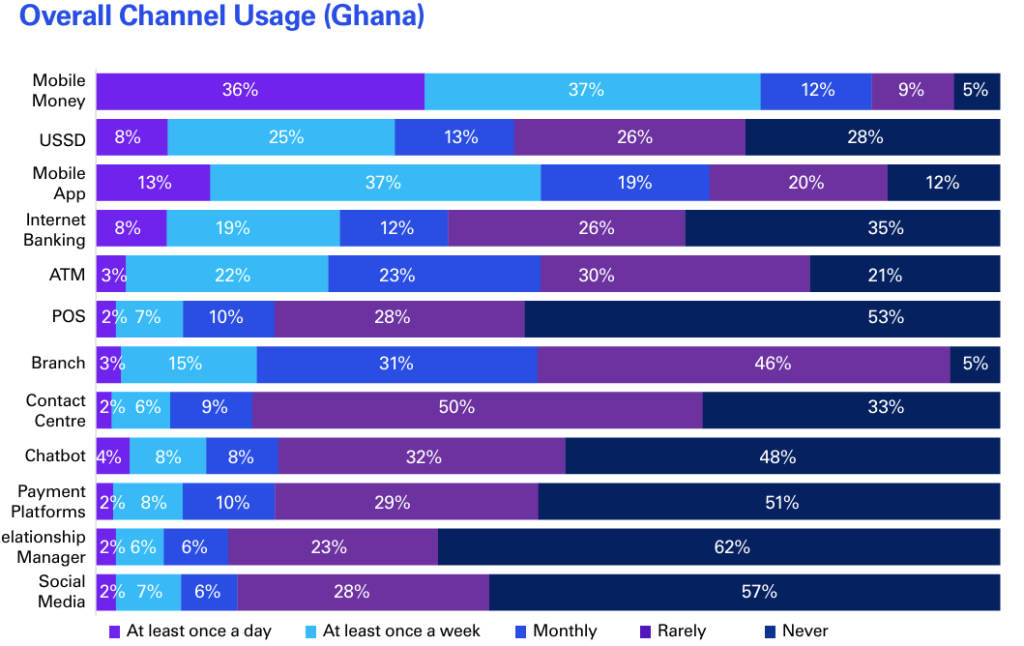
    Ghana has emerged as the number one African country with fully interoperable multiple instant payment systems. This was revealed in the 2024 West Africa Banking Industry Customer Experience Survey report from KPMG.

    Highlights from the State of Inclusive Instant Payment Systems in Africa Report 2024 revealed that Africa boasts 28 IPS across 20 countries, with only seven countries operating multiple IPS. According to the report the country stood out amongst the 7 leaders outperforming regional peers such as Morocco, South Africa, Egypt, Nigeria, Kenya, and Tanzania, thereby setting a new standard for the continent.

    “Ghana’s leadership in this space is evident, being the only African country with fully interoperable multiple instant payment systems” the report stated.

    Ghana’s two primary IPS, the Ghana Interbank Payment and Settlement Systems (GhIPSS) Instant Pay (GIP) and Mobile Money Interoperability (MMI), have been interacting flawlessly over the years, winning over admirers from across the world and customers locally.

    Instant Payment Transactions See Significant Growth

    The impact of instant payment systems in Ghana has been noteworthy. Here are some highlights from October 2024:

    – GIP transactions surged by 174% in value and 32% in volume compared to the same period in 2023.

    – Mobile money transactions dominated, reaching GHS 2.36 trillion, marking a 55% year-on-year growth.

    – The number of mobile money transactions increased by 20% to 6.6 billion.

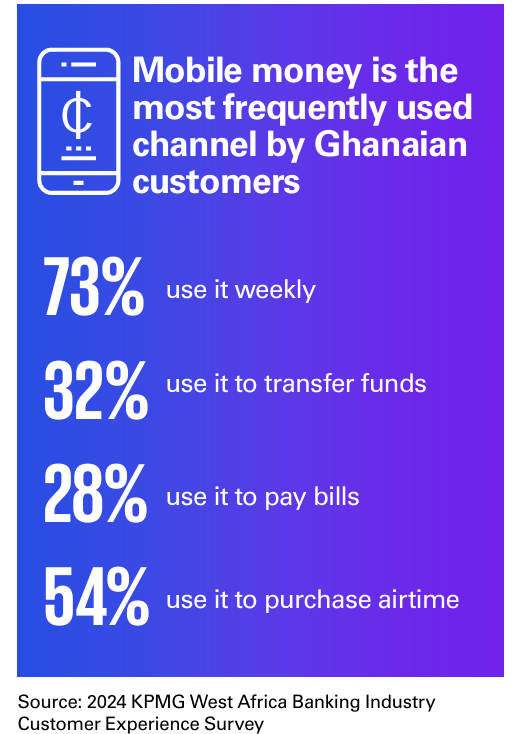
    The report’s findings underscore the importance of interoperability between systems, with 73% of retail customers indicating they use mobile money weekly. The ease of transferring money between accounts and mobile wallets also remains a top priority for customers.

    While Ghana excels in instant payment systems, the report also highlights areas for improvement, including concerns over service reliability, cybersecurity, and the need for innovative features in mobile apps and internet banking.

    As Ghana continues to lead the way in instant payment systems, the country is poised to drive financial inclusion, convenience, and economic growth, setting a benchmark for other African countries to follow.