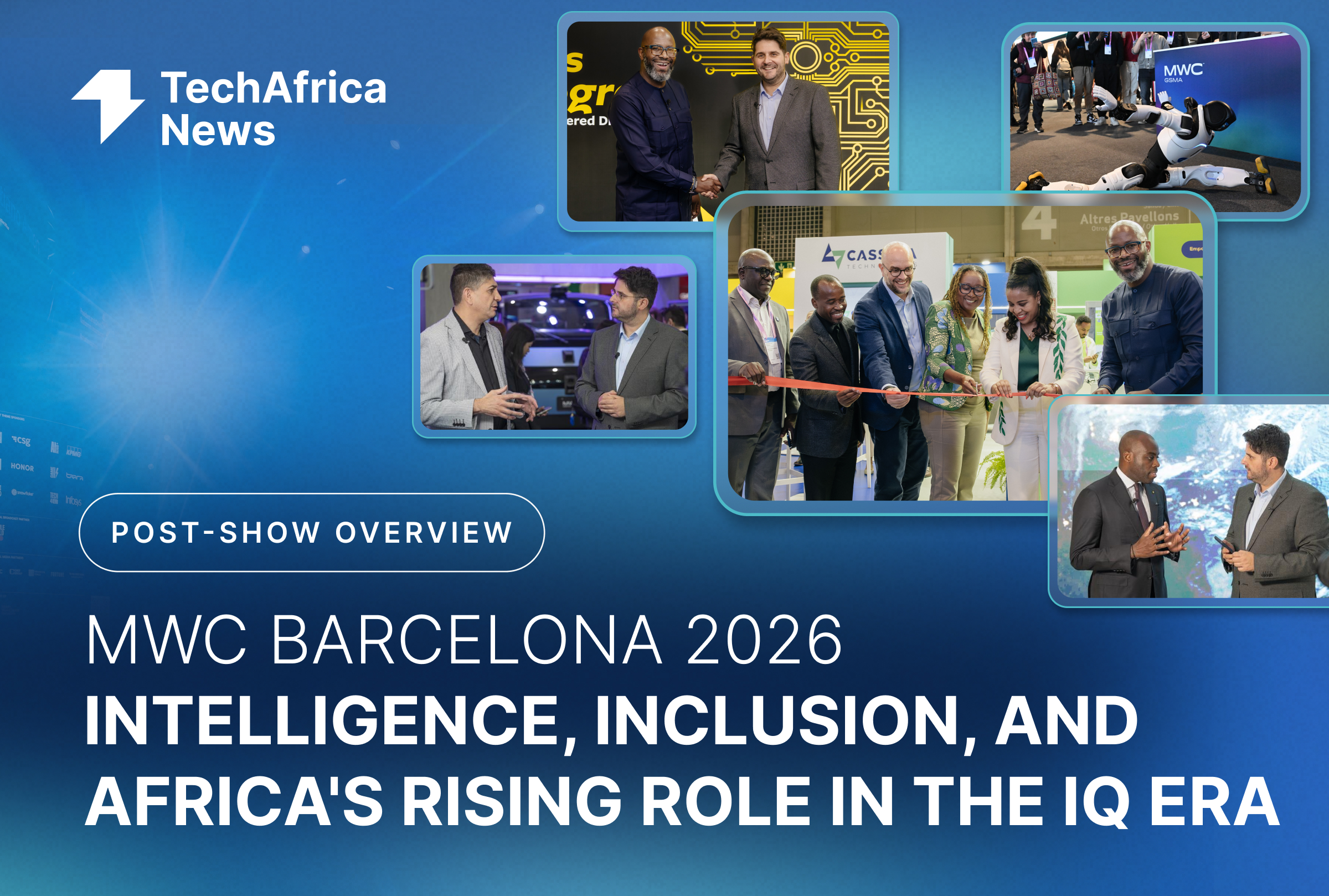
From 2 to 5 March 2026, Barcelona once again became the beating heart of the global connectivity industry. MWC26 marked a milestone year: the 20th anniversary of the world’s largest and most influential connectivity event calling Fira de Barcelona’s Gran Via home. Four days. One city. And an industry more energised than ever.
MWC26 drew nearly 105,000 attendees from 207 countries and territories. Over 2,900 exhibitors, sponsors, and partners filled the halls alongside more than 1,700 speakers and thought leaders. The GSMA Ministerial Programme convened 188 government delegations, 54 ministers, and 118 heads of regulatory authorities, making clear that MWC is not just a technology event. It is where policy, industry, and innovation find common ground.
Fifty-eight percent of attendees came from industries adjacent to the core mobile ecosystem, a sign that connectivity has become the common thread running through finance, healthcare, logistics, manufacturing, and beyond.
“We are in the iQ era. And Africa is not on the sidelines; we are in the room, shaping what this era means. MWC Barcelona showed us that. The conversations, the partnerships, the innovations on display. Intelligent connectivity. African solutions. Global scale. This continent has the talent, drive, and vision. Now we build.”
– Angela Wamola, Head of Africa, GSMA
For TechAfrica News, MWC Barcelona 2026 was four immersive days of on-the-ground reporting, strategic conversations, and exclusive interviews with the leaders shaping connectivity’s next chapter. As an official media partner, our team was embedded in the action from the first keynote to the final session on the show floor, examining every major development through the lens that matters most to us: what this means for Africa’s digital future.
“What we witnessed at MWC Barcelona this year was not a moment of anticipation, but a clear moment of arrival. Africa is engaging in the global technology conversation not as a passive participant, but as an active contributor. The depth of presence, the strength of partnerships, the substance of policy dialogue, and the collective weight the continent brought to Barcelona all point to a structural shift. Africa is no longer positioned at the margins of the global technology agenda. It is becoming central to it. At TechAfrica News, our responsibility is to document this evolution with the rigour and scale it requires.”
– Akim Benamara, Founder, TechAfrica News
Intelligence Is Not Coming. It Is Already Here.
MWC26 had a theme, and it was bold. The IQ Era arrived in Barcelona not as a concept to be debated but as a reality already reshaping how the industry builds, operates, and competes. After years of AI circling the edges of the telecom’s conversation, this edition made one thing clear: intelligence is no longer a feature you add to a network. It is the foundation you build from.
The entire programme was structured around six interconnected themes: Intelligent Infrastructure, ConnectAI, AI 4 Enterprise, AI Nexus, Tech4All, and Game Changers. Each one approached the same central question from a different angle: what does it actually mean to run a connected world on intelligent infrastructure? From self-optimising networks and agentic AI in the enterprise to sovereign AI governance and digital inclusion for the Global South, the conversations at Fira Gran Via moved well beyond ambition. The industry arrived in Barcelona asking what AI could do. It left reckoning with what AI is already doing and what responsibility comes with that.
For the TechAfrica News team, one thread ran through everything: The IQ Era is only meaningful if its benefits reach the communities that need them most.
Africa Did Not Just Attend This Year. It Showed Up.
For the first time in the event’s history, Africa had a pavilion of its own at MWC Barcelona. Anchored in Hall 4 and bringing together MTN, Ethio Telecom, Cassava Technologies, and Yas, the Africa Pavilion was more than a branded space on a floor plan. It was a statement about where the continent stands in the global connectivity conversation and where it intends to go.
The pavilion was inaugurated by the GSMA alongside the leaders of the G6, the six most influential African telecommunications companies, in a ceremony that drew strong interest from delegates across the event. What had long been overdue finally had a physical form: Africa’s digital identity on the world’s biggest telecoms stage.
The Numbers Behind the Moment
The GSMA Mobile Economy Report, released during the week, set the context. Africa is projected to reach 382 million 5G connections by 2030, but that represents just 21 percent of total mobile connections on the continent, the lowest regional adoption rate globally. The continent accounts for 33 percent of the world’s unconnected population despite global mobile broadband coverage reaching 96 percent. Smartphone ownership sits at just 24 percent, with entry-level devices in Sub-Saharan Africa costing the equivalent of 26 percent of monthly GDP per capita.
The Device Deal that Matters
Against those numbers, the GSMA and the Handset Affordability Coalition formalised plans to pilot affordable entry-level 4G smartphones in six African countries: DRC, Ethiopia, Nigeria, Rwanda, Tanzania, and Uganda. An MoU was signed between the GSMA, the G6 operators, and OEM partners, with at least eight device manufacturers already in commercial negotiations. The target price point is US$30 to US$40. The GSMA was direct about the obstacle: rising global memory prices are making that range increasingly hard to hit, and government action on taxes and import duties will be critical to converting pilots into scale.
Building AI in African Languages
The week also marked a pivotal moment for the GSMA AI Language Models Initiative. At the 4YFN Africa AI Networking Event, GSMA leadership presented the initiative’s progress alongside a live demonstration of a Swahili-native reasoning model, built to think directly in Swahili rather than translate from English.
The session also unveiled the African AI Transparency Benchmark and announced the African Trust and Safety LLM Challenge, developed in partnership with Zindi to stress-test AI models across the continent’s multilingual environments. Innovation partners DataSpires and ToumAI showcased how locally built solutions are already closing the linguistic digital divide. The message was unambiguous: Africa’s more than 2,000 languages are not a constraint. They are the foundation.
“When we think about language models, we think about the frontier ones, and we all use the same frontier ones. For African languages, we need models that are built by Africans, for Africans, and that understand our cultural context, our accents, and our dialects, so they can serve us better. We see this as a real socio-economic transformation of the continent, and in the way it is unfolding across digitalisation.
– Kanwulia Okafor, Director of Industry Services – Africa, GSMA
Partnerships, Deals, and Recognition
The bilateral activity across the week told its own story. MTN and Huawei signed a Strategic MoU on AI-driven network evolution, digital inclusion, and home broadband, targeting Autonomous Networks Level 4 as a shared evolution goal. MTN also announced a multi-year partnership with UNHCR to expand connectivity, mobile money, and digital skills for refugees, internally displaced persons, and host communities across its markets, where more than 20 million displaced people currently reside. Africa also took home hardware from MWC: Safaricom and Huawei won the GSMA GLOMO Award for Best FinTech and Digital Commerce Innovation for Ziidi, a money market fund service providing low-threshold digital investment access for low- and middle-income Kenyans, the result of over ten years of mobile money collaboration between the two companies.
On the sidelines, Ghana’s Minister for Communications, Samuel Nartey George, secured an agreement with Huawei to provide free AI training for approximately 3,000 girls under Ghana’s Girls in ICT programme, with implementation planned in partnership with the Ghana Investment Fund for Electronic Communications and Huawei’s local office. Ethio Telecom used the week to hold high-level meetings with Huawei, Ericsson, ZTE, and Nokia, advancing the operator’s “Next Horizon: Digital and Beyond” strategy through discussions on network optimisation, expansion, and next-generation infrastructure.
The Africa AI Council also held its first in-person meeting on the sidelines of MWC under the Smart Africa umbrella, while Smart Africa and MeetKai announced a five-country Sovereign AI pilot, with participating countries to be confirmed.
The Africa story at MWC26 was not a sideshow. It was a parallel summit, with its own pavilion, its own deals, its own awards, and a clear shared message: Africa is not waiting to be included in the IQ Era. It is building its own version of it.
Beyond the Stages: Voices from the Show Floor
MWC Barcelona is where the conversations that shape the industry’s direction actually happen, and for the TechAfrica News team, the four days at Fira Gran Via were as much about the exchanges between sessions as the sessions themselves. From industry leaders and innovators to policymakers, our team spoke to a diverse range of voices across government, enterprise, and the technology ecosystem.
Minister Doumba on Gabon’s Bold Digital Agenda: Policy, Partnerships, and Youth Empowerment
“The continent has missed the previous industrial revolutions. We did not invent electricity, we did not invent the steam engine, we did not invent the internet, but hopefully we’ll learn to harness productively the current digital stage, and AI, and everything that comes with it.”
– Hon. Marc-Alexandre Doumba, Minister of Digital Economy and Innovation, Gabon
Madagascar’s Digital Foundation: Minister Andriamampiadana on Digital Identity, AI, and Africa’s Key Policy Priorities
“The top priority for Africa should be about affordable connectivity and infrastructure, a clear and trusted regulatory framework, and digital skills and talent development. Harmonization of policy is crucial. I believe these three are the foundation.”
– Mahefa Andriamampiadana, Minister of Digital Development, Posts, and Telecommunications, Madagascar
GSMA’s Angela Wamola on Smartphone Affordability, AI, and Africa’s Policy Roadmap
“I think the biggest one is fiscal policy because that affects the affordability of both devices and data. Without addressing incentives, such as reducing taxes on customs duties for devices or removing excise duties on data, it will be difficult to lower costs.”
-Angela Wamola, Head of Africa, GSMA
GSMA’s Caroline Mbugua on Why the Digital Africa Index Matters for Africa’s Policymakers
“So how can we create a harmonized policy and regulatory framework across Africa? What is needed except the political will? So what is needed first is the insights. Where do we have the fragmentation and who takes the action? The Digital Africa Index provides that, giving information on where the fragmentation is.”
– Caroline Mbugua, HSC, Senior Director, Public Policy and Communications, GSMA
Ralph Mupita on MTN’s New Frontier: Connectivity, Content, and African AI
“One of the observations that we’ve reflected on is we’ve been so focused on connectivity and we’ve done a good job, as I said, on coverage. I think the next frontier is how we develop the digital services ourselves that we can have our customers consume. And for much, we will have a partnership approach to be sure. Partnership is part of our model. But if you think about content creation, whether it’s music or video, we want to participate in that.”
– Ralph Mupita, Group President and CEO, MTN Group
Regulating for the Public: Airtel Africa on Spectrum and Policy Harmonization
“So I think I always try to remind people that this is a public service that needs to be regulated in the public interest. Every time you make a decision about setting up the cost of spectrum, the processes, the level of transparency, and so on, ask yourself one question: Am I regulating in the public interest? Are the policies I have in place responding to that requirement? If those public requirements are met, then you have made the right decision. I also like to stick to the principles, because they are what guide daily actions.”
-Daddy Mukadi, Chief Regulatory Officer, Airtel Africa
No Smartphone, No AI: Vodacom’s Shameel Joosub on Africa’s Access Gap
“I think it is extremely important because while you can have AI, without connectivity you will never be able to take advantage of it. The underlying connectivity has to be in place. Africa is still significantly lacking in fibre infrastructure, so fibre, mobile, and even satellite all need to be part of the ecosystem. That full ecosystem is necessary for us to realise the benefits of AI across all parts of the continent.”
– Shameel Joosub, CEO, Vodacom Group
Trustonic’s Blueprint for De-Risking Smartphone Financing and Connecting Millions of Africans
“It is not about punishment, it is about enablement. What we are seeing is that financiers want to provide devices to consumers to enable these 320 million African adults to access the internet and smart technology. But there is no credit vetting. So how do they do this? We need to remove the risk for them, and that is where Trustronic comes into play. We provide locking technology that enables Android device locking for the market across the continent.”
– Craige Fleischer, Executive Vice President, Middle East Africa, Trustonic
The IQ Era Belongs to Africa Too
MWC26 reinforced something we have been saying for years: Africa’s time is not coming. It is here. But momentum is not enough on its own. What MWC26 made equally clear is that the pace of Africa’s digital transformation depends on two things moving together: industry delivering on its commitments, and policy creating the conditions for those commitments to scale. What we need now is for that ambition to translate into coordinated, accountable action from both sides. Policy must move at the speed of the industry it is trying to enable. And industry must stay honest about what it takes to serve markets where the stakes are highest.
“One week. Hundreds of stages and exhibitors. And thousands of conversations. It’s clear, the global connectivity industry has never been more energised or more purposeful. MWC26 has shown us what happens when the world’s brightest minds come together around genuinely hard problems – from open and inclusive AI and realising the full potential of 5G, to keeping the world safe from the growing threat of fraud and cybercrime.”
– Vivek Badrinath, Director General, GSMA
At TechAfrica News, that is the story we will keep watching, keep questioning, and keep telling.
“Africa’s time is here. And what made this MWC Barcelona 2026 different is that you could see it, touch it, and measure it. Now we need policy and industry to make sure that the decisions made in Barcelona actually land on the ground where they are needed most.”
– Akim Benamara, Founder, TechAfrica News
“Every conversation, every partnership, every award reminded us that Africa is no longer asking to be included in the global tech story. It is writing its own chapters, on its own terms, with its own people leading the way. That is the story we will keep telling.“
– Joyce Onyeagoro, Senior Editor, TechAfrica News
Stay tuned with TechAfrica News for continued coverage, insights, and perspectives as the conversations from MWC Barcelona 2026 move from the show floor into action.
Source : www.techafricanews.com