- Telecel has launched 4G services in the Central African Republic, joining rivals Orange and Moov Africa in the country’s high-speed internet market
- Authorities say the rollout supports the “Digital Central Africa 2030” strategy aimed at boosting digital services, mobile money, online education, and e-commerce
- Despite growth potential, the sector faces major challenges including low internet penetration, limited coverage outside Bangui, and device affordability barriers
Mobile operator Telecel this week officially launched its 4G network in the Central African Republic, marking a major technological step that strengthens the company’s position in the country’s telecommunications market.
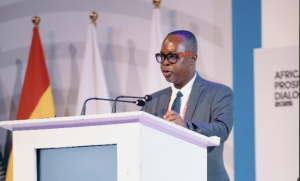
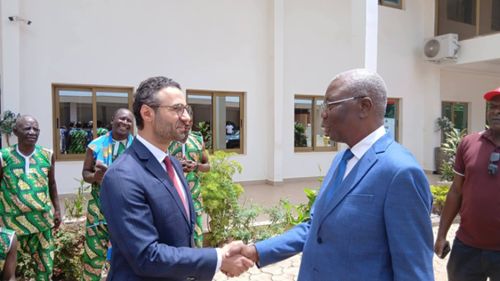
A formal ceremony was held on Tuesday, May 12, at Telecel’s headquarters in Bangui to mark the launch. The event was presided over by Justin Gourna Zacko, Minister of Posts and Telecommunications, alongside members of his cabinet, Telecel Group CEO Moh Damoush, Telecel Central Africa Managing Director Irène Moussa-Kembe, and a delegation from Telecel Gabon.
With this rollout, Telecel narrows the gap with rivals Moov Africa and Orange, both of which have offered 4G services since 2025. Authorities said competition in high-speed mobile internet services had now officially begun in the country.
The launch comes amid rising demand for high-speed connectivity from businesses, households and public institutions, as the Central African Republic accelerates its digital transformation efforts. The expansion of 4G services is also expected to support new digital applications and broader ambitions to develop the country’s digital economy.
According to the Ministry of Telecommunications, Telecel’s 4G rollout forms part of the national strategic plan known as “Digital Central Africa 2030.” During the ceremony, Minister Gourna Zacko said: “Expanding connectivity across the country means enabling a farmer in Bossangoa to sell online, a student in Bambari to attend remote classes, and a trader in PK5 to access mobile money services without interruption.”
Moov Africa has previously highlighted the capabilities of its 4G+ network to deliver very high internet speeds, supporting HD video streaming, webinar participation, instant content sharing and online gaming. For business customers, the operator has also emphasized improvements in data transfer, interconnection and access to mobile services. Orange, meanwhile, has underscored the role of 4G in supporting remote work, e-commerce growth, and access to online education and healthcare services.
Telecel faces stiff competition in a market where connectivity remains limited
The race for high-speed mobile internet is unfolding in a market still largely dominated by Orange. At the beginning of 2025, the operator said it held a 60% share of the mobile telephony market, 65% of fixed B2B services, and more than 90% of the mobile money segment in the Central African Republic.
Moov Africa, meanwhile, reported holding around 11% of the mobile market at end-September 2025. In the absence of recent official data from the telecommunications regulator, Telecel is estimated to account for the remaining roughly 29% of the market.
The sector nonetheless offers significant growth potential due to the country’s persistent digital divide. According to DataReportal figures, the Central African Republic had 2.49 million mobile subscribers at end-2025, representing a penetration rate of 38.1%. Internet adoption remains low, with around 670,000 users, equivalent to roughly 12% of the population.
Coverage and adoption challenges remain
Central African authorities acknowledge that expanding network coverage remains the sector’s main challenge. While Bangui is now covered by 4G services, the next major step will be extending coverage to secondary cities and key road corridors, in line with operators’ licensing obligations.
The government has pledged to closely monitor these commitments, while indicating that operators investing in rural areas could receive support through the Universal Service Fund (USF).
As of 2024, 2G and 3G networks covered approximately 60% of the population, according to the GSMA’s Mobile Connectivity Index. Although these technologies have long formed the backbone of the country’s telecommunications infrastructure, they are gradually being phased out in many markets.
Beyond network coverage, operators will also need to address broader barriers to digital adoption, including the cost of data plans, limited access to compatible devices, digital literacy levels, and the overall quality of the user experience.
Several operators across Africa are already developing financing solutions that allow customers to purchase smartphones or tablets through installment payments. Others are bundling devices with internet packages to reduce barriers to broadband access and accelerate the adoption of digital services.
Source : www.ecofinagency.com