NIA, Telecom Chamber and Digital Chamber Strengthen Partnership to Boost Ghana’s Digital Security and Trust

Ghana Chamber of Telecommunications

The National Identification Authority (NIA), the Ghana Chamber of Telecommunications (GCT), and the Digital Chamber of Ghana (DCG) have reaffirmed their commitment to advancing a secure, efficient, and trusted digital ecosystem for Ghana.

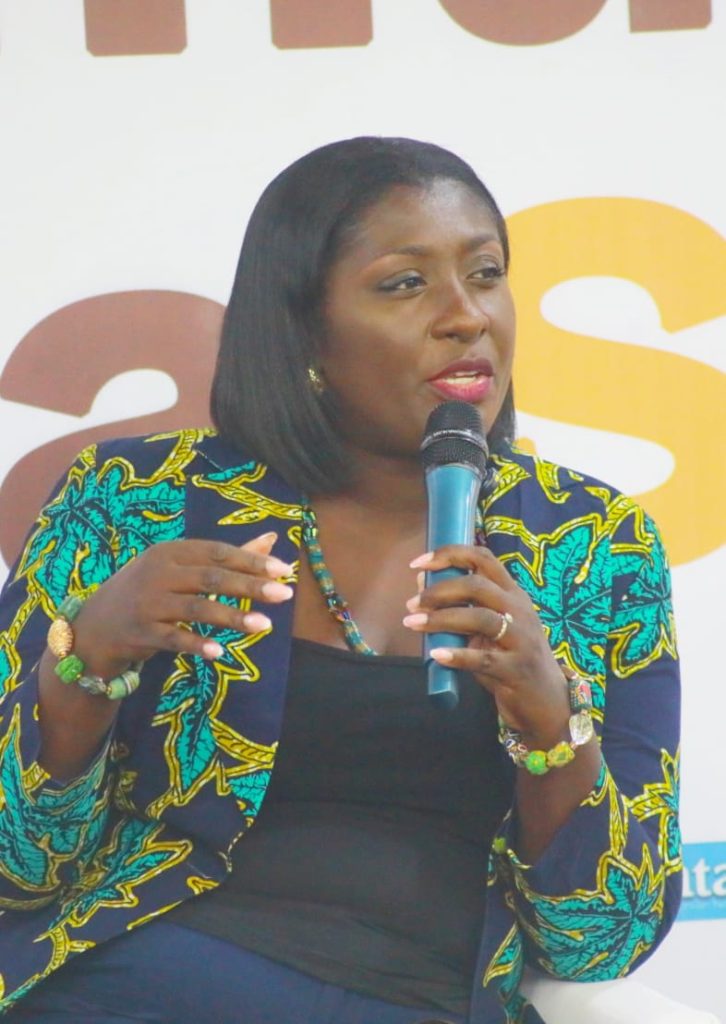
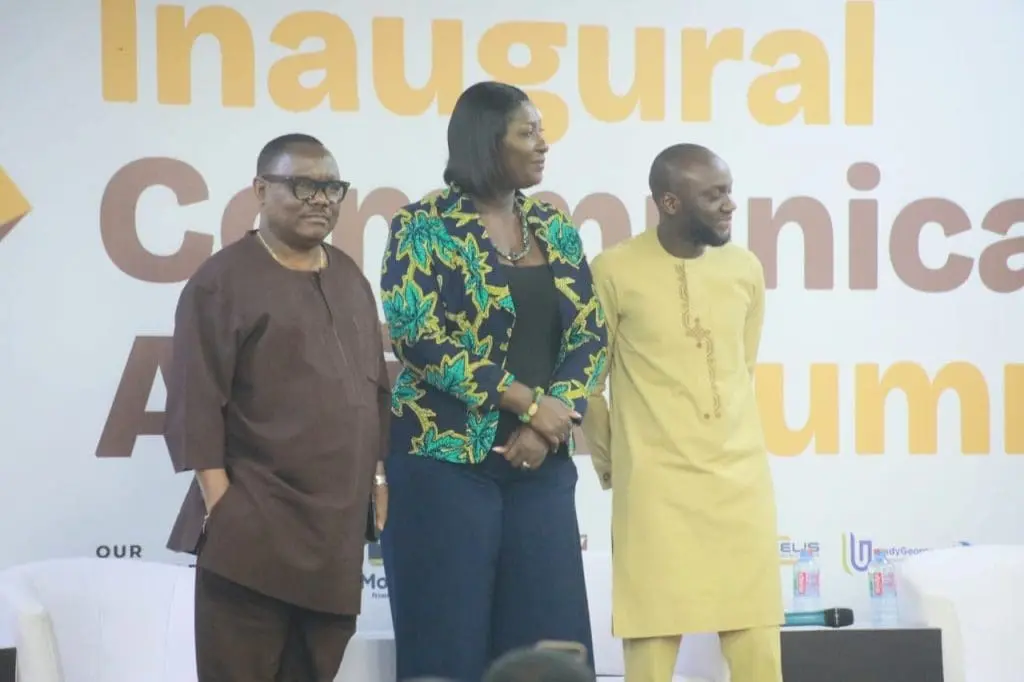
During a high-level leadership engagement, the three institutions discussed strategic areas of collaboration—including biometric verification, interoperability, and data integrity—to enhance secure digital transactions across critical sectors. The meeting also served to formally introduce the new CEO of the Ghana Chamber of Telecommunications, Ms. Sylvia Owusu-Ankomah, to the leadership of the NIA and DCG.

Ghana Chamber of TelecommunicationsThe renewed collaboration builds on a long-standing partnership focused on driving Ghana’s inclusive digital transformation, deepening cybersecurity, and strengthening confidence in digital financial services and telecommunications infrastructure. By leveraging shared expertise and systems, the institutions aim to expand digital trust and support Ghana’s transition into a fully digitized economy.

Source: Chamber News Desk

Ghana Chamber of Telecommunications Engages Communications Minister to Advance Digital Transformation Agenda

The Ghana Chamber of Telecommunications, led by its Chief Executive Officer, Sylvia Owusu-Ankomah, has paid a courtesy call on the Minister for Communications, Digital Technology & Innovation, Hon. Samuel Nartey George, as part of efforts to deepen collaboration and strengthen policy alignment for Ghana’s digital growth.

The meeting focused on advancing shared priorities for the telecommunications and digital ecosystem, including sustaining a competitive industry, accelerating connectivity expansion, and safeguarding consumer interests nationwide. Discussions also touched on the need to support a robust digital infrastructure framework to enable innovation, inclusion, and secure digital participation for all Ghanaians.

The engagement underscores its continued role as the unified voice of Ghana’s telecom and digital sector. The visit marks a renewed commitment between industry and government to drive forward policies that support a secure, connected, and inclusive digital future.

The Chamber reiterated its readiness to work closely with the ministry to ensure the sustainability of the telecoms sector, promote investment, and advance digital transformation to benefit citizens, businesses, and the national economy.

Source: Chamber News Desk

MTN equips SMEs with digital, financial tools

MTN-logo-1068x808-1

MTN Ghana has rolled out a Small & Medium Enterprise (SME) Business Clinic in Kumasi as a testament of its commitment to strengthening the\xa0 country’s economic backbone.

The programme, which has already made stops at Accra, Takoradi and Tamale, brought together over 120 SMEs in the Ashanti Region for two days of capacity building, digital empowerment and financial literacy to enhance business activities for beneficiary SMEs.

call to action icon

Speaking at the event, Senior Manager-SME Sales, MTN Ghana, Mohammed Abubakari-Sidick noted that the initiative was designed to tackle unique challenges facing SMEs – ranging from poor record-keeping and financial management to low technology adoption and lack of insurance cover.

“Most SMEs in the country contribute significantly to GDP but continue facing hurdles that limit their growth potential. With the SME Business Clinic, we are arming them with digital tools, financial literacy and insurance solutions to help them thrive,” Mr. Abubakari-Sidick said.

Key highlights of the programme include exposing SMEs to MTN’s ‘Y’ello Biz’ – a digital package that provides SMEs with fibre broadband, access to Microsoft 365, data management support and, crucially, web development services. This, Mr. Abubakri-Sidick, says will help bridge a major gap as many SMEs lack online presence – which often excludes them from international funding opportunities.

call to action icon

The Business Clinic was done in partnership with Sanlam Allianz and SME Ghana Awards (SMEGA) for beneficiary SMEs to understand and appreciate the benefits of insuring their businesses.

Mr. Abubakari-Sidick emphasised that with the right insurance cover, businesses can quickly recover and stay afloat in the event of disasters or shocks.

“Today, we are not just giving SMEs internet solutions. We are giving them the assurance that when unforeseen challenges come, they won’t lose everything. Insurance is now part of the digital toolkit,” he stressed.

The SME Business Clinic forms part of MTN’s broader strategy to support entrepreneurship and digital inclusion under its Vision 2025 agenda.

Some participants expressed appreciation to MTN Ghana, describing the SME Business Clinic as an eye-opener. They assured of their readiness to incorporate all that they have learnt to enhance their business.

Source: MSN

Meta Platforms faces Dutch algorithm crackdown

Meta

A Dutch court reportedly ordered Meta Platforms to change the way Instagram and Facebook present content to users, taking aim at the company’s algorithm practices.

According to Reuters, the court ruled Meta Platforms must offer simpler options on user timelines that do not focus on making profit for the company, mainly ensuring the platforms’ do not rely on algorithms.

It further argued that the design of both platforms go against the principles of the European Union Digital Services Act (DSA), and it has been given two weeks to offer users a direct and simple way to opt out of timelines that offer recommended content.

A chronological based timeline must be offered, added the court.

In its decision, the court explained “people in the Netherlands are not sufficiently able to make free and autonomous choices about the use of profiled recommendation systems”.

The case was launched by digital rights group Bits of Freedom. Spokesperson for the group Maartje Knaap said it was “unacceptable a few American tech billionaires can determine how we view the world”.

Meta Platforms, which has stated it will appeal the decision, faces a fine of up to $5.8 million if it does not comply.

The case in the Netherlands is the company’s latest row in Europe. It is also facing heat from the European Commission over failing to remove illegal content on Facebook and Instagram.

Source: Mobile World Live

Apple pulls location tracking tool from App Store

Apple

Apple reportedly removed a location tracking app that informs users of the whereabouts of US immigration and customs agents from its App Store, following pressure from the Donald Trump administration.

Reuters reported the US Justice Department had contacted Apple to remove the ICEBlock app, claiming it increased the risk of attacks on its agents, and the company has complied with the request.

ICE is a federal enforcement agency and its agents are tasked with enforcing Trump’s hard-line immigration laws. The app is designed to alert users if ICE agents are in their area.

In an statement seen by the news outlet, Apple stated: “Based on the information we’ve received from law enforcement about the safety risks associated with ICEBlock, we have removed it and similar apps from the App Store.”

ICEBlock launched in April and shot up to the top of Apple’s App Store rankings in July. It then faced heat from the White House, with the administration claiming agents were facing a 500 per cent increase in assaults.

Following Apple’s removal, US attorney general Pam Bondi welcomed the decision, telling CNN “ICEBlock is designed to put ICE agents at risk just for doing their jobs, and violence against law enforcement is an intolerable red line that cannot be crossed”.

Apple and other technology companies have sought to improve relations with Trump during his second term. The iPhone maker has pledged to invest $600 billion in the US over the next four years.

Source: Mobile World Live

Indonesia suspends TikTok licence

TikTok

Indonesia’s Ministry of Communication and Digital Affairs (Komdigi) temporarily suspended TikTok’s operating licence after it refused to hand over information about live streaming activity during protests in August.

Komdigi issued a statement explaining the move was prompted by the short-form video platform providing only partial data on its live streaming during the protests from 25 August to 30 August.

The Ministry stated it requested data on traffic information, live streaming activity and monetisation data on 16 September and gave the social media app owned by China-based ByteDance a deadline of 23 September.

TikTok stated in an official response that “internal policies and procedures governing how to handle and respond to data requests” meant it could not provide the information requested.

Komdigi stated TikTok’s failure to comply with the data request violated its obligations as a private electronic system operator, leading to temporary suspension measures as part of the Ministry’s oversight.

Source: Mobile World Live

Telecel Business Runway Empowers Gen Z Entrepreneurs with Skills, Money, and Mindset

October 6, 2025

Telecel Ghana climaxed its annual SME Month with the Telecel Business Runway 2025 — a dynamic forum held at the Labadi Beach Hotel under the theme “Gen Z Impact: Skills, Money and Mindset.” The event equipped young entrepreneurs with practical skills, financial insights, and digital tools to scale their businesses.

Opening the programme, Ing. Patricia Obo-Nai, CEO of Telecel Ghana, urged participants to focus on “skills, money, and mindset” as the core pillars of business growth. She reaffirmed Telecel’s mission to support young entrepreneurs with training, networks, visibility, and digital resources.

The event featured expert sessions led by Sam Rodgers (Wild Fusion Ghana), Kojo Junior (content creator), Jahzara Agyemang (JTE Business Consult), Nelson Amo (Innohub), and Edward Mawudem (Absa Bank). Discussions centered on content strategy, authenticity in storytelling, funding opportunities, and investor readiness.

Government support was expressed by Mohammed Saani Adams, Deputy Director at the Ministry of Youth Development and Empowerment, who emphasized the Ministry’s commitment to institutionalizing SMEs to drive Ghana’s economy.

Participants benefited from on-site business registration services by the Registrar-General’s Department, tax orientation by the Ghana Revenue Authority, and a vibrant vendor market for small businesses. Entrepreneurs also explored three new SME-focused connectivity products launched by Telecel Ghana — Boss Plan, One Business Mobile, and Your Business Online — designed to enhance digital presence and operational efficiency.

Entrepreneur Genevieve Dzifa Akpalu, founder of The AG Shop, shared that she left the event with a registered business, a clearer understanding of tax filing, and new customers from the vendor market.

Now in its ninth year, Telecel SME Month remains a key initiative supporting Ghana’s entrepreneurship ecosystem — empowering young innovators with the tools, knowledge, and confidence to thrive.

Source: B&FT

MTN Champions Africa’s Digital Future

MTN-logo-1068x808-1

MTN Group CEO Ralph Mupita has called for empowering Africa’s youth with digital tools to capitalize on the continent’s growth potential, emphasizing partnerships in AI and connectivity during discussions at the UN General Assembly (UNGA).

Nigeria’s Minister of Communications, Innovation, and Digital Economy, Bosun Tijani, challenged MTN and other firms to accelerate Africa’s AI revolution. Highlighting the launch of N-ATLAS—an open-source AI framework developed with startup Awarri and partners like Data.org—he urged MTN to fund data collection for underrepresented African languages. Trained on five Nigerian languages and accented English, N-ATLAS addresses AI biases from English-dominated datasets, risking exclusion of millions and cultural erosion. Tijani envisions scalable models like “S-ATLAS” for countries such as Sierra Leone, stressing collaborative leapfrogging: “Government is typically slow… MTN came in, IHS chimed in, Airtel contributed. And boom, we started the largest talent accelerator in the world.”

Mupita accepted the challenge: “We like these kinds of partnerships.” South Africa’s Communications Minister Solly Malatsi echoed the push for linguistic diversity in AI, criticizing the tech’s “glaring gap” in covering over 7,000 global languages. At a G20 forum in April, he advocated for regulatory frameworks to include more voices, viewing AI as a tool for language preservation through data creation and education.

Bridging the Digital Divide

GSMA’s Sub-Saharan Africa head, Angela Wamola, warned that without broader internet access, Africa risks lagging in the AI era. Citing Worldometer data (1.55 billion Africans) and GSMA’s 2025 report (only 500 million online, or 30%), she used a soccer analogy: Africa’s “team” has just three players on the pitch—330 million with smartphones (mostly 3G) and 80 million on feature phones—while 1 billion remain “on the bench” or in the “locker room” due to coverage or affordability gaps. Mobile operators have invested over $40 billion in 4G networks, but low device penetration hampers adoption. Wamola called for partnerships to “get all those on the bench… onto the pitch.”

MTN is targeting this through affordable devices, negotiating $20 smartphones with manufacturers, and drawing lessons from India’s $12 JioBharat 4G feature phone. In South Africa, MTN’s May initiative—partnering with Smartphone For All—will distribute 1.1 million preloaded 4G devices to select customers by 2026, locked to MTN SIMs. Mupita noted tax hurdles like 30% customs duties but praised government collaborations, including Nigeria’s subsea cable security efforts.

Youth Dividend and UNGA Focus

Mupita, GSMA’s global deputy chair, highlighted Africa’s youth bulge (ages 15–64 outnumbering dependents) as a “huge advantage” if nurtured via education, skills, and jobs—per UN guidelines—to avoid a “burden” of frustrated youth. He stressed digital access as “fundamental as electricity,” warning against Africa becoming a “digital underclass” in Global North-led AI talks. At UNGA, Tijani prioritized AI productivity in sectors like agriculture, affordable connectivity, and digital skills, while Mupita eyed geopolitical navigation.

Tech for Agriculture

Both leaders see AI and connectivity transforming agriculture, Africa’s economic backbone (25% Sub-Saharan GDP). Mupita noted the continent’s 70% share of global arable land but low yields, urging tech for better markets and pricing—e.g., helping East African coffee farmers. Tijani contrasted Nigeria’s 2.5 tons/hectare maize yield with South Africa’s 5–6 tons and Brazil’s 10–12 tons via precision farming, enabled by connectivity for targeted inputs.

MTN’s stakeholder ties—with regulators, governments, and 300 million customers—underpin these efforts, leveraging spectrum for infrastructure. As Mupita put it, “We must be in the rooms… designing our future.”

Source: Sunday Times

Nigeria, Kenya partner on satellite tech initiatives

Nigeria

The Nigerian Communications Satellite (NIGCOMSAT) and the Kenya Space Agency (KSA) have formed a cooperation to set a new course for Africa’s and security environment through leveraging satellite technology for broadband expansion.

Hillary Kipkosgey, director general of the KSA, recently visited NIGCOMSAT’s Ground Control station in Abuja to formalise the relationship.

The discussions revolved around Kenya’s desire to leverage NIGCOMSAT’s massive broadband capacity to expedite digital access in sectors such as education, defence, healthcare, fintech, and governance.

NIGCOMSAT’s managing director, Jane Egerton-Idehen, commended the collaboration as a critical step towards unlocking Africa’s digital potential.

“This collaboration is more than connectivity; it is about building resilient systems that safeguard sovereignty, enhance security, and ensure Africa takes its rightful place in the global space industry,” Egerton-Idehen said.

She emphasised Nigeria’s early commitment in space technology as a foundation for continental progress, noting that collaboration with Kenya is consistent with NIGCOMSAT’s mission of promoting socioeconomic development through satellite solutions.

NIGCOMSAT is already forecasting N8 billion ($5.4 million) in revenue over the next three years. With Kenya joining forces, the business sees an opportunity to expand its broadband coverage while also boosting Africa’s collective space ecosystem.

While, Kipkosgey emphasised Kenya’s preparedness to benefit from Nigeria’s knowledge, emphasising the importance of consistent, high-level engagements for Africa’s collective space objectives.

“We are here to build a closer working relationship with our Nigerian counterparts. To achieve meaningful progress, we need deeper engagement and more frequent dialogue,” he said.

The partnership is expected to translate into joint projects that expand broadband coverage in Kenya, strengthen regional security collaboration, and promote policy alignment in satellite governance. 

Source: IT Web Africa

Morocco Orders Telecom Operators to Share Fiber Networks Under Landmark ANRT Ruling

Fibre

Under the new framework, operators may act either as Infrastructure Operators (IOs), leasing their fiber to competitors, or as Commercial Operators (COs), offering services using other networks in areas where they lack coverage.

Morocco’s National Telecommunications Regulatory Agency (ANRT) has introduced a sweeping reform that obliges telecom operators to share their fiber optic infrastructure, a move set to transform the country’s digital landscape.

The ruling, issued on March 4 under decision DG/05/2025, lays out technical and pricing rules that require the country’s three major players—Maroc Telecom, Orange, and Inwi—to open their networks to rivals.

Under the new framework, operators may act either as Infrastructure Operators (IOs), leasing their fiber to competitors, or as Commercial Operators (COs), offering services using other networks in areas where they lack coverage. To ensure fairness, infrastructure providers must grant non-discriminatory access and publish transparent pricing, including for after-sales services. The decision also introduces automated web-based systems to streamline service requests and support between IOs and COs.

The reform aims to prevent the duplication of networks, accelerate fiber rollout, and avoid the disputes that previously hampered ADSL copper-sharing efforts. It also directly challenges the long-standing dominance of Maroc Telecom, whose market leadership has been criticized for stifling competition. The regulatory shake-up comes as Mohamed Benchaaboun takes over leadership following the departure of Abdeslam Ahizoune, who held the position for 27 years amid accusations of anti-competitive practices.

Inwi has already acted on the ruling, granting competitors access to its Fiber-to-the-Home (FTTH) network from March 13. Other operators are expected to follow suit in the coming weeks.

The decision aligns with Morocco’s Digital 2030 strategy, which aims to grow fiber-ready households from 1.5 million in 2022 to 5.6 million by 2030. Fewer than one million households currently subscribe to fiber, but planned investments of MAD 20 billion ($2 billion) are expected to rapidly increase availability.

While consumer pricing remains regulated, industry analysts anticipate gradual reductions as infrastructure is shared more widely and costs are optimized. The framework is also seen as critical groundwork for 5G deployment, with spectrum tenders expected to be announced at GITEX Africa in Marrakech next month.

By enforcing infrastructure sharing, Morocco’s telecom regulator aims to boost competition, expand connectivity nationwide, and improve affordability, while ensuring that infrastructure spending is maximized across the sector.

Source: Tech Africa News