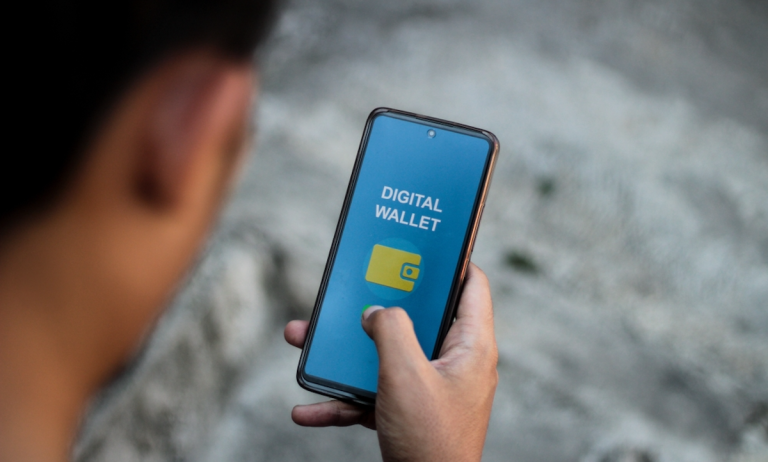
Visa, a digital payments business, has produced a new research outlining digital payment development potential, particularly among Kenya’s small and medium-sized enterprises (SMEs).
According to the report, 40% of SMEs have used digital payments within the last two years.
This impetus, according to Visa, is driven by the awareness that investments in payment technologies, such as card payments, mobile and digital wallets, are critical for business growth.
Convenience (40%), cost savings (38%), and greater efficiency (37%) are the top reasons given by SMEs for embracing digital payments.
“Kenya’s digital payments landscape is experiencing a dynamic growth, fuelled by a rising preference for innovative payment methods and value-added services that provide enhanced security and streamline operations” Chad Pollock, VP and General Manager, Visa East Africa said..
“This shift presents a significant opportunity to boost both individual prosperity and broader economic development,” he said.
While cash comfort remains a hurdle, the survey finds that almost all digitally equipped SMEs (97%) continue to be concerned about cash security.
This makes a compelling case for pushing digital payments as a more secure and economical alternative.
Furthermore, there is a strong need for improved security measures among organisations that already accept digital payments, with 71% indicating a need for secure B2B payment solutions and 69% requesting advice on payment security best practices.
Given these dangers, the research suggests that promoting secure digital payment solutions is a potential strategy for SMEs seeking to reduce security risks.
‘’Promoting secure digital payment options as a fundamentally safer way to conduct business can help mitigate these risks, fostering trust and further prompting a shift away from cash.’’ the report notes.
Visa’s ‘Value of Acceptance: Understanding the Digital Payment Landscape in Kenya’ analysis, conducted by 4Sight Research & Analytics, investigates the present state of digital payment acceptance, identifying both potential and problems.
The findings are based on face-to-face interviews with 254 SME owners/managers who make critical business choices on a daily basis.
Australia-based operator Telstra signed-up with Ericsson to deploy what the pair claimed as the first programmable network in the Asia Pacific region, citing benefits around the provision of bespoke capabilities to customers.
The four-year project will see the operator’s radio network upgraded to Ericsson’s latest open RAN-ready hardware and deployment of 5G-Advanced software.
AI and automation technology is set to be used to optimise network management, through self-detection of problems and self-healing.
Ericsson noted the new infrastructure would provide a platform for development of new applications and give the operator the ability to tailor connectivity based on customer need.
Highlighting the fact it and Telstra were founding members of API focused company Aduna, Ericsson explained the new kit would provide the means to “open the network to tech innovators from wider ecosystems via network APIs”.
Telstra CEO Vicki Brady said: “We are at an inflection point, where customer needs for technology and connectivity are becoming more sophisticated, requiring a step change in how connectivity is delivered and consumed. At the same time, demand for mobile data on our network has tripled over the past five years.”
The executive added its new network infrastructure would “evolve our offering and improve the efficiency of how we use our spectrum so we can increase our 5G network capacity to deliver better consistency of performance, reliability and speed to millions of customers”.
Nearly all telcos are assessing or deploying AI, according to NVIDIA’s State of AI in Telecommunications survey.
More than three-quarters of respondents already seeing return on investment through cost savings and/or increased revenue.
37% of operators focusing investment on applying AI or GenAI in network planning and operations, including integration in radio access networks.
Findings appear to bode well for nascent AI-RAN developments.
NVIDIA: AI delivering ROI for telcos, advancing into production
Source: NVIDIA
Telcos are seeing increasing cost savings and revenue boosts from investments in artificial intelligence (AI) and showing greater willingness to take the technology deeper into their networks, according to new research from NVIDIA, which TelcoTitans discussed with the vendor’s Global Head of Business Development for Telco, Chris Penrose.
The third annual State of AI in Telecommunications report takes the pulse of telcos’ plans and experiences with the technology and the results look encouraging for its author, AI system and software behemoth NVIDIA — with headline finding being that nearly all (97%) telecom operator respondents are assessing or adopting AI.
The technology is already considered to be delivering results for most, as 83% of operators said AI is helping to increase revenues, up from 72% in last year’s survey. Some (21%) have seen AI contribute revenue uplift of more than 10%, while 38% have tracked increases of less than 5%.
AI is also helping operators to reduce costs, with 77% agreeing that the tech has supported decreases in annual operating costs.
“ More than three quarters of companies indicated that they are seeing a positive impact on return on investment [ROI]… [they] are seeing real dollars begin to happen” –Penrose.
Chris Penrose
Source: NVIDIA
Part of the higher ROI realisation is driven by AI projects progressing from proof of concepts to “full production”. As solutions scale out, “that’s really where the big ROI is going to come”, Penrose said.
Telcos are seeing the biggest impacts from AI in higher employee productivity, enhanced customer experience, and improved network operations, the survey found.
AI buds in the network
Improving customers experience remains the top AI use case and investment area for telcos, according to the survey.
The next highest-ranked use cases were network planning and operations (which includes integrating AI into RAN infrastructure) and optimising field operations.
“ The network side has really evolved, with now 37% saying that they’re applying AI and generative AI in the network space, particularly network operations. This is the core of what they do… [They can] apply [AI] in the network itself to drive better performance that could be everything from energy savings to spectral efficiency” – Penrose.
Along with the opportunity to improve how the network performs, Penrose said telcos can have, “for the first time”, a common set of infrastructure that can support the radio access network (RAN) as well as other AI workloads.
“ We’re seeing a lot of interest around this because telcos spend so much capital on proprietary networks today but they’re massively underutilized. They’re designed for the peak hour, but at midnight, you’ve got a lot of spare capacity. We can redeploy those compute assets to do AI and GenAI. It’s a whole new opportunity to create revenue. ” – Penrose.
NVIDIA is one of the founding members of the AI-RAN Alliance, which launched at February 2024’s Mobile World Congress (MWC), along with Amazon Web Services, Arm, DeepSig, Ericsson, Microsoft, Nokia, Northeastern University, Samsung Electronics, SoftBank, and T-Mobile US (Deutsche Telekomwatch, #133). The organisation has since increased to 50 members, including telcos Boost Mobile Network, Globe Telecom, Korea Telecom, and SK Telecom. Demonstrations of the Alliance’s work are expected to be on show at Arm’s stand at MWC 2025. The group’s aim is to: use AI to improve RAN spectral efficiency; integrate AI and RAN to use infrastructure more efficiently and open revenue opportunities; and deploy AI services at the network edge through the RAN. SoftBank is possibly the most advanced operator in exploring AI-RAN’s potential.
This year’s survey included a section dedicated to telcos’ plans for, and adoption of, GenAI, finding that the sector is one of the fastest to implement the technology, according to Penrose.
But the “shocking” result for Penrose was that 84% of respondents said they intend to offer GenAI services to their customers. “That’s a really powerful statistic”, he said.
To enable these services, NVIDIA is seeing interest in Europe and Asia for “sovereign AI”, whereby telcos are supporting governments in establishing national AI infrastructure, said Penrose.
NVIDIA has partnered with 14 telcos on sovereign AI solutions, including Iliad Group subsidiary Scaleway, Swisscom and its Italian subsidiary Fastweb, and Telenor.
The national infrastructure can offer anything from AI training and inferencing as a service to GPU-as-a-service for startups and businesses, he explained.
“ This really does provide a new opportunity to drive revenue now but also use the same infrastructure to drive their own cost savings and support the network for the future. And when all those things come together, it becomes a very exciting place for the telcos to lean into. ” – Penrose.
Recent examples of telcos bundling GenAI into their consumer services include Telefónica and Deutsche Telekom offering Perplexity’s digital search assistant. Both operators are also investors in the GenAI scaleup via their respective corporate venture arms, along with NVIDIA. Meanwhile, Orange Business launched a suite of GenAI services for enterprises earlier this year under its Live Intelligence product range. French rivals Iliad and Bouygues offer twelve months free access to AI digital assistants from Mistral AI and Perplexity, respectively. In the UK, EE’s 5G standalone network launch in September last year was pitched as part of the operator’s efforts to prepare for an expected influx of AI-powered devices.
Finding AI talent remains top challenge
The survey also found some persistent challenges to telco adoption of AI, with the top three obstacles the same as in the 2024 survey.
The biggest hurdle to scaling AI is lack of talent, such as finding data scientists, engineers, architects, and developers.
More respondents this year (38%) pointed to ’inability to quantify ROI’ as an issue, up from 33% last year, while 30% cited lack of budget for AI as problematic.
Key findings from NVIDIA’s State of AI in Telecommunications survey
84% — AI is helping to increase their company’s annual revenue.
77% — AI helped reduce annual operating costs.
97% — Either actively deploying or assessing AI projects.
60% — Increased employee productivity the biggest benefit from AI.
44% — Investing in AI for customer experience optimisation, which is the top area of investment for AI in telecommunications.
40% — Deploying AI into their network planning and operations, including RAN.
49% — Adopted GenAI solutions.
84% — Using GenAI plan to offer solutions to the customer.
From the U.S. to Saudi Arabia, people are leveraging digital wallets due to their fast and efficient way to send and receive money internationally. This shift in payment preferences speaks to the demand for convenience and simplicity, the report notes, especially when compared to traditional methods like bank transfers or money transfer services.
Among the countries surveyed — Saudi Arabia, Singapore, the U.K. and the U.S. — digital wallets emerged as the leading option for cross-border payments. On average, the report shows 42% of consumers across these countries preferred digital wallets for their international transactions.
US Leads in Digital Wallet Adoption
The U.S. stands out with 44% of consumers choosing digital wallets over other payment methods, the report notes, far ahead of other options like bank accounts and money transfer services. Consumers are more likely to send money to family or friends, a common type of cross-border payment. Nearly 75% of U.S. consumers who made cross-border payments in the past year sent money to their loved ones. These transactions are often remittances, underscoring how important digital wallets have become in the process of sending small, frequent payments across borders.
Singapore: A Tradition of Bank Transfers
In contrast, Singapore shows a different trend. Only 27% of Singaporean consumers prefer using digital wallets for cross-border transactions, with 37% still relying on bank accounts. This reliance on traditional banking services may stem from Singapore’s advanced financial infrastructure, where people have been accustomed to using bank accounts for payments. While the use of digital wallets is gaining traction, it has not yet surpassed the comfort and familiarity of bank accounts, which remain a preferred method for many Singaporeans.
Saudi Arabia: A Blend of Digital and Traditional Payments
Meanwhile, Saudi Arabia provides an interesting case with a blend of digital and traditional methods. Like other countries, remittances sent to family and friends are common, but payments from employers and gig platforms are also significant. In Saudi Arabia, the report shows, digital wallets are highly favored for sending and receiving payments as well, though the shift has been slower compared to other regions. But the country’s reliance on traditional banking methods for certain payment types has slowed the overall adoption of digital wallets.
Speed and Convenience Drive Digital Wallet Adoption
One reason digital wallets are preferred for cross-border transactions is their speed and convenience, according to the report. Digital wallets provide an efficient way to move money without the delays that often accompany bank transfers or money transfer services. This speed is particularly valuable for consumers who send small-value payments regularly, such as remittances to family members. The ease of linking a digital wallet to a mobile device means sending money across borders is as simple as a few taps on a screen, removing much of the complexity that accompanies traditional methods.
Another factor contributing to the preference for digital wallets is the ability to send money to recipients who use the same wallet. Many consumers who use digital wallets for cross-border payments report that they typically send money to people who also use the same service. This creates a streamlined, seamless experience that avoids the friction associated with using multiple payment systems.
In countries like the U.S., U.K. and Saudi Arabia, nearly two-thirds of digital wallet users said they typically send funds to recipients who use the same mobile wallet. This level of compatibility is an advantage over traditional methods, which often require coordination between different banks or services to facilitate the transfer.
Overcoming Interoperability Challenges
While the trend toward digital wallets is evident in several regions, challenges remain, according to the report. Interoperability, or the ability for different wallet systems to work together smoothly, continues to hinder the growth of cross-border transactions. Even in markets where digital wallets are popular, consumers may still face challenges when sending money to different countries or dealing with different currencies. These issues highlight the need for further integration and innovation within the digital wallet ecosystem to make global money movement easier and more efficient for all users.
Preferences for cross-border payment methods vary by region, but digital wallets are clearly becoming a key tool for international transactions. Their ease of use, speed and capacity to manage frequent, small-value payments make them an appealing option for many consumers. As interoperability improves and the digital wallet infrastructure expands, more consumers around the world are likely to rely on them for cross-border payments.
The Tunisian government is considering a collaboration with the International Telecommunication Union (ITU) to facilitate the population’s access to 5G phones. This initiative is part of a strengthening of partnerships between Tunisia and the ITU, a topic at the heart of discussions between Sofiene Hemissi (pictured, center), Minister of Communication Technologies, and Doreen Bogdan-Martin (pictured, right), Secretary-General of the ITU, at the Summit for Action on Artificial Intelligence, held on February 10-11 in Paris.
The collaboration is expected to facilitate the adoption of the country’s recently launched 5G services, which require compatible phones. The Global Association of Mobile Phone Operators (GSMA) said in its report “5G in Africa: Realising the Potential” that cost is a major barrier that could deter consumers from adopting 5G. The organization estimates that 5G-compatible smartphones are now available from $150 from several manufacturers, but this price remains prohibitive for most consumers in Africa, especially if they have to pay for the device in one go.
“While device prices are falling, they remain significantly higher than 2G, 3G and 4G devices. In Africa, 5G adoption will depend on the affordability of devices. While smartphone financing programmes are primarily driven by the private sector, governments and policymakers have a role to play in creating an enabling environment for these initiatives – for example, by allowing operators to offer carrier-locked phones to mitigate the risks associated with device financing,” the GSMA said.
It is not yet clear what concrete measures will be put in place to facilitate the adoption of 5G phones. It is important to remember that the accessibility of 5G smartphones is not the only obstacle to the adoption of this technology. According to the GSMA, the cost of plans is one of the main obstacles to mobile internet. In addition, network coverage can also slow its adoption, as services are generally deployed first in major cities before being gradually extended to the rest of the country.
South Africa’s parliamentary portfolio committee on communications (PCC) on communications and digital technologies adopted a bold stand this month, recommending that spectrum be allocated to state-owned firms on an open access basis.
The move by the PPC comes as demand for broadband service across the continent continues to rise.
Broadband Infraco, a licensed state-owned telecoms company, welcomed the decision, which coincides with its goal to increase market efficiency in the long-distance connectivity segment by enhancing available long-distance network infrastructure.
According to the business, “the PCC’s decision to provide spectrum to the State Digital Infrastructure Companies (SDIC) or any of the required SOEs on an open-access basis will go a long way towards offering cost-effective broadband services to marginalised populations. BBI welcomes this initiative and will collaborate with important stakeholders to achieve this goal.”
It continued, “Broadband Infraco applauds the PCC leadership in paving the way to resolve matters of national significance and is committed to expanding digital infrastructure accessibility and skills, thereby supporting the broader goals of the 4th Industrial Revolution and bridging the digital divide.”
BBI said its strategy focus includes several important areas to provide a complete and inclusive approach, including collaboration with regulatory organisations, collaborations with SMMEs, digitisation of government services, bridging the digital gap, and leveraging state broadband assets to benefit the country.
It went on to explain, “Duplication of telecom infrastructure makes broadband services more expensive. The PPC position, which includes prioritising the consolidation of state-owned fibre assets housed within other SOEs such as Eskom, Transnet, PRASA, Sanral, and others, will make a substantial impact in delivering digital services to all corners of the nation.”
Ethio telecom, Ethiopia’s leading telecom and digital solutions provider, continues its nationwide 5G expansion with the launch of 5G services in Jimma City.
This milestone is a significant step in the company’s mission to accelerate Ethiopia’s digital transformation, ensuring high-speed connectivity and unlocking new opportunities for innovation and economic growth.
Since launching Ethiopia’s first 5G network in Addis Ababa in 2022, our company has expanded 5G to twelve cities, including Addis Ababa, Adama, Jigjiga, Dire Dawa, Harar, Bahir Dar, Hawassa, Wolaita Sodo, Hosaena, Arba Minch, Bishoftu and today, Jimma.
With today’s launch in Jimma, Ethio telecom is further strengthening its commitment to enhancing digital accessibility and enabling Ethiopia to harness the full potential of next-generation connectivity.
This launch meets the growing data and internet demands of individuals, businesses, and industries, enhancing service reliability and digital solutions.
The network is now available in Jimma City, particularly around Jimma Zone Administration Office, Ethio telecom South West Regional Office, Ferenj Arada, Central Hotel, Haile Hotel and Stadium Area, Dololo Hotel, Firomsis Hospital, Central Merkato, Kochi, Jimma University, Mizan and Boye areas.
Ethio telecom’s 5G network delivers speeds of up to 10 Gbps with ultra-low latency as low as 1 millisecond, supporting up to 1 million devices per square kilometer. This cutting-edge technology is designed to meet the rapidly growing data and internet demands of individuals, enterprises, and industries.
The expansion facilitates online education and training, fostering innovation and job creation for startups while bridging the digital divide through increased smartphone access.
5G technology transforms key sectors, including healthcare, agriculture, education, manufacturing, transport, mining and entertainment. By modernizing operations, it boosts productivity and creates new revenue opportunities, serving as a catalyst for economic growth and strengthening Ethiopia’s position in the global digital economy.
To access these services, customers will need 5G-compatible devices. We invite customers to upgrade their SIM cards if needed and to explore available 5G-supported devices at service centers.
Huawei selected Malaysia’s capital Kuala Lumpur to launch its double-fold Mate XT to the international market, after releasing the device in its home market in September 2024.
Unlike the Chinese version which runs Huawei’s Harmony OS, the international edition employs the Android-based EMUI.
The display measures 10.2 inches when fully opened and the device weighs 298 grams, about 50 per cent more than a standard smartphone.
Huawei states it is the world’s largest and thinnest foldable, at 3.6mm folded and 2.9mm unfolded.
The company only provided the price for the 16GB+1TB storage option, at €3,499. At launch, the same model in China was priced CNY21,999 (€2,889).
Counterpoint Research director Marc Einstein told Mobile World Live the Mate XT is “an impressive piece of hardware”, with Huawei trying to set a higher bar for what a flagship smartphone should look like.
He suggested the company is making a statement by marketing one of the priciest smartphones on the market, showing it can out innovate Apple despite continued US sanctions as reflected in its Ultimate Design tagline for the series.
Einstein added while users might be enthralled with the device, they are likely to be less enthusiastic about the very high price and lack of access to applications.
Huawei speakers did not mention the sensitive topic of the chip set-up. The Chinese version runs its Kirin 9 chipset.
The device uses three batteries, one in each panel measuring 1.9mm thick and producing a combined capacity of 5600mAh.
Huawei is running an advertising campaign throughout Kuala Lumpur.
During the event, Huawei also unveiled the MatePad Pro 13.2 and is new FreeArc earbuds featuring what the company describes as an ergonomic and breathable design.
Siemens Digital Industries Software readied an automated workflow for Taiwan Semiconductor Manufacturing Corp’s (TSMC) high-performance wafers used in mobile and other computing applications, advancing an existing collaboration.
The workflow was developed for TSMC’s InFO packaging technology, an integration method which delivers high-density interconnection and performance in silicon in 2D or 3D arrangements.
Siemens employed its Innovator 3D IC product, which it separately explains is a cockpit technology developed “for the planning and heterogeneous integration of ASICs and chiplets” which is at the cutting edge of semiconductor packaging technologies and substrates.
The TSMC set up also uses Siemens’ Xpedition Package Designer software, covering single- and multi-die or chiplet configurations.
AJ Incorvaia, SVP of Electronic Board Systems at Siemens Digital Industries Software, said its cockpit and software “provide customers with an expanding number of design avenues”, helping to tackle growing complexity in chip design.
Incorvaia added the combination with TSMC’s advanced packaging platforms means the arrangement enables “our many mutual customers to achieve truly remarkable and industry-disrupting innovations”.
Tunisie Télécom, Ooredoo Tunisie, and Orange Tunisie have officially launched their 5G services, marking a new era of high-speed connectivity in Tunisia.
The rollout follows the operators’ acquisition of 5G licenses in December, granting them approval to establish and operate next-generation mobile networks across the country.
With comprehensive coverage and cutting-edge technology, we are preparing a revolution in connectivity to meet the needs of businesses, entrepreneurs, content creators, gamers, students and many more.