Ericsson has reaffirmed its long-term commitment to China, describing the country as one of its most strategic markets for advancing artificial intelligence (AI), 5G, and future 6G technologies. Speaking at the 2026 Summer Davos in Dalian, Chafic Nassif, Head of Ericsson Northeast Asia, praised China’s scale, innovation, and research capabilities, noting that its ability to rapidly deploy emerging technologies makes it a global leader in digital transformation.
Nassif highlighted China’s nationwide rollout of 5G Standalone networks and its growing leadership in AI-powered communications, robotics, and autonomous technologies as key drivers of future innovation. He said Ericsson is strengthening collaboration with Chinese companies on AI-native 6G development, adding that the country’s strong industrial ecosystem and research institutions continue to play a vital role in shaping the future of global connectivity.
Looking ahead, Ericsson expressed confidence in deeper international collaboration, emphasizing that openness, innovation, and strategic partnerships will remain essential to advancing the telecommunications industry. The company believes China’s continued investment in next-generation digital infrastructure will accelerate AI adoption and unlock new opportunities for industries worldwide.
Nigeria’s push to deepen broadband penetration and digital inclusion received a boost in 2025, as MTN Nigeria expanded network coverage to 93.7 per cent of the population.
According to the company’s just-released 2025 Sustainability Report, the company invested N2.7 billion in social-impact initiatives that reached more than 534,000 people.
The company says the improved coverage, up from 93% in 2024, was driven by the continued rollout of base stations across rural and underserved communities.
This included the deployment of 229 integrated renewable, solar-powered rural telephony sites under its Project Zero initiative. Broadband penetration across MTN’s network footprint reached 90.1%, while 4G population coverage remained stable at about 82%.
And there’s more. The Nigerian Communications Commission says MTN Nigeria accounted for more than half of the country’s active GSM connections in 2025, serving approximately 89.64 million active mobile lines.
The CSR footprint of the company also expanded last year. MTN Foundation’s increased recipients rose to more than 534,000.
https://googleads.g.doubleclick.net/pagead/ads?gdpr=0&client=ca-pub-3871929244942399&output=html&h=280&num_ads=1&adk=3259916396&adf=2215483563&w=740&fwrn=4&fwrnh=100&lmt=1779958515&rafmt=1&armr=3&sem=mc&pwprc=8676808003&ad_type=text_image&format=740×280&url=https%3A%2F%2Fwww.nigeriacommunicationsweek.com.ng%2Fmtn-nigeria-reaches-93-7-population-coverage-invests-n2-7bn-in-communities-as-child-online-safety-drive-launches%2F&fwr=0&pra=3&rh=185&rw=740&rpe=1&resp_fmts=3&asro=0&aiactd=0&aicctd=0&ailctd=0&aimartd=4&aieuf=1&aicrs=1&fa=27&abgtt=6&dt=1779956977311&bpp=4&bdt=9076&idt=4&shv=r20260521&mjsv=m202605210101&ptt=9&saldr=aa&abxe=1&cookie=ID%3D4d01222c0447853b%3AT%3D1778056441%3ART%3D1779956971%3AS%3DALNI_Mbp4f8kQypklKuDTD5I9giBK8dXbA&gpic=UID%3D0000136da911389d%3AT%3D1778056441%3ART%3D1779956971%3AS%3DALNI_MaSRhs5Af1gFiFsSOpDRp81LU0OCA&eo_id_str=ID%3D5350681f5746faca%3AT%3D1778056441%3ART%3D1779956971%3AS%3DAA-AfjZCd3Vk139468sU4ixBwPxe&prev_fmts=0x0%2C1366x635%2C740x280&nras=4&correlator=2446502212181&frm=20&pv=1&u_tz=0&u_his=1&u_h=768&u_w=1366&u_ah=720&u_aw=1366&u_cd=24&u_sd=1&adx=163&ady=2139&biw=1366&bih=635&scr_x=0&scr_y=0&eid=31098652%2C95390668%2C31098762%2C95392292%2C95386194&oid=2&pvsid=8279566619199752&tmod=1804581596&uas=0&nvt=1&ref=https%3A%2F%2Fwww.google.com%2F&fc=1408&brdim=-8%2C-8%2C-8%2C-8%2C1366%2C0%2C1382%2C736%2C1366%2C635&vis=1&rsz=%7C%7Cs%7C&abl=NS&fu=128&bc=31&bz=1.01&pgls=CAEaBTYuOC41&ifi=4&uci=a!4&btvi=2&fsb=1&dtd=M The programmes in 2025 spanned community infrastructure, maternal healthcare, youth empowerment and digital access. Under its STEM scholarship scheme, 300 students studying science and technology disciplines in public tertiary institutions received scholarships worth N300,000 annually through graduation.
The company also continued its Scholarship for Blind Students and Top-10 UTME Scholarship initiatives, while distributing more than 25,000 learning devices in partnership with state governments.
Another focus for the year was child online safety as MTN Nigeria’s ‘Help Children Be Children’ in response to growing concerns around online grooming and exposure to harmful digital content.
The initiative includes school sensitisation programmes, parental workshops and collaborations with civil society organisations.
On the flip side, the company disclosed that it spent more than NGN1 billion on infrastructure repairs and security interventions following 9,218 fibre cuts recorded nationwide during the year, incidents linked largely to vandalism and theft of telecoms assets.
Director of Enterprise Business and Wholesale at Telecel Ghana, Tawa Bolarin, has encouraged African governments and industry leaders to open markets and harmonise digital infrastructure policies to accelerate growth.
Speaking during a panel discussion at the 11th Ghana Female CEO Summit in Accra on the topic, Women Building Africa’s Digital Ecosystem, Innovation and Inclusive Growth, she argued that the continent’s next wave of economic growth depends on moving beyond basic connectivity to full participation in the digital economy.
“We need to ensure growth beyond our local environment and make access to markets, financial transactions and movement across the continent easier and without barriers,” Ms Bolarin said.
She stressed that it would deepen regional trade and accelerate digital transformation in African economies, where millions remain excluded from online commerce despite rapid network expansion.
“If we look at today and five years ago, connectivity borders on access and that hasn’t changed. Three-quarters of Ghana is covered by connectivity, but smartphone penetration is at 46 per cent because half don’t have access to smart devices. If we can tackle that, more people can equally access and participate in the digital ecosystem,” she said.
According to industry estimates, mobile broadband now reaches most of Ghana’s population, yet smartphone adoption and digital literacy remain uneven, particularly among women, rural communities and small businesses.
The data shows that though infrastructure coverage has expanded sharply, meaningful digital participation still lags.
Ms Bolarin said that the challenge extends beyond infrastructure and hinges on people building the requisite digital literacy and skills.
https://syndicatedsearch.goog/afs/ads?sjk=YCL9BephTC%2BeFhDSyhk9%2BQ%3D%3D&psid=5134551505&channel=AutoRsVariant&cx=r-c1277a198ad716411&fexp=95390278%2C95390681%2C21404%2C17300002%2C17301431%2C17301432%2C17301436%2C17301266%2C72717108&client=pub-2500680891621702&r=m&sct=ID%3D63576e181286159d%3AT%3D1778760777%3ART%3D1778760777%3AS%3DALNI_MZ7_nWeX0HetrU-XvQy9EacO3yDxg&sc_status=6&hl=en&rpbu=http%3A%2F%2Fgoogle.com&rpqp=q&type=3&rs_tt=c&oe=UTF-8&ie=UTF-8&format=r5&nocache=8361779265887471&num=0&output=afd_ads&domain_name=www.myjoyonline.com&v=3&bsl=10&pac=2&u_his=1&u_tz=0&dt=1779265887472&u_w=1366&u_h=768&biw=1366&bih=635&psw=1366&psh=10&frm=0&uio=-&cont=autors-container-0&drt=0&jsid=csa&jsv=913690580&rurl=https%3A%2F%2Fwww.myjoyonline.com%2Fcreate-open-african-market-to-accelerate-connectivity-telecel-business-director%2F&referer=https%3A%2F%2Fwww.google.com%2F&lle=1 She pointed to the widening gap between internet access and productive digital participation, particularly among small businesses and women-led enterprises.
“People have access to the internet but don’t have the knowledge to convert that into a business tool. Technology keeps moving at a rapid pace, and the agility to be able to keep up with that pace requires commitment and support if we want more people to participate in the digital economy,” she said.
The panel discussion brought together some of Ghana’s leading women in technology, telecommunications and digital finance to examine how Africa can build a more inclusive digital economy.
Moderated by Akosua Annobil of Tech in Ghana, the panel also featured Deborah Asmah of Mpontu Technologies and Jubilare Group, Gillian Darko of Yellow Card, and Estelle Akofio-Sowah of CSquared Ghana.
The discussions centred on connectivity, digital infrastructure, women-led innovation, fintech collaboration, and strategies to expand digital access across underserved communities.
The summit, now in its 11th year, has become one of Ghana’s influential gatherings of women executives, policymakers and entrepreneurs.
Held under the theme Women Driving Sustainable Business for a Resilient Africa, this year’s event focused on how female leaders are shaping growth across sectors, including technology, finance, manufacturing and telecommunications.
The development underscores Airtel Tanzania’s continued investment in next-generation telecom infrastructure and digital transformation efforts in the East African market.
Airtel Tanzania says it is expanding collaboration with Huawei to strengthen Tanzania’s telecommunications infrastructure and improve digital services across the country.
In a statement shared on May 13, Airtel Tanzania said its managing director met with Huawei technology experts to discuss major infrastructure upgrades aimed at expanding communication services nationwide.
The discussions focused on several strategic areas, including the use of artificial intelligence (AI) to improve network stability and quality, expansion of high-speed home broadband services, enhancement of communication systems, and deployment of advanced technologies such as Voice over LTE (VoLTE) to improve service efficiency.
According to the company, the initiative is part of its broader goal of ensuring Tanzanians continue to receive fast, reliable and high-quality digital connectivity as demand for digital services grows.
The development underscores Airtel Tanzania’s continued investment in next-generation telecom infrastructure and digital transformation efforts in the East African market.
Ericsson has launched a new 5G adapter called the Ericsson Cradlepoint W2255 to help businesses stay connected and avoid costly network downtime.
The company says many organizations now lose hundreds of thousands — and sometimes over $1 million — during major network outages, making reliable internet connectivity a top priority.
The new W2255 adapter, powered by Ericsson NetCloud, allows businesses to use 5G wireless networks not just as backup internet, but as an active part of their daily operations. It also supports Low Earth Orbit (LEO) satellite connections for extra reliability, especially in areas affected by bad weather or weak network coverage.
Key features include:
Faster switching between mobile network providers if one connection fails
Automatic selection of the strongest carrier during setup
Support for combining multiple 5G and satellite connections for stronger performance
Improved visibility and control for IT teams managing many branch locations
Rugged indoor/outdoor design suitable for offices and harsh environments
Industry experts say the solution could help businesses in sectors like retail and manufacturing maintain stable operations and support demanding applications such as AI-powered systems.
Ericsson says the platform is designed to simplify network management while improving uptime, security, and performance for distributed businesses with multiple branches or remote sites.
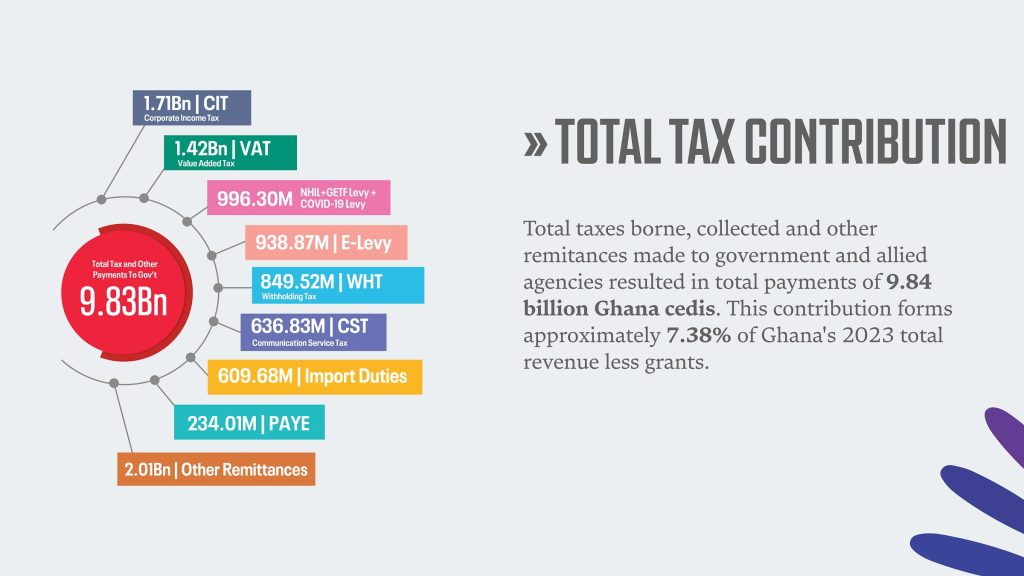
The total contribution of the telecommunications industry by way of taxes, fees, levies, and other payments to government in 2023, has risen by more than 30%. The industry’s overall taxes and other payments to the government in 2023 rose to GHS 9.84 billion, up from GHS 7.32 billion in 2022.
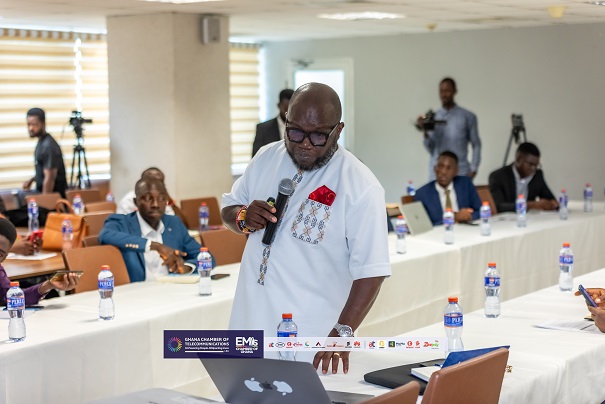
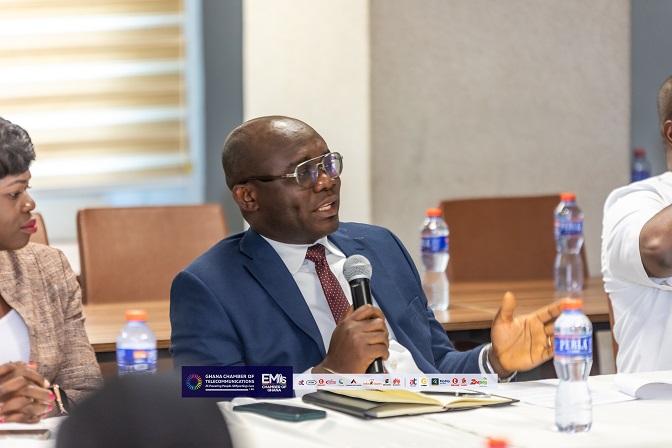
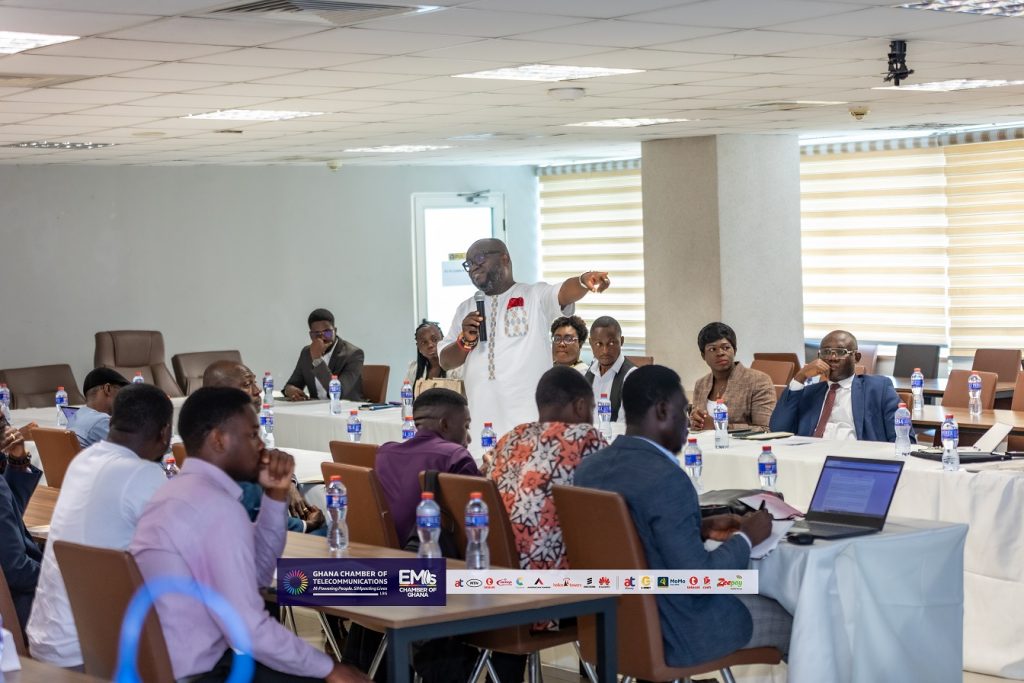
This was made known by the Chief Executive Officer of the Ghana Chamber of Telecommunications (GCT) and the EMIs Chamber of Ghana, Ing. Dr. Kenneth Ashigbey during the launch of the 2023 Mobile Industry Transparency Initiative Report in Accra. The event was well attended by representatives of members of both Chambers, members of the media, and external validators including Mr. William Demitia, a law lecturer at the University of Ghana and Mr. Gordon Dardey, Partner at KPMG.
The annual report, based on data from members of the Ghana Chamber of Telecommunications including AT, MTN, Vodafone, ATC, Helios, Comsys, CSquared, Ericsson, and Huawei, and members of the EMIs Chamber of Ghana including AT Money, G-Money, Mobile Money Limited, Telecel Cash and Zeepay, aims to illustrate the industry’s societal and economic contributions to the country’s development.
During his presentation, Dr. Ing. Kenneth Ashigbey, revealed that the industry’s tax contribution and other payments span various categories, including Corporate Income Tax (CIT), Value Added Tax (VAT), Communication Service Tax (CST), Import Duties and the E-levy, among others. The CIT alone contributed GHS 1.71 billion, while VAT and CST amounted to GHS 1.42 billion and GHS 636.83 million respectively. Additionally, import duties and other remittances formed a substantial part of the total tax payments.
This extensive contribution according to Dr. Ashigbey underscores the industry’s commitment to Ghana’s economic progress. Beyond taxes, the telecom sector is pivotal in driving socio-economic development. With approximately 35 million mobile connections in Ghana, mobile penetration boosts jobs, productivity, and financial inclusion. Mobile money, for instance, has made financial services accessible to the unbanked, particularly benefitting micro, small, and medium-sized enterprises (MSMEs).
The report also highlighted the industry’s contributions to employment, with over 5,800 direct and indirect jobs (not counting the jobs created for mobile money agents and others). The industry also demonstrated a strong commitment to corporate social responsibility, investing millions into social initiatives across the country.
These contributions showcase the ongoing efforts of the telecom industry to align with government revenue goals, support national development, and bridge the digital divide in Ghana.
Methodology
The study employed the Total Contribution methodology, encompassing both tax and non-tax contributions made by GCT members as well as members of the EMIs Chamber to government.
Tax contribution breakdown
Corporate Income Tax (CIT) jumps from GHS 1.35 bn to 1.71bn
The breakdown of tax contributions included Corporate Income Tax (CIT), increased from million to GHS 1.35 billion in 2022 to GHS 1.71 billion, accounting for a significant rise of approximately 26.62%
VAT grows from GHS 930 m toGHS 1.42 bn
Value Added Tax (VAT) surged from GHS 930 million to GHS 1.42 billion, marking it as the second most significant tax category for the industry after Corporate Income Tax (CIT). The report shared by the Chamber demonstrated a notable increase of 52.04 % in VAT in 2023.
Withholding Tax jump to GHS 849.5 bn in 2023
Withholding Tax (WHT) continued to grow in 2023 like it did in 2022. WHT rose from GHS 699.25 million in 2022 to approximately GHS 849.52 in 2023, indicating an increase of about 21%. The continued rise can be attributed to escalating business costs and increased spending, impacting the overall industry value chain.
Communications Service Tax (CST)
Proceeds from the Communications Service Tax (CST) rose by 25% in 2023, from a figure of GHS 509.46 million in 2022 to GHS 636.83 million in 2023. This industry specific tax continues to put a damper on the potential volume growth and affects the affordability of data and voice for the Ghanaian subscriber. We would continue to propose that the rate of CST should be reduced in the near term or scrapped entirely.
GHS 2.01bn in other remittances
The report further highlighted that; other remittances collectively contributed GHS 2.01 billion in 2023. Other Remittances jumped because of surcharge on international inbound call termination (SIIT). Though in USD terms the amount it increased by just 1%, in cedi terms it increased significantly by more.
Import Duties rise from GHS 330.9 m in 2022 to GHS 609.7 in 2023
Import duty collections in 2023 stood at GHS 609.68 million. This rise can be attributed to among other things the significant depreciation of the Ghana Cedi against its major trading partners in 2023. As highlighted in the previous edition of this report, there’s a pressing need to focus efforts on developing and implementing local solutions that alleviate pressure on the local currency. Additionally, we propose that government considers waiving some import duties and taxes on some critical telecommunications equipment that are very important for the country’s development. This should also include components for the provision of solar energy other than the panels that are currently exempt.
Pay as You Earn
The report’s analysis revealed a significant growth in the Pay as You Earn (PAYE) tax line, inching up from GHS 167.2 million in 2022 to GHS 234.01 million in 2023 marking a 39.95% increase. This demonstrates not only the growth in payments made to our direct employees but also the numbers employed within an environment where unemployment is a critical national challenge. This is one of the reasons why the government should consider easing the fiscal burden on the industry to enable it further expand its employment capacity.
E-Levy increases by 93.8%
Electronic Transfer Levy (E-Levy) collected in 2023 stood at GHS 938.87 million, a rise of about 94% from the GHS 484.5% paid by the industry in 2022. The reduction in the E-Levy rate has resulted in some recovery in the volumes and values. But there is the need for further revision in this policy to align it to government’s digital by default strategy.
An Industry Poised for Growth with Tax Reforms
Beyond the numbers highlighted above, the telecom industry has positioned itself as the horse pulling the economic cart up the hill, making invaluable contributions to the digital transformation and connectivity needs of Ghana.
As a driver of economic progress, the telecom industry holds the potential to bring more people into the formal economy, particularly in the informal sector, which is traditionally outside the tax net. Through innovations in mobile money, data services, and digital platforms, telecom companies can facilitate the tracking of transactions and financial flows within the informal sector, creating an opportunity for the government to expand its tax base. By working closely with the telecom industry, the government can develop policies and systems that encourage the registration and taxation of informal businesses, thereby boosting national revenue. This partnership can create a win-win situation, where the informal sector benefits from access to digital financial tools and the government increases its revenue from a broader tax base.
Additionally, the government can play its part in supporting the telecom industry by reconsidering the current taxes (especially industry specific ones) and rates. A more extensive tax base with fair rates could ultimately foster a more sustainable and inclusive economy, as businesses of all sizes would feel more inclined to operate within the formal economy, knowing that their contributions are fairly assessed.
In summary, the telecom industry’s growth is not just about revenue; it is about creating a more inclusive, connected, and robust economy. By enabling greater formalization within the informal sector and fostering digital access, the industry empowers individuals and businesses to participate more actively in the economy. With the government’s support in refining tax policies to encourage compliance and reduce the burden on citizens, Ghana can leverage this synergy to accelerate growth and drive sustainable development across the nation.
Note: All 2022 figures have been revised to reflect the final confirmed figures from members of the Ghana Chamber of Telecommunications and the EMIs Chamber of Ghana.