MTN Group CEO Ralph Mupita ends a 3-day tour of Ghana.

The MTN Group CEO, Mr Ralph Mupita, concluded his 3-day working visit to Ghana on Friday, February 20, 2026.

The event, his first official strategic business engagement in Ghana since the beginning of the year, involved visits to selected government agencies with some MTN management members.

The places visited included the Bank of Ghana, the Ghana Investment Promotion Centre, and the Ministry of Communications, Digital Technology, and Innovation.

His visit sought to advance the company’s digital ambitions and reinforce the group’s commitment to the Ghana market.

Accompanying Mr Mupita were the Board Chairman of MTN Ghana, Dr Ishmael Yamson, MTN Group Senior Vice President for Markets, Mr Ebenezer Twum Asante, CEO, Mr Stephen Blewitt, and Chief Corporate Services and Sustainability Officer, Madam Adwoa Afriyie Wiafi.

Mr Mupita took the opportunity to address the annual workers’ durbar, where staff interacted with him.

Addressing the media to end his visit, Mr Mupita announced plans to invest US$1.1 billion in Ghana over the next three years to strengthen its infrastructure and improve service delivery. He said the accelerated capital expenditure underscores the company’s confidence in its Ghanaian operations. “We are going to accelerate capital investment within the business, US$1.1 billion equivalent over a three-year period to build robust infrastructure. Previously, we invested US$1 billion over five years.

This acceleration demonstrates that Ghana remains a material operation for the group.” During the visit, the Group CEO engaged with key stakeholders across the public sector. Discussions focused on strengthening collaboration and driving investment to support Ghana’s national development, while positioning MTN to continue delivering leading digital solutions for Africa’s progress.

Mr Mupita also met with MTN Ghana’s leadership team and employees, where he reiterated the group’s confidence in the Ghana business and outlined expectations for the year ahead.

These engagements highlighted ongoing investment in network resilience, customer experience, digital innovation, and youth empowerment initiatives.

He also used the opportunity to announce that MTN Ghana has been formally elevated to the status of a major subsidiary within the MTN Group, reflecting its growing strategic importance within the MTN Group.

source : www.myjoyonline.com

MTN to invest $1.1bn in Ghana – It elevates the country to third major subsidiary.

MTN-logo-1068x808-1

The Chief Executive Officer (CEO) of MTN Group, Ralph Mupita, has reaffirmed Ghana’s strategic importance within the multinational telecoms company’s portfolio, announcing plans to invest $1.1 billion in the country over the next three years to accelerate digital and financial inclusion.

The investment, he said, would focus heavily on expanding digital infrastructure, improving quality of service and deepening broadband coverage.

“We already have 5,000 sites where we have telecommunications equipment that connect our customers here in Ghana. Just this year alone, we’re going to add another 500,” he said during an engagement with a cross-section of the media in Accra last Friday.

Ghana’s performance

Mr Mupita, who was answering questions together with the Senior Vice-President of MTN Group, Ebenezer Asante, said Ghana had become one of the group’s most significant operations, citing its strong performance and long-term growth prospects.

He revealed that MTN Ghana would this year be classified as the third major subsidiary of the group, alongside its operations in South Africa and Nigeria.

“Up until the end of last year, we’ve had two major subsidiaries within the context of the MTN Group across all markets serving the 300 million plus customers, South Africa and Nigeria. This year, we are adding Ghana as the third major subsidiary for the whole group, purely as a function of the way it has performed and the potential that we see going forward,” he said.

He also disclosed that MTN Ghana emerged as the best-performing operation across the group’s markets in 2025 under its Million Dollar Challenge which was an internal competition designed to reward excellence in strategic execution, innovation and value creation

Ghana was recognised as the top-performing Operating Company across the entire MTN Group during the competition.

Engagement with stakeholders

As part of his visit to Ghana, Mr Mupita held discussions with the Minister of Communication, Digital Technology and Innovations, Sam George, on improving network performance and exploring the release of 5G spectrum to enhance home and enterprise connectivity.

Additionally, the MTN Group CEO and his team held meetings with the Bank of Ghana and the Ghana Investment Promotion Centre (GIPC).

At the central bank, Mr Mupita said the discussions centred on strengthening collaboration to combat fraud and mobile money scams.

“We’re going to bring artificial intelligence (AI) to improve the ability to deal with scams and fraud that we see particularly in the mobile money market,” Mr Mupita said.

Digital economy

Mr Mupita identified the digital economy and fintech as the two primary engines of growth for MTN Ghana.

On mobile money, he said the company intended to introduce more advanced financial services, while maintaining close engagement with regulators to align with national financial inclusion goals.

Beyond telecoms, he indicated that the group was interested in partnering with the government in areas such as fibre optic expansion, data centres, AI, digital skilling and youth empowerment.

He referenced a recent $2 million commitment by MTN Ghana towards youth coding initiatives, and expressed interest in supporting content creation among young Ghanaians.

“There’s a lot of talent in this country. How do we leverage the digital economy to create a platform for that talent — to build their own creative content they can sell and build businesses around,” he said quizzically.

Drawing parallels with India’s rapid digital transformation over the past decade, Mr Mupita said Ghana had the potential to leapfrog its development ambitions by deploying robust digital infrastructure and inclusive payment systems.

“Nothing stops Ghana from being able to leapfrog its own ambitions by a decade by deploying the digital economy and digital infrastructure going forward,” he said.

Beyond telecoms, he indicated that the group was interested in partnering with the government in areas such as fibre optic expansion, data centres, AI, digital skilling and youth empowerment.

He referenced a recent $2 million commitment by MTN Ghana towards youth coding initiatives, and expressed interest in supporting content creation among young Ghanaians.

“There’s a lot of talent in this country. How do we leverage the digital economy to create a platform for that talent — to build their own creative content they can sell and build businesses around,” he said quizzically.

Drawing parallels with India’s rapid digital transformation over the past decade, Mr Mupita said Ghana had the potential to leapfrog its development ambitions by deploying robust digital infrastructure and inclusive payment systems.

“Nothing stops Ghana from being able to leapfrog its own ambitions by a decade by deploying the digital economy and digital infrastructure going forward,” he said.

Beyond telecoms, he indicated that the group was interested in partnering with the government in areas such as fibre optic expansion, data centres, AI, digital skilling and youth empowerment.

He referenced a recent $2 million commitment by MTN Ghana towards youth coding initiatives, and expressed interest in supporting content creation among young Ghanaians.

“There’s a lot of talent in this country. How do we leverage the digital economy to create a platform for that talent — to build their own creative content they can sell and build businesses around,” he said quizzically.

Drawing parallels with India’s rapid digital transformation over the past decade, Mr Mupita said Ghana had the potential to leapfrog its development ambitions by deploying robust digital infrastructure and inclusive payment systems.

“Nothing stops Ghana from being able to leapfrog its own ambitions by a decade by deploying the digital economy and digital infrastructure going forward,” he said.

Resilience

The Senior Vice-President of MTN Group underscored the resilience of the Ghana operation, noting that it had withstood significant macroeconomic shocks over the past decade, including high inflation, currency depreciation and domestic debt restructuring.

Mr Asante said the business had adopted deliberate financial and operational models to manage external shocks, while continuing to invest in infrastructure and pay dividends.

“Talking about resilience is not just the Ghana situation, but also building resilience based on the geopolitical context within which Ghana will press into the future,” he said.

Mr Asante added that while performance remained strong, transformation was equally critical.

Source : www.graphic.com.gh

Telecel Foundation Inspires Next Generation of Girls in STEM at La Cluster of Schools.

In commemoration of the International Day of Women and Girls in Science, the Telecel Foundation has trained about 100 students on foundational robotics and digital skills at La Cluster of Schools in Accra as part of its flagship Grow Girls in STEM programme.

The interactive and hands-on session, targeted at majority girls, reflects an intentional focus on closing the gender gap in Science, Technology, Engineering, and Mathematics (STEM) from an early age.

Facilitated by the Mingo Foundation, the students, divided into groups, rotated from assembling robotic components to testing their creations to gain firsthand experience in how technology shapes the modern world.

Kyerewaa Gifty, a 16-year-old JHS 3 pupil said “This initiative from Telecel Foundation has been very exciting for us.  It is our first time experiencing something like this, and we are truly proud to be part of it. The training has inspired me to pursue an engineering – related programme in the future. “

Beyond technical skills, the programme also gave the pupils the chance to meet female engineering professionals from Telecel, who shared their personal career journeys in STEM. They answered questions, offered mentorship advice, and provided real-life examples of women thriving in fields historically dominated by men.

Grow Girls in STEM forms part of Telecel Foundation’s Connected Learning pillar, which focuses on equipping young people with practical digital skills to prepare them for the future. 

“Research has shown that many young girls are just as curious about STEM, but they often lose confidence as they grow older,” said Komla Buami, Director of External Affairs at Telecel Foundation. “We believe by introducing more young girls to hands-on experiences and careers in robotics and digital world at this age, we help them stay curious, build confidence, and understand that STEM careers are truly possible for them,”

At the end of the training, each student received a free robotics kit to continue practising the design building skills they had learned. The take-home robotics kit ensures that the learning doesn’t stop at the classroom door and allows the girls to experiment, explore, and build confidence in robotics at their own pace.

Mrs. Angelina Appiah, Headmistress of the La Wireless 5 Primary and JHS welcomed the initiative and commended Telecel Foundation for making STEM training kits available for the students. “We are very grateful for this initiative. The availability of STEM training kits has given our students the opportunity to learn in a more practical way. Our students are usually more interested and engaged during hands- on sessions than in purely theoretical lessons, so the GrowGirlsInSTEM initiative  by Telecel Foundation has been very impactful.”

As the training ended, most of the pupils were excited about the experience and eager to apply their new skills at home with renewed energy and curiosity for STEM. Telecel Foundation said it will continue to champion initiatives that close the gender gap in STEM to give girls equal opportunities to learn, grow, and shape the future.

According to the United Nations (UN), women account for 35 per cent of all STEM graduates and only 22 per cent of STEM jobs are held by women. As societies grapple with widening inequalities, the UN believes the integration of artificial intelligence (AI), social science, Science, Technology, Engineering and Mathematics (STEM) and finance is the four-pillar approach to accelerate inclusive and sustainable development for women.

Telecel Ghana Earns Top Employer Recognition for the 8th Year Running.

Telecel Ghana has been named a Top Employer for the eighth consecutive year.

The certification, awarded by the Top Employers Institute, places the telecom operator among a select group of employers globally that has sustained high standards in workforce practices and people management across areas such as leadership, learning and development, diversity and inclusion, employee wellbeing, and workplace culture.

“For eight consecutive years, our people practices have met global benchmarks. That consistency tells us we are building a workplace where employees feel valued, supported and empowered to grow,” said Ing. Patricia Obo-Nai, CEO of Telecel Ghana.

The Top Employers Institute assesses organisations through a detailed audit of their human resource policies and employee experience, a comprehensive process that covers six key dimensions such as People Strategy, Work Environment, Talent Acquisition, Learning, Diversity, Equity & Inclusion and Wellbeing, among others.

Telecel Ghana’s Human Resources Director, Rachael Appenteng, believes that the recognition validates the telco’s people strategy during a period of change and growth.

“Our ongoing efforts to enhance how people experience the organisation continue to focus on building trust, strengthening capability, and creating inclusive systems that empower our people to bring their best selves to work. This recognition reaffirms our commitment to co‑creating an enabling and supportive work culture with our employees,”Rachael said

In reaction to the bestowed recognition, Telecel Ghana employees affirmed that the collaborative and supportive workplace culture is what sets the company apart.

Torikubu Omar is a Management Information Systems & Data Science Analyst who has worked with Telecel for the last three years. She said “This recognition as Top Employer is well-deserved because it reflects what the company embodies and our daily experience. Working at Telecel Ghana feels like belonging to a community that truly sees and supports you. There’s space to learn, to speak up, and to grow professionally and personally as well.”

For Telecel Ghana, the eighth consecutive Top Employer certification comes at a time when the telco’s is expanding its connectivity footprint and investing significantly in technological infrastructure. Against that backdrop, Telecel Ghana believes that a strong internal workplace culture will remain central to improving performance and trust.

The Top Employers Institute is the global authority for recognising excellence in people management practices, certifying organisations that meet rigorous international standards as employers of choice. In 2025, it certified nearly 2,500 companies across 131 countries and regions, collectively impacting more than 14 million employees worldwide.

“Equip Women & Youth with Skills for Africa’s Free-Trade Market” – Telecel Ghana CEO

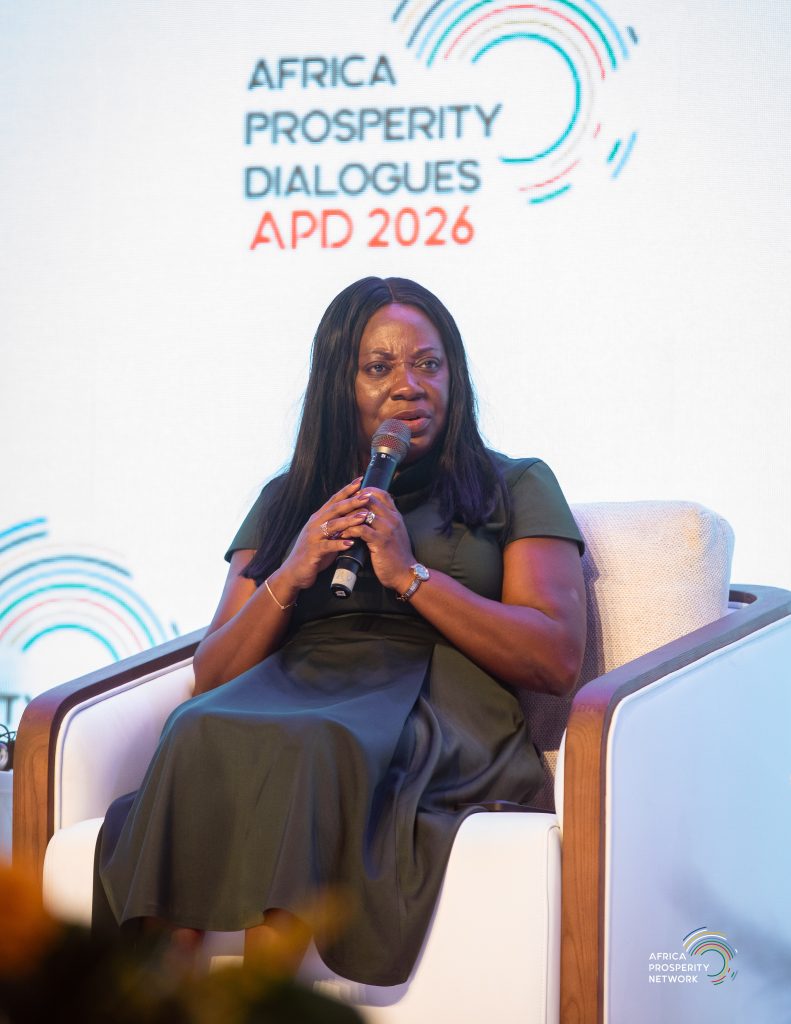
Chief Executive Officer of Telecel Ghana, Ing. Patricia Obo-Nai has called for deliberate investment in practical digital skills and awareness of the African Continental Free Trade Area (AfCFTA) to ensure women and young people in business can benefit meaningfully.

Speaking on the Women Prosperity Dialogue opening panel at the Africa Prosperity Dialogues (APD) 2026 in Accra, under the theme ‘Building an Inclusive AfCFTA,’ Ing. Obo-Nai said that trade can only deliver shared prosperity if more women and young people are equipped to participate. She noted that many women and young traders still lack a clear understanding of how AfCFTA works and how it can support cross-border trade.

“The AfCFTA Protocol on Women and Youth clearly shifts the trade agreement from just opening markets to preparing people to benefit from those markets. But awareness remains a major challenge because many women and young traders don’t yet understand how AfCFTA works or how it can support their businesses.”

Ing. Obo-Nai urged national governments and key players to tackle limitations to maximising the full potential of AfCFTA including navigating multiple SIM rules, mobile money limits, data regulations and compliance requirements, among others.

Looking into the future, Ing. Obo-Nai stressed the need to prepare the next generation of African producers and innovators. She cited the Telecel DigiTech Academy, which introduces practical coding, robotics and design skills at the primary school level, as well as Telecel’s partnership with the government’s One Million Coders Programme. The partnership is set to train 100,000 young people, with a deliberate goal of achieving at least 70 percent female participation.

“If AfCFTA is going to have generational impact, we must think beyond today. How are we preparing the younger generation to take advantage of the opportunities today? At Telecel, we are intentionally investing in early-stage skills development for the young ones who are coming up. I think the private sector should be deliberate about where we are investing our efforts to build the future we want to see.”

Ing. Obo-Nai said digital literacy and financial skills have become essential trade tools, particularly for women operating in the informal sector. She highlighted the work of the Telecel Foundation, which provides digital and financial skills training to women in underserved communities, with a focus on the agribusiness value chain.

Sharing the example of the Telecel Women in Business proposition which provides access to finance, connectivity, reach and visibility for women-led business, Ing. Obo-Nai tasked the private sector to design solutions that meet women and young traders where they are.

She urged policymakers to embed trade, digital and financial education into national AfCFTA strategies, adding that inclusion of women and youth should be treated as a core requirement rather than an afterthought.

The session followed a special opening address by Vice-President of Ghana, Her Excellency Naana Jane Opoku-Agyemang, who called on African governments to rethink how borders are managed to promote trade, mobility and shared prosperity. She described AfCFTA as an opportunity for Africa to move from dependency and fragmentation toward self-reliance and integration.

Other members of the high-level panel, including former African Union Deputy Chairperson Monique Nsanzabaganwa, Africa Business Council President Dr. Amany Asfour, Ghana’s Former Ambassador to Brazil H.E. Prof Abena Busia Professor Emerita,  and Dr. Joy Kategekwa of the African Development Bank Group, agreed that addressing barriers to skills, finance and market access is critical to making Africa’s single market equitable and participatory. The panel session was moderated by 

The Africa Prosperity Dialogues 2026, held at the Accra International Conference Centre, brought together policymakers, business leaders and development partners to advance practical solutions for empowering SMEs, women and youth within Africa’s emerging single market.

The advisory team of the Pan African AI Summit meets Communications Minister Sam George.

A delegation from the Pan African AI Summit (PAAIS) and the management of the Digital Youth Village (DYV) of the University of Ghana have met with Samuel Nartey George (MP), Minister for Communication, Digital Technology, and Innovations, to advance Ghana’s position as Africa’s ethical AI hub.

The meeting focused on the upcoming 2nd Pan African AI & Innovation Summit, scheduled for September 22–23, 2026.

This year’s summit will take place in strategic partnership with the Digital Youth Village to leverage AI for Ghana’s development.

Minister George, who also serves as Patron of the DYV, emphasised the need to empower the youth using local data to develop AI solutions that address local challenges and pledged his support for the collaboration.

The delegation highlighted the PAAIS-DYV partnership as a “match made in heaven,” bridging academia and industry to create market-ready AI solutions.

Both parties agreed to continue working closely to ensure the summit promotes innovation, ethical AI practices, and practical solutions that benefit Ghana and the wider African continent.

Source : www.myjoyonline.com

Huawei, National School of Government partner to boost public sector digital skills.

Information and communication technology company Huawei South Africa and the National School of Government have signed a memorandum of understanding (MoU) to strengthen digital skills development within the public sector and accelerate government’s digital transformation journey.

The two-year agreement will see Huawei support the National School of Government in integrating selected Huaweitechnology courses into the existing National School of Government U-Learning ecosystem.

This will promote continuous professional development and provide public servants with access to curated courses on key technologies and global best practices.

The collaboration will also equip public- sector employees with the skills required to operate effectively in a rapidly evolving technological environment and bolster the National School of Government’s mandate of building relevant and forward-looking digital competencies.

AI, cybersecurity, networking, storage, cloud and digital government are key focus areas to ensure that public servants gain practical, future-focused skills that align with South Africa’s evolving digital landscape.

“As the primary provider of training and educational material for government employees, the National School of Government aims to expand its offering to include up-to-date technology learning pathways,” says National School of Government acting principal Phindile Mkwanazi.

Huawei is working with the National School of Government to help thousands of public servants build confidence in using AI, cloud and cybersecurity tools in their day-to-day roles, adds Huawei South Africa enterprise marketing and solutions director York Ning.

“Digital government depends on people as much as it depends on infrastructure. Our goal is to combine Huawei’s global technology expertise with the National School of Government’s deep understanding of the public service, so that digital skills become part of every official’s professional development journey.

“This partnership is about practical impact.”

The parties will co-develop learning paths aligned to the realities of public administration, from managing critical data securely to designing citizen-centric digital services, which will lay the foundations for a more capable, responsive and future-ready state, he adds.

“The National School of Government has forged partnerships locally and internationally to diversify our programmes and strived to be responsive to public sector needs.

“Our collaboration with Huawei provides us with the opportunity to empower our public sector employees to embrace digital transformation and drive positive change in governance and service delivery,” Mkwanazi concludes. 

source : www.engineeringnews.co.za

MTN supporting jobless youth with fresh ICT learnerships.

The charitable arm of South African telecom MTN, the MTN Foundation, has launched a new 12-month ICT learnership programme for young people in the country. 

In partnership with independent UK telecom tower company Helios Towers and the development arm of business consulting firm Datacomb, the learnership is aimed at addressing youth unemployment in South Africa by upskilling students towards specialised ICT roles. 

Focus areas of the year-long learnership include modern skills necessary to compete in global digital markets and drive digital transformation. Participants will receive both an academic grounding in ICT skills and practical workplace exposure. 

“Beyond creating a direct route into employment, the learnership forms part of the MTN SA Foundation’s broader commitment to developing specialised digital talent across high‑demand ICT domains,” the Foundation said in an announcement. 

“These include software development, cybersecurity, data science and analytics, artificial intelligence and Machine Learning, and Network and Systems Administration.” 

MTN’s Digital Skills four Digital Jobs initiative, which this learnership falls under, has upskilled more than 3 746 young people and helped them develop ICT and digital acummen. It says this learnership is the next step, ensuring that young people are able to secure employment by gaining experience.

“This learnership is a testament to what can be achieved when committed partners work together with purpose. South Africa needs pathways that translate potential into opportunity, and we are proud to help young people step confidently into the digital future,” enthused Arthur Mukhuvha, MTN SA’s General Manager: MTN Foundation.

“Our commitment is to ensure that every programme we deliver contributes to national development, strengthens communities and supports a more inclusive, skilled and competitive South Africa.”

Source :www.htxt.co.za

FAAN, MTN unveil free WiFi at airports

MTN-logo-1068x808-1

The Federal Airports Authority of Nigeria (FAAN) and MTN Nigeria have launched free WiFi services at the Murtala Muhammed International Airport (MMIA) Terminal 2, Lagos, and the Nnamdi Azikiwe International Airport, Abuja. 

The internet service was launched at MMIA Terminal 2, Lagos by the Managing Director of FAAN, Mrs Olubunmi Kuku who was represented by the Director of Airport Operations, Capt. Abdullahi Mahmood. 

Also present was the Chief Enterprise Business Officer of MTN Nigeria, Lynda Saint-Nwafor, who represented the Chief Executive Officer, Mr Karl Toriola.

The WiFi service, which is free for passengers and airport users, will be extended to the MMIA temporary terminal and other international airports across the country within the next three months. 

Mrs. Kuku in a statement by the Director of Public Affairs and Consumer Protection of FAAN, Henry Agbebire described the launch as a milestone for FAAN and a benchmark for digital infrastructure and passenger experience at Nigerian airports.

She noted that the partnership with MTN Nigeria demonstrates how effective Public-Private Partnership (PPP) alignment can modernise infrastructure and strengthen Nigeria’s digital economy.

She added that the initiative aligns with the Renewed Hope Agenda of Bola Ahmed Tinubu and the transformation drive of the Minister of Aviation and Aerospace Development, Festus Keyamo. 

The representative of MTN Nigeria, Saint-Nwafor assured that the service would be reliable, secure, and efficient for all users. 

She commended the FAAN management team for its collaboration and foresight in ensuring the successful completion of the project.

source : www.thenationonlineng.net

Ericsson invests $1M in University of Toronto partnership to advance AI-powered mobile networks.

Ericsson and the University of Toronto have launched a three-year strategic partnership backed by a $1 million investment from Ericsson to accelerate research and development in AI-powered mobile communications technologies.

The agreement formalizes collaboration around next-generation wireless infrastructure, applied AI, and graduate talent development. The deal, marked by a signing ceremony at the University of Toronto, strengthens joint research into AI-powered mobile networks tied to 5G and emerging 6G technologies, while reinforcing Canada’s R&D ecosystem.

“This partnership represents a strategic investment in Canada’s innovation ecosystem—advancing world-class research, developing highly skilled talent, and strengthening the foundation for secure and reliable next-generation wireless technologies,” says Nishant Grover, President of Ericsson Canada. “As 5G continues to transform industries and societies, and as we look ahead to 6G, Ericsson and the University of Toronto are working together to help shape the future of connectivity in Canada and globally.”

Formalizing applied AI research

Daniel Giovannini, Associate Director of MScAC Partnerships at the University of Toronto, posted on LinkedIn that the launch marked “a significant milestone in our ongoing collaboration.”

He wrote: “The University of Toronto and Ericsson are officially launching their strategic partnership today, marking a significant milestone in our ongoing collaboration. The three-year agreement, backed by $1M from Ericsson, opens new doors for collaborative research opportunities in communications technology.”

Giovannini added that through the Master of Science in Applied Computing program, the university had worked with Ericsson since 2024 on applied research designed to bridge academic innovation and industry challenges. He continued: “Our graduate students and faculty advisors have delivered impressive results: building multi-modal AI systems for automated failure detection in radio integration testing, and creating agentic intelligence platforms that unlock Canada’s national radio data through natural language interfaces.”

He described the internships as demonstrating “what’s possible when graduate talent tackles real telecommunications problems,” adding that MScAC collaborations had helped strengthen the broader university-wide research partnership.

The new framework formalizes that work at an institutional level following what Ericsson describes as a formal partner selection process.

Professor Leah Cowen, Vice President, Research & Innovation at the University of Toronto, says: “We’re very proud that U of T has been successful in being selected in this process. We have a long and positive track record of catalyzing next generation technology with Ericsson, and with these types of industrial collaborations in general. 

“It’s a win-win proposition, enabling us to apply the expertise of our researchers, enhance the skills of our students, and elevate the global competitiveness of a major global technology innovator with major R&D operations right here in our own backyard. This strategic partnership is a great opportunity to take things to the next level.”

Industry-linked projects and talent strategy

The partnership includes a strategy to solve real-world research problems through industry-linked projects and to promote research excellence in mobile communications, mobile computing, and machine learning solutions. It also outlines talent development initiatives intended to equip students with skills aligned to current industry needs.

“Ontario is proudly home to a robust sector of researchers whose ground-breaking discoveries cement the province as a global innovator in technology,” says Nolan Quinn, Minister of Colleges, Universities, Research Excellence and Security. “Our government proudly supports this partnership between Ericsson and the University of Toronto, which will equip our researchers with the cutting-edge tools they need to design, drive and lead the future of mobile communications technology.”

“This partnership will foster cutting-edge research, develop world-class talent, and support the creation of secure and reliable technologies for the future of wireless communications,” says Marcos Cavaletti, Head of Ericsson’s Ottawa site. “As 5G continues to drive profound changes across industries and societies, Ericsson and the University of Toronto are committed to tackling these challenges together.”

The agreement reflects a wider shift in higher education, where applied AI research and graduate internships are increasingly embedded in multi-year industry partnerships rather than short-term collaboration.

Source : www.edtechinnovationhub.com