
Telecom Standards Reform: Telcos push back on blanket enforcement.

The Ghana Chamber of Telecommunications has signalled that Ghana’s tough telecom quality standards must be matched with policy support, warning that compliance cannot be divorced from commercial realities in a capital-intensive industry.

According to the Chamber, while operators are committed to delivering better network performance, the cost of meeting stricter obligations in an already challenging operating environment raises difficult questions about sustainability and long-term investment returns.

This follows an announcement by the regulator, the National Communications Authority, to enforce a 1% call drop cap, higher data speed thresholds, and expanded coverage requirements under revised Quality of Service benchmarks that take immediate effect.

Speaking to Citi Business News, Chief Executive of the Chamber, Sylvia Owusu-Ankomah, made clear the industry is not resisting reform but is seeking balance.

“So as a chamber, we welcome the directives from the National Communications Authority. The objective to ensure that Ghanaians have reliable and high-quality telecom services is one that we embrace,” she said.

But she cautioned that “it’s really counterintuitive if the approach of the NCA is to just have new KPIs or measures, which are licensed conditions for our members to meet,” without addressing structural bottlenecks.

The sector, she stressed, operates in a “high capex environment,” and investments must generate returns. “When we have those investments made, we need to ensure that they are being utilised to make a reasonable return on investments for our shareholders.”

Beyond regulatory metrics, operators are grappling with rising infrastructure risks. “Cumulatively since 2025 alone… we spend over 90 million cedis just on repairs,” she disclosed, citing more than 5,000 fibre cuts in a single year.

“You cannot then penalise a network operator when they build the infrastructure, and yet that same infrastructure has been sliced up.”

Owusu-Ankomah also pointed to a 62% data usage gap despite 95% network coverage, questioning whether blanket rollout obligations — particularly in commercially unviable areas — should instead be supported through Ghana’s universal access framework.

“We need to look at all these things within the policy framework that Ghana has,” she argued.

For the industry, the message is clear: higher standards are welcome — but without coordinated policy action, the cost of compliance could reshape the economics of Ghana’s telecom market.

Source: www.citinewsroom.com

Ericsson launches AI-ready radios, antennas, and AI RAN software to power future networks.

  • Ericsson is introducing an AI-first approach to building networks with the latest RAN hardware, engineered to meet AI-driven network demands, delivering greater uplink performance, improved TCO, and enhanced energy efficiency
  • Ericsson’s RAN software enhancements include AI-managed Beamforming, AI-powered Outdoor Positioning, and a best-in-class AI model for instant coverage prediction
  • New AI‑ready radios, featuring Ericsson Silicon with neural network accelerators, boost on‑site AI inference capabilities in Massive MIMO radios, enabling real‑time optimization and full stack, fully distributed AI

The accelerating adoption of AI-powered devices around the world underlines the importance of mobile networks that can seamlessly manage the new performance requirements. To meet these evolving demands – driven by multi-modal artificial intelligence (AI) and augmented reality (AR) use cases requiring far greater uplink performance – Ericsson (NASDAQ: ERIC) is introducing a new suite of radio, antenna, and AI RAN software solutions ahead of Mobile World Congress (MWC) 2026 in Barcelona.

The new products will enable communications service providers (CSPs) to monetize AI devices with differentiated connectivity and launch new services. This new lineup includes new AI-ready radios and Ericsson Silicon featuring neural network accelerators that boost AI inference capabilities in Massive MIMO radios. The neural network accelerators are programmable matrix cores that are integrated in the Ericsson Many-Core Architecture and optimized for AI and Machine Learning.

The new portfolio suite is structured around three pillars:

1. Ten AI-ready radios: 

Next‑generation Massive MIMO and remote radios engineered for higher downlink efficiency and uplink performance breakthroughs. This includes:

  • Expanded performance breakthroughs including: High-power FDD M-MIMO with AIR 3286 and AIR 3211 combining M-MIMO on both TDD and FDD and an expanded 8-receiver portfolio enabled by Radio 4891 and Radio 4458, which will improve uplink performance to support AI and AR applications. 
  • High‑power triple‑band radios: Radio 4488 and Radio 4464, designed for network consolidation and RAN sharing. 
  • TDD M‑MIMO advancements including AIR 3267 with 600 MHz instantaneous bandwidth in just 13 kg and AIR 6492 with higher power (480 W) and 256 antenna elements for next-level performance.

2. RAN software: 

A new suite of AI-powered functionalities to improve efficiency and reliability, while meeting the latency requirements demanded by AI applications 

  • The new AI-powered functionalities consist of AI-managed Beamforming, AI-powered Outdoor Positioning, and a state-of-the-art AI model for instant coverage prediction, which complements Ericsson’s market-leading AI-native Link Adaptation software 
  • To support CSPs meeting the bounded latency and reliable uplink speeds required by AI and AR applications, we have added tools like the new Latency Prioritized Scheduler and Low Latency Mobility, which deliver up to seven times faster response times and a better and more reliable connection. 

Together, these AI software enhancements increase efficiency and intelligence and enable new service offerings that were previously not possible.

3. Five high-performing antennas:

Interleaved and passive antennas that enhance spectrum utilisation and simplify site design. The new energy-efficient passive antennas, built on the trio net design, maximise uplink performance, carrier aggregation, and spectral efficiency. The expanded Interleaved AIR portfolio now adds three new configurations to the two already launched, supporting full flexibility for TDD and FDD M‑MIMO deployments.

Mårten Lerner, Head of Networks Strategy and Product Management, Ericsson, says: “As AI transforms traffic patterns and raises consumer expectations, networks must provide precise performance where and when it’s needed most. At Ericsson, we’re committed to delivering that needed performance. We are also embedding AI solutions across our full portfolio, introducing AI RAN software solutions that deliver revolutionary improvements in spectral efficiency. We are now taking the final step to full AI enablement across our portfolio by introducing neural network accelerators in our leading Massive MIMO portfolio.”

Ericsson’s latest portfolio additions integrate AI more deeply into the RAN, enabling real-time optimisation of performance and energy usage. With these AI-powered capabilities and a robust hardware lineup, CSPs can deliver consistent and differentiated user experiences. The portfolio is designed to capitalise on the growing demand for AI-enabled devices by providing superior uplink performance and service differentiation. Additionally, AI-driven efficiency across both hardware and software helps lower TCO and accelerates time to value.

Iain Milligan, Network Development & Infrastructure Director, Vodafone Three, says: “By bringing the Vodafone and Three networks together on a single, high-performing 5G infrastructure powered by Ericsson’s RAN, Vodafone Three is ushering in a new era of connectivity – unlocking next-generation technology and paving the way for AI-driven innovation.” We’re embedding AI throughout our network, reducing operational complexity, boosting energy efficiency, and delivering faster, more reliable connectivity for our customers in every corner of the country.”

Source : www.ericsson.com

MTN Foundation, BOI unveil N1bn fund for women entrepreneurs.

MTN-logo-1068x808-1

The MTN Foundation and the Bank of Industry have signed a memorandum of understanding to establish a N1bn Matching Fund to expand access to finance and capacity building for women-led micro enterprises across the country.

The institutions said that the fund, under the Y’ellopreneur 3.0 programme, would operate as a pilot to reach women running viable businesses who remain excluded from formal credit due to collateral and documentation requirements.

Speaking at the signing ceremony in Lagos, the Executive Director of MTN Foundation, Odunayo Sanya, said that the renewed partnership builds on earlier pilot phases that helped both institutions refine their approach and scale impact in women-led businesses.

Sanya said the new phase seeks to deliver faster and more measurable outcomes for women-owned enterprises. She explained that the foundation aims to build capacity for 30,000 female-led businesses by 2030, up from nearly 6,000 reached so far, while unlocking access to capital for 10,000 women-owned enterprises through the renewed partnership with BOI.

“This partnership will deepen support for women entrepreneurs, improve business survival rates, and attract additional partners to scale funding for the segment,” Sanya stated.

She added that the initiative would combine training, mentorship, and financing and serve as a blueprint for broader public–private cooperation in unlocking new pools of capital for enterprise development and inclusive growth in Nigeria.

In his speech, the Managing Director and Chief Executive Officer of BOI, Dr Olasupo Olusi, stated that the initiative goes beyond the continuation of an existing collaboration and targets women at the base of the economic pyramid.

Olusi explained that the intervention focuses on women who operate viable businesses but remain excluded from structured finance.

“Across Nigeria, women sustain a large share of micro-businesses in the markets and communities, while processing and providing services that support household income and local economic activity,” he said.

According to Olusi, despite their contributions, many women cannot access affordable capital because traditional lending models demand documentation, collateral, and financial histories that do not reflect how their businesses operate.

He noted that the partnership aims to bridge that financing gap through a model tailored to women entrepreneurs who need funding the most.

“This partnership is designed to specifically bridge that gap. The programme is structured as a pilot to test, learn and refine the model that works for women entrepreneurs who need financing the most, while building a framework that can be sustainably expanded over time,” he said.

Olusi explained that beyond credit provision, the programme embeds capacity building, business development support, and mentorship. He disclosed that the partners plan to train about 1,000 women entrepreneurs in record-keeping, growth management, and competitiveness.

He stressed that an expanding opportunity at the microenterprise level strengthens productivity, stabilises income, and contributes to broader economic resilience.

“BOI remains committed to working closely with MTN Foundation and all stakeholders to ensure the effective implementation of this programme,” he stated.

“Our focus will be on transparency, on sustainability and measuring outcomes so the programme delivers real value and provides a model that can be replicated under other programmes.”

Source : www.apanews.net

Ericsson and the Nigerian Government Launch Four-Month Tech Hackathon to Upskill Young Innovators.

The Hackathon is one of the key operationalisation phases of the Ericsson and the Federal Government of Nigeria MoU to collaborate on digitally upskilling Nigerians, policymakers and public sector decision-makers in modern technologies that are transforming industries and daily life.

Ericsson in partnership with the Federal Government of Nigeria, represented by the Office of the Vice President, Tech Revolution Africa and ecosystem partners, will launch a four-month innovation hackathon for young talents, startups, and university students at the Banquet Hall, Presidential Villa. The programme combines hands-on mentoring, an eight-week acceleration, and practical learning across priority technologies including 5G, IoT, Cloud, AI, and sustainable technologies. Participants will develop solutions in digital inclusion, smart cities, agritech, and sustainability, with outstanding teams gaining access to accelerators and further incubation opportunities.

The Hackathon is one of the key operationalisation phases of the Ericsson and the Federal Government of Nigeria MoU to collaborate on digitally upskilling Nigerians, policymakers and public sector decision makers in modern technologies that are transforming industries and daily life. To support the country’s digital transformation agenda, an Ericsson Educate program focusing on policy makers in ICT will be launched as part of the initial rollout.

“At Ericsson, we are proud to partner with the Federal Government of Nigeria to support the country’s digital transformation journey. Through initiatives focused on skills development, alongside our Ericsson Educate programme for policymakers and regulators, we aim to contribute to a stronger digital ecosystem. By bringing together talent development and informed policy dialogue, we support efforts to address connectivity gaps and enable inclusive, sustainable growth.”

– Majda Lahlou Kassi, Head, Ericsson West and Southern Africa

The Hackathon is open to innovators across Nigeria, including university students, startups, and emerging young talent. Eligible participants are invited to apply via the official registration platform with registrations open from 11 February 2026 to 10 March 2026.

Source :www.techafricanews.com

GIFEC marks one year of resetting digital access and inclusion across Ghana.

The Ghana Investment Fund for Electronic Communications (GIFEC), under the leadership of Mr. Sofo Tanko Rashid-Computer, has marked one year of measurable progress in its mandate to bridge the digital divide and expand access to electronic communications in underserved and unserved communities across the country.

Over the past year, the Fund has implemented a series of strategic interventions aimed at strengthening rural connectivity, promoting digital inclusion, and supporting public institutions with reliable ICT infrastructure.

•Expanding Rural Telephony Coverage

As part of efforts to enhance rural connectivity, GIFEC conducted a comprehensive status assessment of 1,542 existing Rural Telephony Project (RTP) sites to evaluate infrastructure conditions and service quality.

Additionally, technical site surveys were carried out in 371 communities to determine their suitability for new telecommunication deployments. Network simulations for these communities are currently ongoing to guide the rollout of additional sites.

Mast erection has commenced in selected areas, while land acquisition processes are underway in 55 communities within the Volta Region to facilitate further expansion.

GIFEC says more communities are being earmarked for technical surveys, reinforcing its commitment to extending mobile network coverage to underserved populations nationwide.

In collaboration with the Ministry of Communication, Digital Technology and Innovations, GIFEC successfully organized the National Girls in ICT Day Climax Celebration at the University of Health and Allied Sciences in Ho. The event saw 1,000 girls receive hands-on ICT training, with over 100 participants awarded laptops, certificates, and cash prizes.

A similar large-scale training programme was held in the Upper West Region, where another 1,000 girls benefited from digital skills training and received awards.

The initiative is aimed at encouraging more girls to pursue careers in ICT and closing the gender gap in digital skills and access to technology.

•Empowering Women Through Digital Skills

Women empowerment has also featured prominently in GIFEC’s digital inclusion agenda. In Tamale, the Fund launched a two-week ICT Training of Trainers programme for 30 women in ICT, in partnership with the International Telecommunication Union (ITU) and Cisco.

Beyond this, free digital skills training was extended to female small business owners in Jasikan, Nkwanta South, and Krachi West in the Oti Region. 

The programmes are designed to enhance productivity, improve market access, and strengthen business sustainability through practical ICT knowledge.

•Institutional and School Connectivity Support

Within the year under review, GIFEC provided connectivity support to several public institutions, including the Narcotics Control Commission, Ghana Army Recruit Training Centre, National Road Safety Authority, National Sports Authority, National Hajj Board, and the Students Loan Trust Fund.

The Fund also connected a number of basic and secondary schools under its Schools Connectivity Project, improving access to digital learning resources and online educational platforms.

•Recognition and Awards

GIFEC’s performance over the past year has attracted both local and international recognition. The Fund received multiple awards, including Top Leader Recognition, Championing Inclusive Digital Transformation – Fund of the Year, and Top Transformational Leaders Recognition.

•Sustaining the Momentum

As the new year begins, GIFEC says it remains focused on scaling rural connectivity, strengthening digital inclusion for women and girls, and ensuring that investments in ICT infrastructure translate into improved livelihoods, enhanced access to services, and inclusive digital participation across Ghana.

Source : https://www.myjoyonline.com

MTN and Huawei Jointly Complete World’s First Large-Scale Deployment of the Alpha Antenna, Leading Africa’s AI-Powered Network.

Africa leading operator MTN, in collaboration with Huawei, successfully completed the world’s first large-scale deployment of the Alpha Antenna in Ghana. This milestone represents a substantial enhancement in network performance, with the transition to intelligent and AI-driven innovation establishing a new benchmark for the evolution toward autonomous driving networks in Africa and globally. This deployment has validated groundbreaking performance improvements and operational efficiencies. Post-deployment tests recorded a rise in regional traffic by 6.8%, while improving operations and maintenance efficiency by a factor of 30x.

Confronting persistent network operations and maintenance challenges of manual dependency, slow adaptation, and inconsistent accuracy, MTN has unlocked a new paradigm through the Alpha Antenna deployment. The solution’s integrated AISU (Antenna Information Sensor Unit) enables fully automated, real-time, and precise retrieval of antenna parameters, eliminating manual site visits. The AIMU (Array Information Mapping Unit) ensures real-time and exact visualization of network topology, eradicating configuration errors. Furthermore, it supports remote adjustment of multi-dimensional beams, allowing the network to dynamically adapt coverage and capacity to real-time demands, collapsing optimization cycles from weeks to minutes while delivering a consistently superior user experience.

The Alpha antenna is driving a paradigm shift in network operations by endowing networks with closed-loop capabilities for “real-time retrieval, precise control, and dynamic optimization”—transitioning from passive, reactive manual intervention to a proactive, AI-powered model. This transition provides a crucial “digital foundation” for MTN in building a high-level Autonomous Driving Network (ADN), making self-optimization and autonomous evolution of the network a reality.

MTN Ghana states that the Alpha Antenna solution represents a pivotal step toward the full digital transformation of network infrastructure. It not only significantly reduces operational complexity and costs but, more importantly, empowers the network with real-time retrieval and rapid-response capabilities. This successful collaboration with Huawei has laid a solid foundation for future AI-driven intelligent networks, injecting fresh momentum into Africa’s digital transformation.

Source : www.huawei.com

MTN Ghana Foundation mobilises 525 units of blood from Northern SHSs.

MTN-logo-1068x808-1

The MTN Ghana Foundation has mobilised 525 units of blood from three Senior High Schools (SHSs) in the Northern Region as part of this year’s Save A Life Campaign to supply blood banks in the region.

At Tamale SHS, a total of 273 units of blood were mobilised, while 200 units and 52 units were mobilised at Tamale Islamic Science SHS and Bimbilla SHS, respectively.

The blood donation exercise, which took place at the respective schools on Friday, February 14 formed part of the MTN Ghana Foundation’s commitment to mobilising voluntary blood donations to strengthen healthcare delivery across the country.

Speaking during the exercise in Tamale, Richard Asemane, the Northern Regional Territory Sales Controller of MTN Ghana, said the Foundation’s target was to collect 640 pints of blood in the region and 7,000 pints nationwide as part of the campaign.

He noted that over the years, blood mobilised through the initiative had been distributed to health facilities, including the Tamale Teaching Hospital (TTH), Korle-Bu Teaching Hospital, and Ridge Hospital.

Mr Asemane added that this year’s exercise also formed part of MTN Ghana’s 30th anniversary activities, aimed at supporting national development initiatives, including health interventions.

Meanwhile, Ziblim Adam, Chief Blood Donor Organiser at TTH, said voluntary blood donations in the Northern Sector remained low, with the facility meeting only about 30% of its annual demand through voluntary donors.

He explained that rare blood groups, particularly negative types, were difficult to mobilise, noting that in every hundred donations, only about 5% might be negative, making it challenging to meet urgent blood group-related needs.

Mr Adam said the timing of the donation exercise was significant because it preceded the Ramadan fasting period, during which voluntary donations usually decline.

He also addressed misconceptions surrounding blood donation, dismissing claims that donated blood was sold or used for rituals.

“They pay what we call the processing fee. The charges cover laboratory screening, testing and equipment costs, and not payment for the blood itself,” he explained.

Mr Adam urged the public to cultivate the habit of voluntary blood donation, stressing that “One unit of blood can save up to three lives, especially babies.”

Source : www.citinewsroom.com

MTN Ghana Connects With More Than 1,500 Students At The 2026 Success Africa Summit In Accra.

MTN-logo-1068x808-1

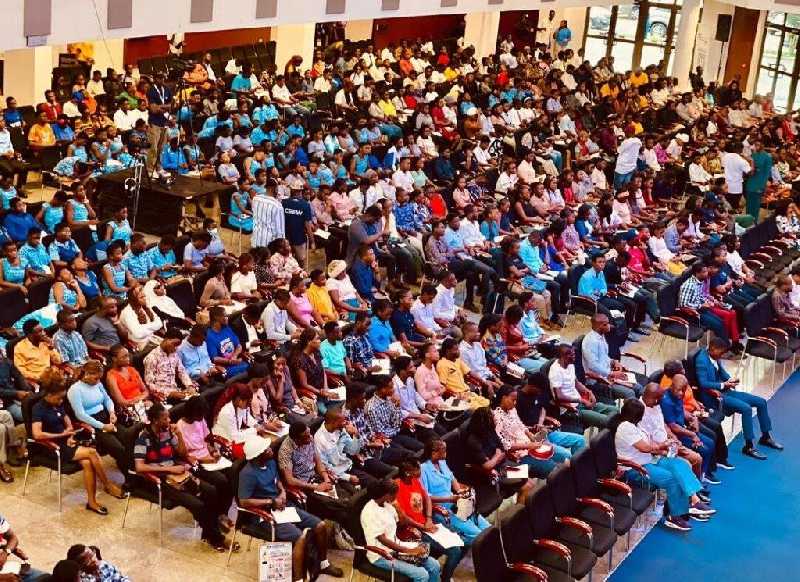
Demonstrating its dedication to customer engagement, youth empowerment, digital education and financial inclusion, MTN Ghana partnered and participated in the 2026 Success Africa Summit held at the UPSA Auditorium in Accra on February 7, 2026.

The summit, which serves as a vital forum for mentoring and inspiring young individuals to become visionary leaders with purpose, brought together over 1,500 students from various second cycle and tertiary institutions in Accra, providing a platform for learning, inspiration and engagement with industry leaders.

MTN Ghana’s participation in the summit reinforces its commitment to empowering young people with the knowledge and tools required to thrive in a rapidly evolving digital world.

During the summit, Tony Boateng, Manager for Fintech Distribution Commercial and Operations at MobileMoney LTD, took the opportunity to educate students on digital fraud awareness and the importance of using secure digital payment platforms for responsible financial management. He emphasised how these practices support the broader development of a resilient digital financial ecosystem. His presentation covered common fraud typologies, highlighted emerging cyber threats within the digital financial landscape, and offered practical guidance to help students protect themselves in the digital space.

Dzudzorfe Hadzor, Coordinator for Data Devices & Home at MTN Ghana, also engaged the students on data usage and introduced them to the affordable bundle offers designed to support their academic and digital needs.

MTN attendees interacted with the students and responded to their queries. The students expressed appreciation to MTN, recognising the effort the company is making to support students.

With MTN on board, the Success Africa Summit will continue its journey to more regions in the coming weeks, broadening its reach and positively impacting even more students across the country.

Source : www.businessghana.com

Digital infrastructure: MTN extends its services to African telecom operators.

MTN-logo-1068x808-1

MTN, Africa’s leading operator in terms of subscribers, had 301.3 million customers at the end of September 2025, including 165.8 million internet users. Despite this solid base, the group is seeking to adapt to market developments in a context of accelerated digital transformation.

Bayobab (MTN Digital Infrastructure), the digital infrastructure arm of the South African MTN Group, announced a partnership with Mozambican telecom operator TMCEL on Tuesday, February 10. As part of this agreement, Bayobab will make its digital platforms available to the incumbent operator to enhance its international communications services. This initiative aligns with MTN’s ambition to evolve from a telecommunications-centric model to that of a technology company.

In a press release, Bayobab stated that TMCEL will leverage its global communications platforms, including international voice, international roaming, and IPX services, to offer its residential and business customers advanced, scalable, and high-quality services. The partnership aims to enhance the international calling experience and ensure smoother cross-border connectivity.

The company emphasizes that this launch marks an important step in its partnership strategy, which consists of supporting African operators with the same level of expertise and capacity as that deployed across its entire international footprint.

“This partnership with TMCEL is a strong example of how MTN Digital Infrastructure is expanding its reach and capabilities to support African operators ,” said Mazen Mroué (pictured), Managing Director of MTN Group Digital Infrastructure.

This initiative comes at a time when MTN, like other African telecom operators, is seeking to diversify its activities beyond traditional services. This transition is all the more strategic as digital transformation accelerates across the continent, driven by evolving usage patterns, the rise of digital services, and the emergence of new business expectations, including in the telecommunications sector.

Bayobab, a pillar of MTN’s diversification strategy

MTN has chosen to empower Bayobab by separating it from its traditional telecom business. It is with this in mind that the entity abandoned its former name, MTN GlobalConnect, in May 2023. Bayobab now aims to position itself as a world-class, open-access, Africa-centric digital infrastructure platform, serving not only the MTN Group but also third-party clients.

To achieve this goal, the company relies on one of the continent’s most extensive fiber optic networks, boasting 127,000 km of open-access fiber, a presence in 54 African countries, access to 24 submarine cables and 235 landing stations.

In parallel, Bayobab is developing high-speed, low-latency satellite solutions to bridge the digital divide in rural and isolated areas. The company is also investing in data centers to strengthen its position in colocation and cloud services for hyperscalers, businesses, and African governments.

Beyond physical infrastructure, Bayobab also offers next-generation communication platforms – voice, messaging, roaming, IPX and IoT services – designed to support business performance.

Fintech, AI: MTN is multiplying its growth levers

This diversification strategy is also reflected in other structuring initiatives. On February 5, 2026, MTN announced its intention to acquire IHS Towers, one of the leading telecom tower providers in Africa, in which it already holds a 25% stake. If the transaction is completed, the group would enter the telecom tower market, a key infrastructure for the development of mobile services. Demand for this equipment is expected to grow in the coming years, driven by the accelerated rollout of 4G and 5G, increased data consumption, growing smartphone penetration, and the expansion of coverage in rural areas.

Furthermore, Ralph Mupita, CEO of MTN, recently told the media outlet Semafor that the group was interested in acquiring fintech start-ups, particularly in payments, loans and money transfers, in order to strengthen an activity that has become one of its main growth drivers.

MTN is also strengthening its position in emerging technologies. In September 2025, the group announced it was seeking international partners to develop data centers dedicated to artificial intelligence in Africa. A month earlier, it launched the “MTN Genova” program, designed to promote the responsible use of AI to drive innovation, improve productivity, and enhance the customer experience. The program is currently limited to the group level.

Use cases already tested include optimizing energy consumption in data centers in South Africa, intelligent energy management of cellular sites in Benin, detecting fiber optic breaks in Ivory Coast, and optimizing network traffic in Nigeria. 

Source : www.extensia.tech.com

MTN Ghana sets benchmark across Group, plans $300m investment in 2026

MTN-logo-1068x808-1

MTN Ghana’s Chief Executive Officer, Stephen Blewett, has described the company’s recent recognition as the overall winner of the MTN Group 2025 Million Dollar Challenge as a “massive acknowledgement” of the team’s performance and commitment to customers.

Speaking at the first edition of the MTN Bright Conversation, Stephen Blewett said the award, presented at the MTN Global Leadership Gathering 2026, reflects execution excellence across all business segments.

“It’s always very pleasing to be the CEO of a very successful organisation. But the reality of the success of MTN Ghana is the engaged and passionate people we have here,” he stated.

According to him, the achievement was broad-based. “It’s the first time in my career… that I’ve actually sat back at the end of the year and said, I can’t think of a single department that hasn’t done well. That’s unusual,” he noted, citing strong performances in data innovation, customer experience, network expansion, and fintech, particularly mobile money.

Beyond recognition, Stephen Blewett signalled an aggressive investment drive backed by macroeconomic stability.

“Any business wants a stable macro environment, and that’s what we got in 2025,” he said, adding that stability provides certainty for long-term capital commitments.

“We will invest over $300 million this year in Ghana. That investment’s not going to pay off in one year. So as a CEO we need to know there’s a stable economic future.”

He further highlighted that exchange rate stability enhances network investment capacity, explaining that a stronger cedi allows the company to procure more equipment for expansion and quality improvements.

Looking ahead to 2026, the CEO outlined a strategy anchored on deeper network rollout, digital transformation and customer-centric innovation.

“We want to work on the network. We need to roll out more sites… look at peri-urban areas… and even rural areas,” he said. The company also plans to expand digital self-service options through its MyMTN platform and scale support for small businesses in the digital economy.

Summing up his outlook, Mr Blewett declared, “I’m looking forward to a year of innovation… be leaders in driving innovation in Ghana and making innovation something that benefits the lives of our customers.”

Source : www.citinewsroom.com