
Parliamentary Select Committee Engages Telecoms Chamber on State of The Industry and More

telcos-35-scaled

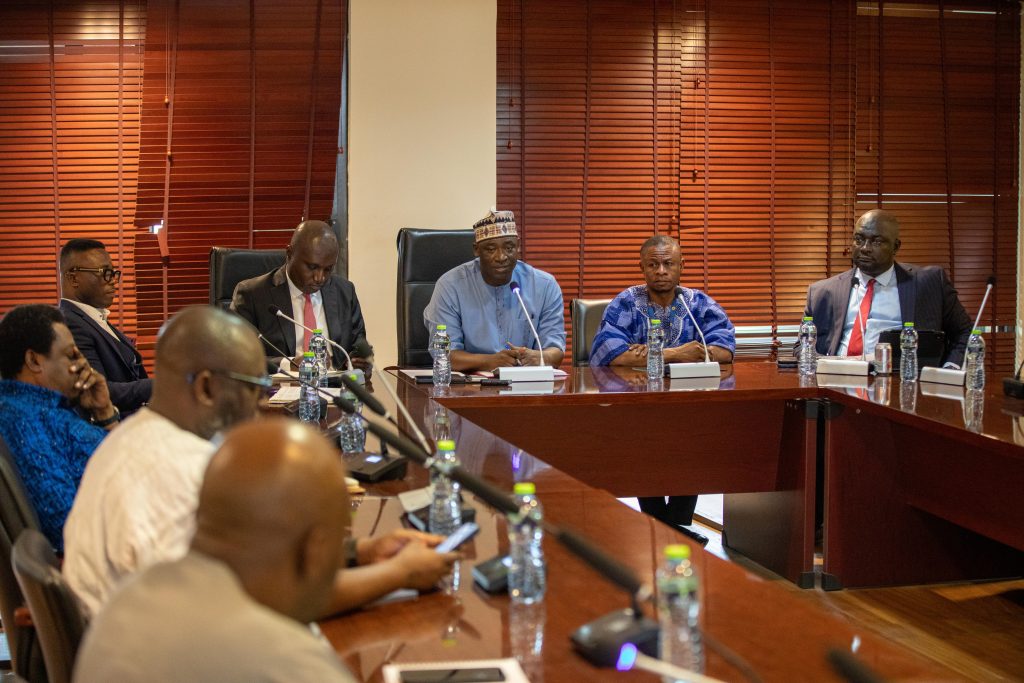
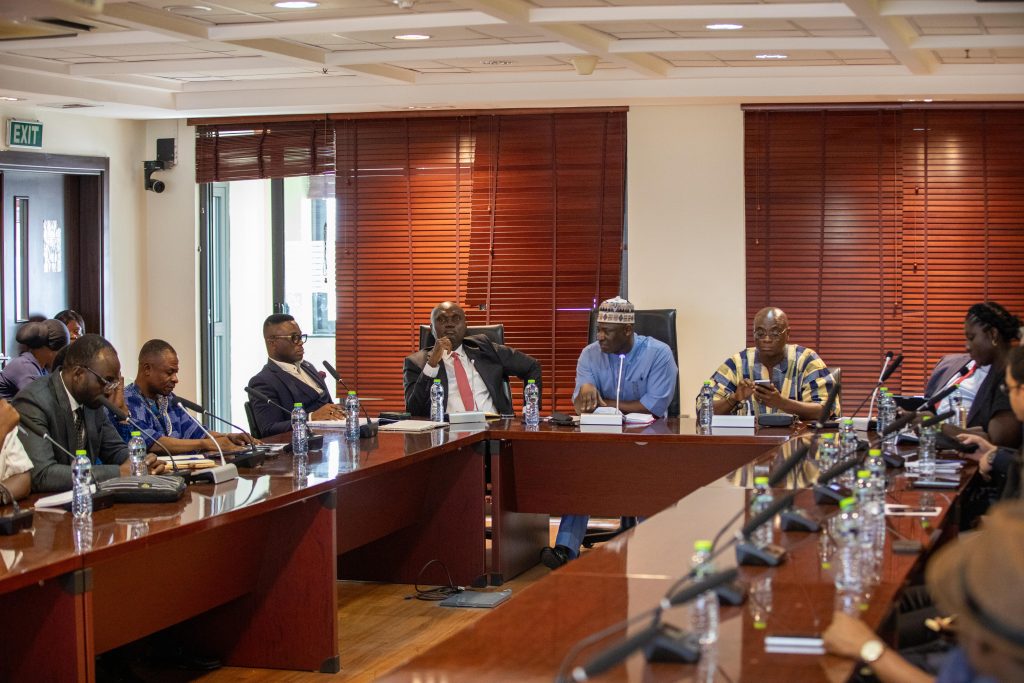
The Parliamentary Select Committee on Information and Communications has held a constructive engagement with the Ghana Chamber of Telecommunications and its leadership, reaffirming a shared commitment to strengthening Ghana’s digital ecosystem.
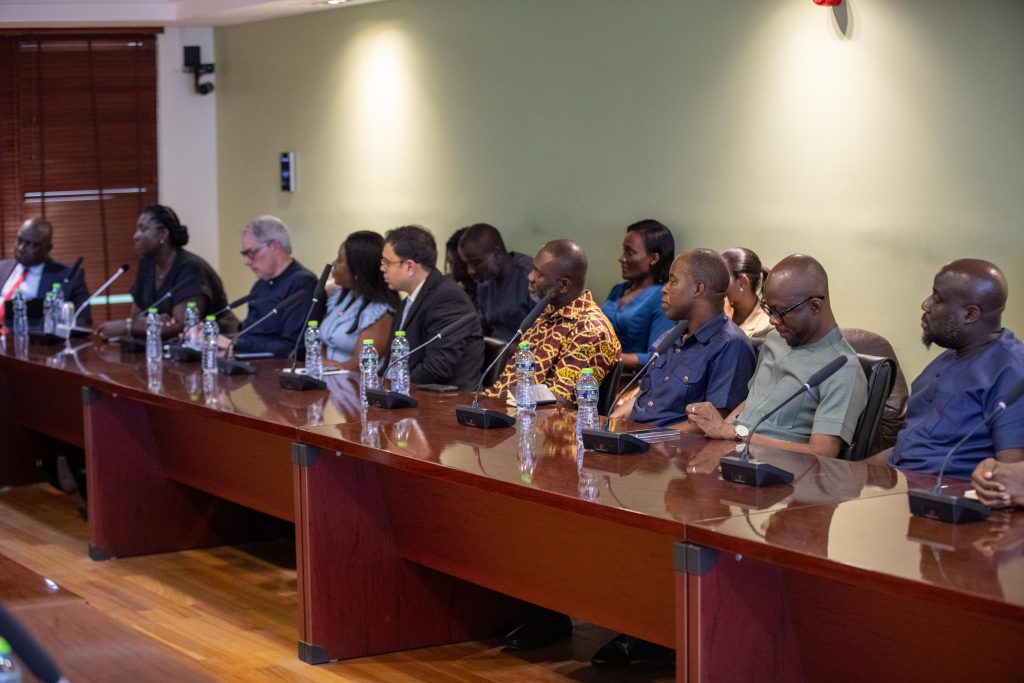
The meeting, which brought together Members of Parliament on the Committee and Chief executives and senior executives from key industry players, including ATC Ghana, C-Squared, Helios Towers Ghana, Huawei Technologies Ghana, Ericsson Ghana, Vobiss Ghana, MTN Ghana and Telecel Ghana, focused on improving quality of service, expanding connectivity, addressing fibre optic cable cuts, and ensuring affordable access to digital services across the country.

Collaboration for Improved Quality of Service

Chairman of the Committee Hon. Bandim Lamangin Abed-Nego, along with the Deputy Ranking member Hon. Owiredu Asuako Charles, welcomed the Chamber and underscored Parliament’s interest in long-term sustainability, affordability and inclusivity within Ghana’s digital economy.
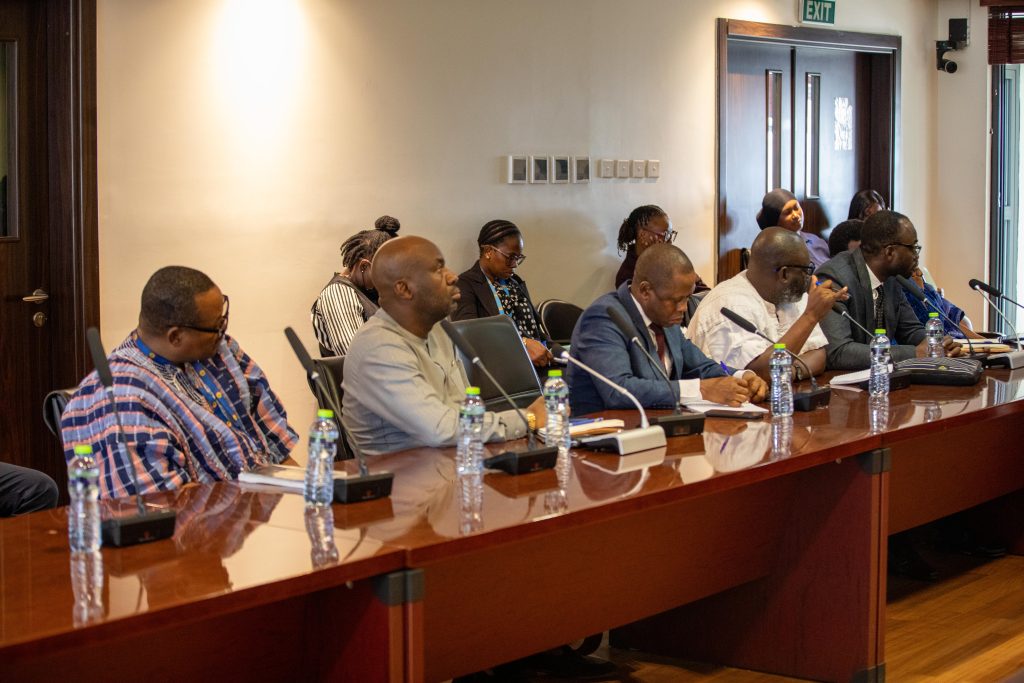
Members of the Committee raised concerns about network quality in some areas, rising data costs, and connectivity challenges in rural communities. They also sought updates on measures being taken to address fibre optic cable cuts, which continue to disrupt service delivery.

Responding, representatives of the Chamber (led by its CEO Sylvia Owusu-Ankomah) acknowledged the concerns and reaffirmed the industry’s commitment to improving service quality. They highlighted ongoing investments in network expansion, including significant increases in the number of new sites being deployed to address congestion and peri-urban growth.

Industry leaders noted that fibre cuts remain a major challenge, with operators experiencing multiple incidents (about 20) daily, leading to service interruptions and high repair costs. They appealed for stronger collaboration with government and road agencies to ensure dedicated fibre ducts are incorporated into new road projects to protect critical infrastructure.

The Committee assured the Chamber of its readiness to work with relevant ministries and agencies to help address the issue sustainably.

Focus on Rural Telephony and Affordability

The engagement also touched on rural telephony and data pricing. Committee members expressed concern about the cost of data bundles and disparities between urban and rural connectivity.

The Chamber explained that rural telephony pricing is regulated and that operators pass through approved rates without mark-ups. They further noted that several external cost drivers, including import duties, regulatory fees and infrastructure investments, contribute to overall pricing structures.

Both sides agreed on the need for a deeper, data-driven discussion on affordability, with the Chamber indicating its readiness to share detailed industry data with the Committee to support informed policymaking.

Legislative Engagement and Policy Input
The Committee highlighted upcoming legislative reviews within the ICT sector and encouraged the Chamber to actively participate in consultations and public engagements once bills are formally laid before Parliament.

The Chamber welcomed the opportunity and pledged to submit inputs and technical expertise to support the legislative process. It also reaffirmed its openness to structured, regular engagements with the Committee to ensure ongoing collaboration.

Next Steps and Agreed Actions

At the close of the meeting, both parties agreed on the following next steps:

  • A follow-up, more extensive working session will be scheduled to allow for a deeper technical engagement.
  • The Committee will engage relevant ministries and agencies on the protection of fibre infrastructure, particularly along major road corridors.
  • Industry players will continue expanding network coverage, including accelerated site deployments to improve service quality.

The meeting ended on a positive note, with both Parliament and industry stakeholders reaffirming their shared responsibility to ensure that Ghana’s digital transformation is inclusive, affordable and sustainable.

The engagement marks a renewed phase of cooperation between policymakers and the telecommunications industry, aimed at delivering improved connectivity and digital opportunities for all Ghanaians.

Minister meets Telecoms Chamber, MNOs, NCA over fresh SIM registration and 5G rollout plans

MG_9172.jpg-scaled

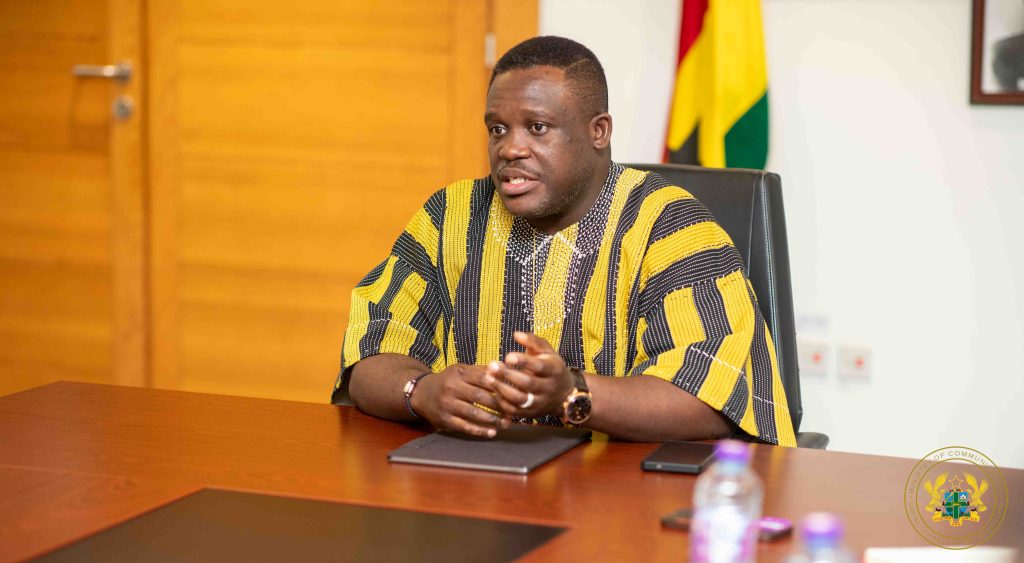
The Minister for Communication, Digital Technology and Innovations, Samuel Nartey George, has held high-level talks with the leadership of the Ghana Chamber of Telecommunications, Chief Executives of MTN Ghana (Stephen Blewett) and Telecel Ghana (Ing. Patricia Obo-Nai), as well as leadership of the National Communications Authority (NCA), to deliberate on the announced new national SIM registration exercise and the roadmap for 5G deployment in Ghana.

The meeting, also attended by the CEO of the Ghana Chamber of Telecommunications, Sylvia Owusu-Ankomah, NCA Director-General Rev. Ing. Edmund Yirenkyi Fianko and senior Ministry and NCA officials, focused on Cabinet-approved reforms aimed at strengthening national security, improving quality of service, and accelerating Ghana’s digital transformation

Fresh SIM registration exercise approved

Addressing participants of the meeting, the Minister disclosed that Cabinet has approved the completely new SIM registration exercise following what he described as an extensive review of the previous process.

According to him, the earlier exercise suffered significant challenges, including weak biometric enforcement, data inconsistencies, and registration fraud among others. He stressed that the new approach would not be a continuation of the old system but a reset designed to ensure credibility and security

Under the new framework:

  • The NCA will serve as the central repository of SIM registration data.
  • Biometric verification will be mandatory.
  • A Central Equipment Identity Register (CEIR) will be introduced to enable cross-network blocking of stolen or fraud-linked devices.
  • A revised Legislative Instrument (L.I.) is being prepared to regulate back the exercise

Industry leaders, while supporting the objective of strengthening the system, raised some operational concerns.

5G policy reset and spectrum auction

On 5G, the Minister revealed that Cabinet has approved the removal of the exclusivity clause under the previous wholesale 5G framework, paving the way for a new competitive spectrum auction process

He clarified that the wholesale model has not been cancelled but that the new framework will allow network-based rollout, with the objective of ensuring universal deployment across operators.

Among the key highlights:

  • A new 5G spectrum auction is expected to be concluded soon.
  • The rollout is expected to be coordinated to prevent market distortion.

Industry leaders underscored the capital-intensive nature of 5G, noting that deployment will require significant spectrum acquisition costs, network upgrades and infrastructure expansion. They called for reasonable pricing, predictable policy direction and streamlined regulatory approvals to enable rapid deployment.

Collaborative path forward

The meeting concluded with agreement on structured technical engagements between the Ministry, NCA, Telecoms Chamber and operators to refine implementation modalities for both the SIM registration exercise and the 5G auction framework.

Immediate next steps include finalising the revised L.I., and publishing auction documentation.

The engagement signals what participants described as a renewed collaborative approach between government and industry as Ghana prepares for a new phase of digital regulation and next-generation connectivity.

Cabinet Approves Telecoms Chamber’s Proposal for Fibre Integration in All New Roads

WhatsApp-Image-2025-11-17-at-09.32.20

(A milestone decision to accelerate Ghana’s digital transformation and reduce fibre cuts nationwide)

Ghana’s Cabinet has approved a transformative proposal from the Ghana Chamber of Telecommunications to integrate fibre-optic ducts and access chambers into all new road construction projects across the country.

The announcement was made by the Minister for Communications, Digital Technology and Innovations, during a high-level discussion at the Africa Tech Festival in Cape Town, South Africa. The move positions Ghana as a continental leader in infrastructure-led digitalisation and sets a precedent for other African nations to follow.

“What Ghana’s Cabinet has approved is this, every new road is also going to be a digital new road,” the Minister stated. “Contractors will now build fibre chambers alongside roads, effectively eliminating the capital cost of digging for telecom operators. This will make network rollout faster, cheaper, and more sustainable, thereby allowing operators to reinvest in expanding connectivity.”

The policy, often referred to as the “Dig Once Policy”, stems from sustained advocacy by the Ghana Chamber of Telecommunications and its member companies. The Chamber’s technical justification highlighted that about 60% of fibre cuts in Ghana, a major cause of service interruptions, are caused by road and construction activities. Between 2021 and the first three (3) quarters of 2025, fibre repair costs is projected to be $69.3 million, representing a significant drain on industry resources and national productivity.

By mandating the inclusion of fibre ducts in new roads, Ghana is expected to:

  • Reduce fibre cuts and network downtimes significantly
  • Lower broadband deployment costs
  • Accelerate 5G and digital infrastructure rollout across the country
  • Protect road assets and prevent repeated excavation, and
  • Foster innovation and inclusion through reliable, affordable internet access

This milestone decision aligns with the goals of Ghana’s Digital Economy Policy (2024) and National Broadband Strategy, advancing the vision of a digitally enabled economy that supports growth, inclusivity, and innovation.

The Ghana Chamber of Telecommunications, on behalf of its member companies and the wider digital ecosystem, has commended the Government for this forward-looking decision. The Chamber reaffirmed its commitment to work closely with the Ministry of Communications, Digital Technology and Innovations, the Ministry of Roads and Highways, and other stakeholders to ensure seamless implementation.

“This is a bold and visionary step that will shape Ghana’s digital future,” said Sylvia Owusu-Ankomah, CEO of the Digital Chamber of Ghana. “By embedding fibre in all new roads, we are laying the foundation for a connected nation, one that leverages digital infrastructure to drive growth, innovation, and opportunity.”

The initiative reinforces Ghana’s position as one of Africa’s emerging digital leaders and offers a scalable model for other African countries aiming to build resilient, inclusive, and future-ready digital economies.

Sylvia Owusu-Ankomah Appointed CEO of The Ghana Chamber of Telecommunications & The Digital Chamber of Ghana

GCT-DCG-New-CEO-scaled

The Ghana Chamber of Telecommunications (GCT) and the Digital Chamber of Ghana (DCG) announce the appointment of Sylvia Owusu-Ankomah as their new Chief Executive Officer effective 1st October 2025.

With close to two decades of progressive leadership experience spanning Ghana’s telecommunications, digital, and FMCG sectors, Sylvia combines deep industry knowledge with a proven ability to build partnerships and deliver results which she brings on board in her new roles. Her inspiring career spans high-impact positions at leading multinational organizations, including MTN Ghana, Tigo (Millicom Ghana), AirtelTigo (AT Ghana), and Guinness Ghana Breweries PLC (Diageo/Castel Group).

Throughout her telecoms career, Sylvia has been at the forefront of transformational projects shaping Ghana’s telecom and digital landscape. She played a pivotal role in securing regulatory approvals for Ghana’s first landmark telecom merger, spearheaded high-stakes public policy advocacy, and championed initiatives that expanded connectivity, enhanced regulatory compliance, and strengthened industry-government relations. At MTN Ghana, she was instrumental in securing the 3G License and Submarine Cable Landing rights, both of which helped establish MTN as Ghana’s market leader in data services.

At AirtelTigo, Sylvia provided executive leadership during one of Ghana’s most complex mergers, navigating regulatory landscapes, stakeholder management, and post-merger government relations. She also supported the acquisition of its EMI License from the Bank of Ghana and served as a former Council Member of the Ghana Chamber of Telecommunications, giving her deep insight into the Chamber’s mission and governance.

In addition to her executive roles, Sylvia has served as Board of Trustee Member of the Ghana Investment Fund for Electronic Communications (GIFEC) under the Ministry of Communications, where she contributed to strategies for digital inclusion and the expansion of connectivity to underserved communities. Sylvia also served as a Former Advisory Board Member of the Ghana Innovation Hub, supporting initiatives aimed at fostering innovation, entrepreneurship, and the growth of Ghana’s digital economy.

Most recently, Sylvia served as Director of Corporate Relations at Guinness Ghana, where she led public policy advocacy, sustainability, strategic communications and reputation management, achieving significant wins. These included safeguarding their license to operate, driving local sourcing, and leading their business sustainability agenda in Ghana.

Commenting on her appointment, Stephen Blewett, Chair of the Governing Council and CEO of MTN Ghana, said:

“Sylvia’s appointment represents an exciting new chapter for the Chamber. Her deep roots in the telecom sector, coupled with her proven ability to unite stakeholders and deliver tangible results, position her perfectly to lead the industry Chamber into its next phase of digital growth and innovation.”

Today’s announcement follows the successful conclusion of Ing. Dr. Kenneth Ashigbey’s tenure on June, 2025, after nearly eight years of service. The Council expresses its gratitude for his leadership and contributions, which helped establish strong advocacy platforms for the sector and laid the groundwork for the Digital Chamber.

Expressing her vision for the role, Sylvia stated:

“I am humbled to lead the Ghana Chamber of Telecommunications and the Digital Chamber of Ghana at such a defining time for Ghana’s digital journey. My mandate is clear – strengthening collaboration across government, industry and consumers. Together with our members, we will advocate for policies that enable inclusive and sustainable industry growth, safeguard critical telecommunication infrastructure, empower innovation, and ensure Ghana remains at the forefront of Africa’s digital renaissance.”

Sylvia holds an MBA in Management from Coventry University (UK), a Public Policy Analysis certification from the London School of Economics, and a Leading Sustainable Corporations certification from the University of Oxford’s Saïd Business School.

Sylvia Owusu-Ankomah’s appointment underscores the two Chambers commitment to visionary leadership that serves industry, government, and Ghanaians as a whole. As she steps into this new chapter, the two Chambers wish her great success and commit to support her every step of the way.

About the Ghana Chamber of Telecommunications: The Ghana Chamber of Telecommunications is the foremost industry association representing the interests of telecommunication operators and infrastructure companies in Ghana. The Chamber is deeply dedicated to promoting and advancing the growth of the telecommunications industry, ensuring the delivery of high-quality services to consumers, and supporting the country’s socio-economic development.

The Chamber represents AT Ghana (formerly AirtelTigo), MTN Ghana, Telecel Ghana and associate members across infrastructure and technology, including ATC Ghana, CSquared, Ericsson, Helios Towers Ghana, Huawei, and Spectrum Fibre Limited.

About the Digital Chamber of Ghana: The Digital Chamber of Ghana is the unified voice for Ghana’s digital finance ecosystem.

The Chamber brings together the country’s electronic-money issuers and fintech partners – including AT Money, G-Money, Mobile Money Limited (MTN), Telecel Cash, Zeepay among others – to foster innovation, enhance regulatory collaboration, and promote financial inclusion.