
Telecel DigiTech graduates unveil irrigation solution for dry farmlands

A group of junior high school students in the South Dayi District of the Volta Region have developed a prototype “smart farm” system aimed at addressing the growing challenge of dry farmlands caused by erratic rainfall and rising temperatures.

The innovation was unveiled at the graduation ceremony of the third cohort of the Telecel DigiTech Academy, where about 500 students from across the country showcased practical solutions developed during a three-month training programme in robotics and coding.

The project, designed by a team from Peki Blengo Evangelical Presbyterian Junior High School, responds directly to the environmental pressures affecting farming communities in Peki and its environs, where prolonged dry spells have made cultivation increasingly difficult, particularly during the dry season.

Leading the team, Ruth Martey explained that the idea was inspired by the daily struggles of farmers in their community, many of whom depend on rainfall for their livelihoods. She noted that unreliable rainfall patterns have significantly affected crop yields, prompting the students to explore a technological solution.

The prototype integrates an automated irrigation system capable of drawing water from underground sources or nearby water bodies. It is programmed to activate when soil moisture levels drop below a certain threshold, ensuring that crops receive adequate water without manual intervention. The system also incorporates a lighting feature to illuminate farms at night and deter animals that often destroy crops under the cover of darkness.

Local farmer Evans Owusu, who has spent over two decades cultivating cassava, plantain and cocoa, said the students’ innovation reflects the realities confronting farmers in the area. He indicated that delayed rains have become increasingly common, disrupting planting cycles and reducing output. According to him, a fully developed version of the system could significantly improve productivity and incomes if adopted widely.

The smart farm formed part of a broader exhibition of student-led innovations, including security alarm systems, e-commerce applications, rain detection devices and other agricultural tools. Participants were drawn from 19 schools across five regions, highlighting the growing reach of the programme.

The headteacher of Peki Blengo EP JHS, Vincent Adzagbenu, said the initiative had strengthened students’ analytical and problem-solving abilities, adding that such hands-on learning approaches were essential in preparing young people for future careers in science and technology.

The Telecel DigiTech Academy, implemented in collaboration with the Mingo Foundation and Asustem Robotics, and in partnership with the Ghana Education Service and the National STEM Centre, is designed to bridge the gap between theoretical learning and practical application. Students are trained in areas such as Scratch programming, Arduino-based robotics and basic web development, before applying their skills to real-life community challenges.

Although projects such as the smart farm remain at the prototype stage, stakeholders say they demonstrate the potential of technology-driven solutions to address local problems if supported with further development, funding and testing.

Head of Foundation, Sustainability and External Communications at Telecel Ghana, Rita Agyeiwaa Rockson, said the programme was focused on equipping young people with digital skills to create tangible solutions while inspiring interest in science, technology, engineering and mathematics careers.

She added that the initiative prioritises gender inclusion, with girls accounting for about 70 per cent of participants nationwide, and includes training for teachers to ensure continuity and long-term impact in beneficiary schools.

Since its launch in 2024, the Telecel DigiTech Academy has trained more than 2,300 students across 13 regions, with plans to expand its reach in subsequent cohorts as part of efforts to nurture a new generation of problem-solvers.

Source : www.graphic.com.gh

Cybercrime costs set to hit $10.5t globally – Ghana urged to treat cybersecurity as boardroom priority

The Minister for Communication, Digital Technology and Innovations, Samuel Nartey George, has warned that cybercrime is rapidly becoming one of the world’s most expensive threats, with costs projected to rise alarmingly in the coming years.

Speaking at the 2026 CISO Summit on Wednesday, April 22, he cited data from Cybersecurity Ventures indicating that global cybercrime costs are expected to grow by 15 per cent annually over the next five years, rising from US$3 trillion in 2015 to about US$10.5 trillion by the end of 2025.

He also referenced International Monetary Fund (IMF) figures showing that the global financial sector alone has already lost over US$12 billion to cyber incidents over the past two decades, underscoring the scale of the threat facing institutions worldwide.

He cautioned that Ghana is equally exposed, stressing that cybersecurity now affects revenue, operations, reputation, customer trust, and national security.

“Cybersecurity now impacts revenue, operations, reputation, customer trust, and national security. It is a boardroom-level business imperative,” he stated, while commending Sapient Envision and Innovare Group for creating a platform that elevates cybersecurity discussions to the boardroom level.

Source : www.myjoyonline.com

Telecel Employees Drive Digital Inclusion with ICT Lab Upgrade in Bamboi

Bole-Bamboi

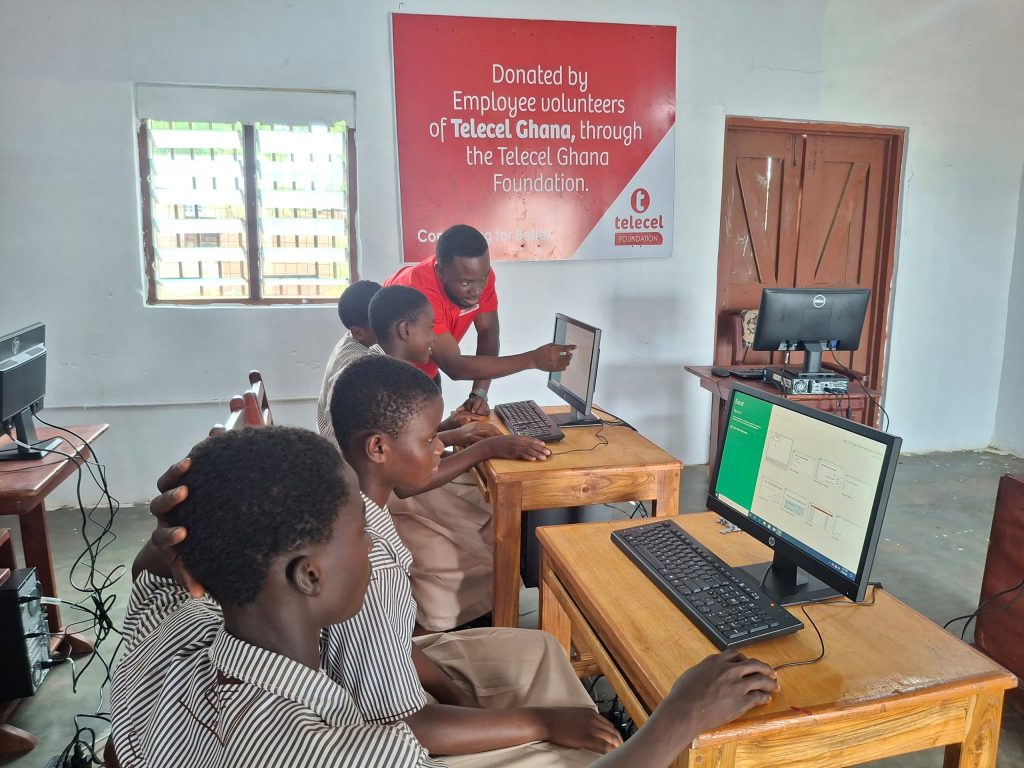
    In a move to bridge Ghana’s digital divide and equip students with information and communication technology (ICT) skills, the Telecel Ghana Foundation has commissioned a fully refurbished ICT laboratory at Bamboi D/A Junior High School in the Savannah Region.

    The initiative, delivered through the organization’s Employee Volunteering Programme (EVP) also known as Red Hearts, encourages staff to contribute their resources to projects that create meaningful social impact. The project, led by Telecel Ghana’s Technology Team, produced the transformation of the school’s outdated ICT facility into a modern digital learning hub.

    Before the upgrade, students had minimal exposure to computers, limiting their ability to
    develop essential digital skills. The refurbished lab now features desktop computers, high-speed internet connectivity, a projector, an Uninterruptible Power Supply (UPS), and other tools to support interactive teaching and learning.

    Rita Agyeiwaa Rockson, Head of Foundation, Sustainability and External Communications at Telecel Ghana, emphasized the importance of inclusive access to technology:
    “At Telecel Ghana Foundation, we believe that access to digital tools is a necessity for every
    child. By empowering schools like Bamboi D/A JHS with the resources they need, we are
    enhancing teaching and learning as well as preparing students to thrive in an increasingly digital world. Our employee volunteers are at the heart of this impact, demonstrating that collective action can drive meaningful change in our communities.”

    She further noted that the initiative aligns with the Foundation’s broader commitment to
    advancing digital inclusion and improving educational outcomes in underserved communities, under its Connected Learning pillar. School authorities and local stakeholders welcomed the intervention, describing it as timely and transformative. They highlighted that the facility will significantly improve ICT instruction and expose students to practical digital learning experiences for the first time.

    The ICT lab upgrade forms part of Telecel Ghana Foundation’s ongoing efforts to promote
    equitable access to education, particularly in rural and underserved areas. Through strategic investments in digital infrastructure and community-driven initiatives, the
    Foundation continues to invest in initiatives that advance education, health, and digital inclusion, working with communities and partners to create sustainable opportunities for young people and to support Ghana’s digital transformation agenda.

    Protecting our kids online

    WhatsApp-Image-2026-04-21-at-11.21.45

    Think about the last time you saw a child without a phone. It is getting harder to remember, isn’t it? Today’s children are growing up in two worlds at once the physical one we can see, and a digital one that never sleeps, never pauses, and is designed by some of the smartest engineers on earth to keep them scrolling for as long as possible.

    For the most part, we have let this happen without asking too many questions. The phone kept the children quiet. The Wi-Fi kept the peace. But the questions we didn’t ask are now showing up as statistics that should stop every parent cold.

    In 2024, there were over 23,000 reports of child sexual abuse material linked to Ghana up from just 750 in 2016. A survey of senior high school girls in Accra found that one in three had been blackmailed on social media, either for money or for sex.

    These are not stories from faraway places. These are our children. And this is why governments around the world including, slowly, our own are finally deciding that enough is enough.

    One in three female SHS students in Accra has been blackmailed on social media. These are not faraway statistics. These are our children.

    What the World Is Doing

    Countries are moving fast. Australia passed a law in December 2025 banning children under 16 from social media platforms including TikTok, Instagram, Facebook, Snapchat, and YouTube. It was the first national ban of its kind anywhere in the world. Platforms that break the rules face fines of up to AU$50 million.

    Greece announced in April 2026 that children under 15 will be blocked from social media entirely from January 2027. The UK, France, Spain, Germany, and Denmark are all passing or considering similar laws. The European Union is discussing a single legal standard across all 27 member states, with fines of up to 6% of a tech company’s global income for non-compliance. For a company like Meta, that could mean tens of billions of euros.

    The message being sent is simple: children are not small adults. They deserve specific protection online, and the platforms that profit from their attention have a legal obligation to provide it.

    Australia — Online Safety Amendment Act, 2025 — Bans under-16s from major social media platforms. Platforms face fines up to AU$50 million for non-compliance.

    Greece — Announced April 2026 — Under-15 ban on social media, effective January 2027. Prime Minister pushing for an EU-wide standard.

    EU — Digital Services Act — Platforms with over 45 million EU users face fines up to 6% of global annual turnover for child safety violations.

    Where Ghana Stands

    Ghana is not starting from zero. We have something many African countries don’t a genuine legal foundation in the Cybersecurity Act, 2020 (Act 1038). This law, passed by Parliament and signed in December 2020, takes child protection online seriously in ways that matter.

    It makes it a criminal offence to take, possess, or share indecent images of children online. It criminalises grooming the process of an adult befriending and manipulating a child online for sexual purposes. Crucially, even an attempt to groom a child is treated as seriously as the act itself. And it holds internet service providers accountable: platforms and networks that knowingly allow grooming to take place on their services can be charged as accomplices. Penalties range from five to twenty-five years in prison.

    The Cyber Security Authority (CSA), created by the same Act, is specifically mandated to promote the protection of children online, run public awareness campaigns, and push platforms and telecoms to do better.

    More recently, the Ministry of Communications and the CSA have proposed using the Ghana Card as an age-verification tool so that when a young person tries to access adult content online, they have to prove who they are through the National Identification Authority database. Minister Samuel Nartey George confirmed in December 2025 that this proposal is heading to Cabinet. The National Identification Authority has already begun issuing Ghana Cards to children aged 6 to 14 as of October 2025, which gives us the infrastructure to actually make this work.

    Ghana — Cybersecurity Act, 2020 (Act 1038), Sections 62–65 — Criminalises grooming, indecent images of children, and online sexual exploitation. Penalties of 5–25 years imprisonment. ISPs can be held liable for aiding and abetting.

    Convention on the Rights of the Child, 1989 — Ghana was the first country in the world to ratify this convention in 1990. It requires states to protect children from all forms of exploitation and abuse, including in digital environments.

    African Charter on the Rights and Welfare of the Child — Obliges African states to protect children from social and economic exploitation and harmful practices.

    The Gap We Need to Close

    Here is what our law does not yet do: it does not restrict a child’s access to social media in the first place.

    Act 1038 is a criminal law it punishes exploitation after it happens. What it does not address is the quieter, everyday harm that runs perfectly legally: the algorithm that keeps a 13-year-old awake until 2am, the feed that bombards a teenage girl with images that make her feel inadequate, the endless notifications engineered to make putting the phone down feel impossible.

    Research from Imperial College London found that children who use social media heavily in early secondary school are significantly more likely to develop anxiety and depression in later years mostly because it destroys sleep. Children who spend more than three hours a day on social media face double the risk of mental health problems. These harms are not accidents. They are features. The platforms are built this way on purpose, because time on screen is how they make money.

    UNICEF’s assessment of Ghana’s legal framework said it plainly: there is no clear statement in our laws about the virtual environment, and Ghana has signed international child protection treaties without fully ratifying them. Signing a treaty and living by it are two different things.

    Act 1038 punishes the predator. It does not restrain the algorithm. The everyday harm — the sleepless nights, the anxiety, the engineered addiction — is still entirely legal.

    What We Can Do Right Now

    Laws take time. While Parliament deliberates, there are things every family can do today.

    Talk to your children not as a lecture, but as a conversation. Ask them what they see online. Ask them how it makes them feel. Children who can talk to their parents about what they encounter online are far better protected than those who can’t. The CSA’s own campaigns have shown that awareness is one of the most powerful tools we have

    Set real boundaries around screens at night. The research is clear: late-night scrolling is the single biggest driver of the sleep disruption that leads to mental health problems in adolescents. A phone charging in the living room overnight is a small change with a significant impact.

    Report harmful content. Ghana has reporting mechanisms through the Cyber Security Authority. If your child encounters grooming, exploitation, or abuse online, report it. Every report helps build the evidence base that lawmakers need to act.

    And hold platforms accountable. Ask the apps your children use what they are doing to protect minors. Demand answers. The more citizens push, the more platforms are forced to respond.

    Every evening, in homes across Ghana, a familiar scene plays out. A parent asks a child to put down their phone. The child resists. The phone wins. It has been winning for years, because the phone was built by people who are paid to make it win.

    The law’s job is to change the rules of that game. Ghana has the foundation in Act 1038. We have the infrastructure in the Ghana Card. We have ministers who say they are ready to act. What we need now is the follow-through before another generation of children pays the price of our delay.

    Source : www.myjoyonline.com

    Ghana, Zambia consider mutual recognition of fintech licences — Sam George

    sam-zam-750x375-1

    The Minister for Communication, Technology, and Innovation, Sam George, has disclosed plans for the consideration of a framework that would allow mutual recognition of fintech and payment service licences between Ghana and Zambia to ease cross-border business operations.

    He explained that the current system forces companies already licensed under one regulatory regime to repeat the entire approval process when entering another market, despite operating under similar standards.

    Speaking on the Citi Breakfast Show on Monday, April 20, Mr George said this creates unnecessary bureaucratic bottlenecks that slow down private sector expansion and cross-border innovation.

    “The Bank of Zambia fintech policy was modelled and structured with technical expertise from the Bank of Ghana. So, if a company in Zambia, using those benchmarks that have been created, goes through the rigorous process of getting a PSP licence, must that company come to Ghana and start afresh from the beginning again? he questioned.

    According to him, the goal is to allow companies that have successfully obtained licences in either Ghana or Zambia to operate across both jurisdictions without restarting the entire licensing process.

    Mr George stressed that the proposed alignment would significantly improve the ease of doing business, reduce administrative delays, and strengthen fintech collaboration between the two countries.

    Source: www.citinewsroom.com

    https://citinewsroom.com/2026/04/ghana-zambia-consider-mutual-recognition-of-fintech-licences-sam-george

    Separation from MTN Ghana won’t affect MoMo services — MobileMoney Fintech CEO

    Shaibu

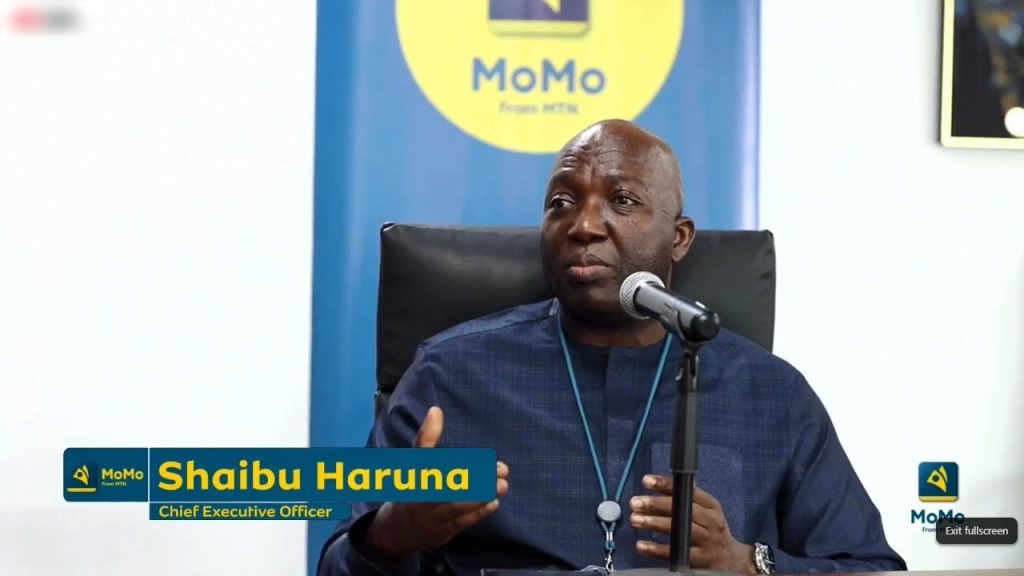
    The Chief Executive Officer of Mobile Money Fintech Limited (MoMo), Shaibu Haruna, has assured customers that there will be no disruption to services following the company’s transition into a standalone fintech entity.

    He said the separation from its parent company, MTN Ghana, is in line with regulatory requirements and will not affect how customers access mobile money services.

    Speaking on the Citi Breakfast Show on Monday, April 20, 2026, Mr Haruna explained that the move was necessitated by Ghana’s financial regulations.

    “We became a standalone entity because it was necessary due to the regulations of the country. The Payment Systems and Services Act requires that we operate as a separate company and be regulated by the Bank of Ghana,” he said.

    He noted that the transition has been in progress for the past five years and involved significant structural changes to meet regulatory standards.

    Mr Haruna said beyond compliance, the shift will position the company to expand its services and form strategic partnerships.

    “Beyond the regulation, we also want a system that will allow us to go beyond a wallet service. This means we will be able to scale up quickly and form strategic partnerships to bring more value to Ghanaians,” he said.

    He reassured customers that their experience would remain unchanged despite the restructuring.

    “Our customers will not experience any change in the way we serve them. They will continue to access our services through the MTN distribution network. From their perspective, the only change will be the level of innovation that we will deliver,” he added.

    Shaibu Haruna also disclosed plans to list the mobile money business on the local stock exchange in the coming years.

    “We have also made a commitment to our shareholders that within the next three to five years, we will list MoMo on the local stock market to allow Ghanaians to buy shares in the business,” he said.

    Source: www.citinewsroom.com

    https://citinewsroom.com/2026/04/separation-from-mtn-ghana-wont-affect-momo-services-mobilemoney-fintech-ceo

    MTN Ghana to invest $1bn in network expansion, cybersecurity

    MTN Ghana has announced plans to invest more than $1 billion over the next three years to expand its network, strengthen cybersecurity systems and improve service delivery across the country.

    The investment forms part of the company’s long-term strategy to enhance infrastructure, meet growing data demand and strengthen its resilience against evolving cyber threats in the telecommunications sector.

    The Chief Executive Officer of MTN Ghana, Mr Stephen Blewett, disclosed this at the company’s 2026 Media and Stakeholder Forum held in Accra on Friday.

    He explained that a significant portion of the investment would go into network expansion and upgrades of IT systems to ensure efficiency and resilience as the business continues to grow.

    “As your business grows, you need more robust systems. With the increasing number of cyber-attacks globally, it is important to invest in resilience to ensure consistent service delivery,” he said.

    Mr Blewett said the company remained committed to improving customer experience while maintaining secure systems capable of supporting Ghana’s digital transformation agenda.

    He identified fibre cuts as a major operational challenge affecting service quality, attributing the problem partly to road construction works and human interference.

    According to him, while the company collaborates with relevant authorities during planned infrastructure works to relocate fibre installations, uncoordinated activities and deliberate damage continue to disrupt services. “We are experiencing many fibre cuts, some due to construction and others due to lack of awareness. In some cases, people even set fire near fibre installations, which is dangerous because it affects critical national infrastructure,” he said.

    Mr Blewett called for stronger public education and stricter enforcement measures to protect telecommunications infrastructure, stressing that damage to fibre networks had nationwide implications.

    The forum, held under the theme “MTN Ghana @30: Connecting Ghana, Shaping the Digital Future,” formed part of activities marking the company’s 30 years of operations in Ghana.

    It brought together media practitioners, regulators, partners and other stakeholders to review the company’s performance and future outlook.

    Mr Blewett described Ghana as a strong and attractive market, noting that MTN continued to record significant growth in subscriber numbers and data usage.

    He revealed that MTN Ghana currently has over 31 million subscribers, while data usage has grown by about 48 per cent, driven by increased demand for video streaming, social media and other digital services.

    “We are pleased with our performance, but we remain focused on sustaining growth and delivering value to our customers,” he said.

    He identified digital services, particularly mobile gaming and entertainment, as emerging growth areas, especially among young people.

    “Gaming is becoming a major opportunity. Many young people who did not have access to traditional gaming consoles can now access games on their mobile phones,” he said.

    Mr Blewett added that MTN aims to support local developers to create and export digital content globally.

    On infrastructure, he announced plans to roll out more than 800 new cell sites in 2026 to improve coverage and network quality nationwide.

    He stressed that network performance depended on spectrum availability, coverage and fibre connectivity, adding that sustained investment was essential to meet customer expectations.

    Mr Blewett also outlined the company’s sustainability efforts, noting that more than 50 per cent of its operational sites are powered by solar energy, with ongoing plans to increase the use of renewable energy.

    He further said MTN was working towards achieving gender balance, with a target of 50 per cent female representation in its workforce.

    Meanwhile, the Chief Executive Officer of MobileMoney Fintech Limited, Mr Shaibu Haruna, disclosed that all 10,000 agents whose accounts had previously been blocked due to suspicious activities had been reinstated after a review.

    He explained that the accounts were initially suspended in line with regulatory requirements to protect customers and ensure compliance.

    Mr Haruna assured that the company would continue to monitor transactions closely and take decisive action against any agent found engaging in fraudulent activities.

    Source : www.ghanaiantimes.com.gh

    Ericsson India revenue grows 29% to Rs 4,228 crore in March quarter

    Swedish telecom gear maker Ericsson has recorded around 29 per cent growth in revenue to Rs 4,228 crore on constant currency basis during the quarter ended March 31, 2026, according to financial data released by the company.

    The company had posted revenue of around Rs 3,272 crore in the same quarter a year ago calculated based on average foreign exchange rate during the corresponding quarter.

     Ericsson India, the second largest market of the Swedish firm, contributed 8 per cent to the consolidated revenue of the firm in the March quarter and 7 per cent in the year-ago period.

    Global net sales of Ericsson grew 6 per cent organically to 49.3 billion Swedish Krona (SEK) while the reported growth declined 10 per cent year-on-year due to the impact of forex, the company said in the financial results released on Friday.

    “Our Q1 results demonstrate continued resilience in a dynamic environment, with organic sales growth of 6 per cent,” Ericsson President and CEO Borje Ekholm said.

    Ericsson attributed growth in sales market across Europe, Middle East, and Africa driven by network modernisations as well as 5G launches and rollouts.

    India was one of the key growth drivers for the company during the reported quarter.

    “Sales in market areas South East Asia, Oceania, and India increased primarily due to higher deliveries in India. Sales in market area North East Asia also increased, reflecting the timing of project deliverables predominantly in Japan,” the company said.

    The company, too, is facing the challenge of rising cost of semiconductors due to demand in artificial intelligence besides uncertainties in the market due to geopolitical conditions.

    “Our multi-year investments in building a resilient, diversified, supply chain have enabled us to deliver consistently for customers amidst geopolitical and macroeconomic uncertainties. We are facing increasing input costs, especially in semiconductors, caused in part by AI demand. Our ambition is to offset these challenges, by working closely with customers and suppliers, and through product substitution and efficiency actions,” Ekholm said.

    He projected that sales in the radio access network (RAN or mobile network) market are expected to remain flat, but expressed optimism about mission-critical projects and the enterprise segment, which are anticipated to grow at a faster pace than the overall mobile networks market.

    Source : www.economictimes.indiatimes.com

    GIFEC supports Sports and Recreation Ministry to enhance digitalisation ahead of World Cup

    The Ghana Investment Fund for Electronic Communications (GIFEC) has supported the Ministry of Sports and Recreation with laptops and projectors to enhance its digital operations ahead of the upcoming World Cup.

    A statement issued in Accra said the support formed part of GIFEC’s commitment to promoting digital transformation across public institutions.

    It said GIFEC donated the high-speed laptops and projectors to improve office efficiency and strengthen the Ministry’s operational capacity.

    The statement said the intervention would also support the establishment of a Digital Centre to help streamline internal processes and enhance communication.

    Mr Tanko Rashid-Computer, Administrator of GIFEC, reaffirmed the Fund’s commitment to supporting the Ministry’s digitalisation agenda.

    He said technology played a critical role in effective planning and coordination, particularly as the country prepared for major international sporting events such as the World Cup.

    Madam Betty Krosbi Mensah, Senior Technical Advisor to Mr Kofi Adams, Minister of Sports and Recreation, who received the items on behalf of the Ministry, expressed appreciation for the support.

    She said the donation would significantly improve the Ministry’s efficiency and readiness ahead of the tournament.

    Also present at the presentation ceremony were Ms Francisca Adjei, Director of Corporate Affairs at GIFEC, and Ms Zulaiya Yakubu, Head of Training at the Fund.

    The initiative is expected to strengthen collaboration between GIFEC and the Ministry as Ghana prepares for the World Cup.

    MTN Ghana Wins Three Ookla Network Awards at MWC 2026

    MTN Ghana has swept three Ookla Speedtest Awards at Mobile World Congress (MWC) 2026 in Barcelona, claiming the titles of Fastest Mobile Network in Ghana, Best Fixed Network in Ghana, and Best Fixed Network in Western Africa.

    The awards, presented earlier this year, are determined entirely by independent data drawn from millions of real consumer speed tests conducted through Ookla’s Speedtest platform, widely regarded as the global benchmark for real-world internet performance. MTN Ghana recorded a Speedtest Connectivity Score of 67.16, outperforming operators across multiple West African markets including those in Mauritania, Côte d’Ivoire, Burkina Faso and Nigeria, placing the company among a select group of network operators worldwide to meet Ookla’s performance benchmarks.

    Chief Executive Officer (CEO) Stephen Blewett said the triple recognition reflects the sustained investment the company has committed to building reliable connectivity across Ghana. “These recognitions from Ookla reflect the significant investments we continue to make in our network to deliver faster, more reliable connectivity for our customers,” he said. “At MTN Ghana, we believe that a strong, dependable network is fundamental to expanding digital access, driving economic growth and supporting Africa’s progress.”

    Chief Technology Officer (CTO) Reuben Opata also welcomed the recognition, saying the company remains focused on delivering consistent, high-quality network experiences across the country.

    The awards reflect a period of deliberate network modernisation at MTN Ghana, encompassing capacity upgrades across radio and transport infrastructure. The company’s investment trajectory is set to accelerate further following a commitment by MTN Group Chief Executive Officer Ralph Mupita, who during a recent visit to Ghana announced plans to invest US$1.1 billion in the country over the next three years, targeting stronger infrastructure and broader service delivery.

    MTN Ghana is listed on the Ghana Stock Exchange under Scancom PLC and holds the position of market leader in Ghana’s mobile telecommunications industry.

    Source : www.newsghana.com.gh