Minister meets Telecoms Chamber, MNOs, NCA over fresh SIM registration and 5G rollout plans

MG_9172.jpg-scaled

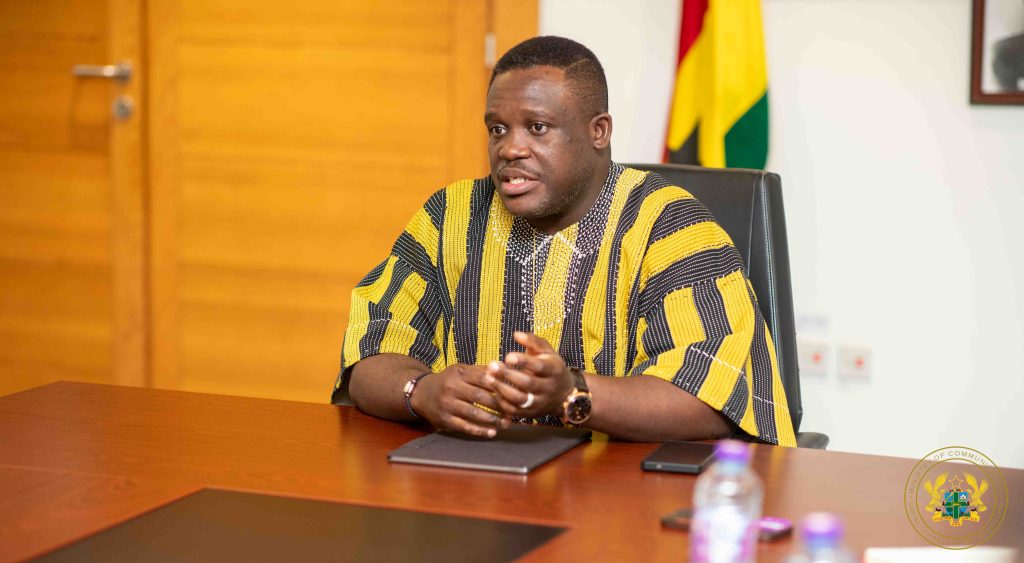
The Minister for Communication, Digital Technology and Innovations, Samuel Nartey George, has held high-level talks with the leadership of the Ghana Chamber of Telecommunications, Chief Executives of MTN Ghana (Stephen Blewett) and Telecel Ghana (Ing. Patricia Obo-Nai), as well as leadership of the National Communications Authority (NCA), to deliberate on the announced new national SIM registration exercise and the roadmap for 5G deployment in Ghana.

The meeting, also attended by the CEO of the Ghana Chamber of Telecommunications, Sylvia Owusu-Ankomah, NCA Director-General Rev. Ing. Edmund Yirenkyi Fianko and senior Ministry and NCA officials, focused on Cabinet-approved reforms aimed at strengthening national security, improving quality of service, and accelerating Ghana’s digital transformation

Fresh SIM registration exercise approved

Addressing participants of the meeting, the Minister disclosed that Cabinet has approved the completely new SIM registration exercise following what he described as an extensive review of the previous process.

According to him, the earlier exercise suffered significant challenges, including weak biometric enforcement, data inconsistencies, and registration fraud among others. He stressed that the new approach would not be a continuation of the old system but a reset designed to ensure credibility and security

Under the new framework:

  • The NCA will serve as the central repository of SIM registration data.
  • Biometric verification will be mandatory.
  • A Central Equipment Identity Register (CEIR) will be introduced to enable cross-network blocking of stolen or fraud-linked devices.
  • A revised Legislative Instrument (L.I.) is being prepared to regulate back the exercise

Industry leaders, while supporting the objective of strengthening the system, raised some operational concerns.

5G policy reset and spectrum auction

On 5G, the Minister revealed that Cabinet has approved the removal of the exclusivity clause under the previous wholesale 5G framework, paving the way for a new competitive spectrum auction process

He clarified that the wholesale model has not been cancelled but that the new framework will allow network-based rollout, with the objective of ensuring universal deployment across operators.

Among the key highlights:

  • A new 5G spectrum auction is expected to be concluded soon.
  • The rollout is expected to be coordinated to prevent market distortion.

Industry leaders underscored the capital-intensive nature of 5G, noting that deployment will require significant spectrum acquisition costs, network upgrades and infrastructure expansion. They called for reasonable pricing, predictable policy direction and streamlined regulatory approvals to enable rapid deployment.

Collaborative path forward

The meeting concluded with agreement on structured technical engagements between the Ministry, NCA, Telecoms Chamber and operators to refine implementation modalities for both the SIM registration exercise and the 5G auction framework.

Immediate next steps include finalising the revised L.I., and publishing auction documentation.

The engagement signals what participants described as a renewed collaborative approach between government and industry as Ghana prepares for a new phase of digital regulation and next-generation connectivity.


Cabinet Approves Telecoms Chamber’s Proposal for Fibre Integration in All New Roads

WhatsApp-Image-2025-11-17-at-09.32.20

(A milestone decision to accelerate Ghana’s digital transformation and reduce fibre cuts nationwide)

Ghana’s Cabinet has approved a transformative proposal from the Ghana Chamber of Telecommunications to integrate fibre-optic ducts and access chambers into all new road construction projects across the country.

The announcement was made by the Minister for Communications, Digital Technology and Innovations, during a high-level discussion at the Africa Tech Festival in Cape Town, South Africa. The move positions Ghana as a continental leader in infrastructure-led digitalisation and sets a precedent for other African nations to follow.

“What Ghana’s Cabinet has approved is this, every new road is also going to be a digital new road,” the Minister stated. “Contractors will now build fibre chambers alongside roads, effectively eliminating the capital cost of digging for telecom operators. This will make network rollout faster, cheaper, and more sustainable, thereby allowing operators to reinvest in expanding connectivity.”

The policy, often referred to as the “Dig Once Policy”, stems from sustained advocacy by the Ghana Chamber of Telecommunications and its member companies. The Chamber’s technical justification highlighted that about 60% of fibre cuts in Ghana, a major cause of service interruptions, are caused by road and construction activities. Between 2021 and the first three (3) quarters of 2025, fibre repair costs is projected to be $69.3 million, representing a significant drain on industry resources and national productivity.

By mandating the inclusion of fibre ducts in new roads, Ghana is expected to:

  • Reduce fibre cuts and network downtimes significantly
  • Lower broadband deployment costs
  • Accelerate 5G and digital infrastructure rollout across the country
  • Protect road assets and prevent repeated excavation, and
  • Foster innovation and inclusion through reliable, affordable internet access

This milestone decision aligns with the goals of Ghana’s Digital Economy Policy (2024) and National Broadband Strategy, advancing the vision of a digitally enabled economy that supports growth, inclusivity, and innovation.

The Ghana Chamber of Telecommunications, on behalf of its member companies and the wider digital ecosystem, has commended the Government for this forward-looking decision. The Chamber reaffirmed its commitment to work closely with the Ministry of Communications, Digital Technology and Innovations, the Ministry of Roads and Highways, and other stakeholders to ensure seamless implementation.

“This is a bold and visionary step that will shape Ghana’s digital future,” said Sylvia Owusu-Ankomah, CEO of the Digital Chamber of Ghana. “By embedding fibre in all new roads, we are laying the foundation for a connected nation, one that leverages digital infrastructure to drive growth, innovation, and opportunity.”

The initiative reinforces Ghana’s position as one of Africa’s emerging digital leaders and offers a scalable model for other African countries aiming to build resilient, inclusive, and future-ready digital economies.

Sylvia Owusu-Ankomah Appointed CEO of The Ghana Chamber of Telecommunications & The Digital Chamber of Ghana

GCT-DCG-New-CEO-scaled

The Ghana Chamber of Telecommunications (GCT) and the Digital Chamber of Ghana (DCG) announce the appointment of Sylvia Owusu-Ankomah as their new Chief Executive Officer effective 1st October 2025.

With close to two decades of progressive leadership experience spanning Ghana’s telecommunications, digital, and FMCG sectors, Sylvia combines deep industry knowledge with a proven ability to build partnerships and deliver results which she brings on board in her new roles. Her inspiring career spans high-impact positions at leading multinational organizations, including MTN Ghana, Tigo (Millicom Ghana), AirtelTigo (AT Ghana), and Guinness Ghana Breweries PLC (Diageo/Castel Group).

Throughout her telecoms career, Sylvia has been at the forefront of transformational projects shaping Ghana’s telecom and digital landscape. She played a pivotal role in securing regulatory approvals for Ghana’s first landmark telecom merger, spearheaded high-stakes public policy advocacy, and championed initiatives that expanded connectivity, enhanced regulatory compliance, and strengthened industry-government relations. At MTN Ghana, she was instrumental in securing the 3G License and Submarine Cable Landing rights, both of which helped establish MTN as Ghana’s market leader in data services.

At AirtelTigo, Sylvia provided executive leadership during one of Ghana’s most complex mergers, navigating regulatory landscapes, stakeholder management, and post-merger government relations. She also supported the acquisition of its EMI License from the Bank of Ghana and served as a former Council Member of the Ghana Chamber of Telecommunications, giving her deep insight into the Chamber’s mission and governance.

In addition to her executive roles, Sylvia has served as Board of Trustee Member of the Ghana Investment Fund for Electronic Communications (GIFEC) under the Ministry of Communications, where she contributed to strategies for digital inclusion and the expansion of connectivity to underserved communities. Sylvia also served as a Former Advisory Board Member of the Ghana Innovation Hub, supporting initiatives aimed at fostering innovation, entrepreneurship, and the growth of Ghana’s digital economy.

Most recently, Sylvia served as Director of Corporate Relations at Guinness Ghana, where she led public policy advocacy, sustainability, strategic communications and reputation management, achieving significant wins. These included safeguarding their license to operate, driving local sourcing, and leading their business sustainability agenda in Ghana.

Commenting on her appointment, Stephen Blewett, Chair of the Governing Council and CEO of MTN Ghana, said:

“Sylvia’s appointment represents an exciting new chapter for the Chamber. Her deep roots in the telecom sector, coupled with her proven ability to unite stakeholders and deliver tangible results, position her perfectly to lead the industry Chamber into its next phase of digital growth and innovation.”

Today’s announcement follows the successful conclusion of Ing. Dr. Kenneth Ashigbey’s tenure on June, 2025, after nearly eight years of service. The Council expresses its gratitude for his leadership and contributions, which helped establish strong advocacy platforms for the sector and laid the groundwork for the Digital Chamber.

Expressing her vision for the role, Sylvia stated:

“I am humbled to lead the Ghana Chamber of Telecommunications and the Digital Chamber of Ghana at such a defining time for Ghana’s digital journey. My mandate is clear – strengthening collaboration across government, industry and consumers. Together with our members, we will advocate for policies that enable inclusive and sustainable industry growth, safeguard critical telecommunication infrastructure, empower innovation, and ensure Ghana remains at the forefront of Africa’s digital renaissance.”

Sylvia holds an MBA in Management from Coventry University (UK), a Public Policy Analysis certification from the London School of Economics, and a Leading Sustainable Corporations certification from the University of Oxford’s Saïd Business School.

Sylvia Owusu-Ankomah’s appointment underscores the two Chambers commitment to visionary leadership that serves industry, government, and Ghanaians as a whole. As she steps into this new chapter, the two Chambers wish her great success and commit to support her every step of the way.

About the Ghana Chamber of Telecommunications: The Ghana Chamber of Telecommunications is the foremost industry association representing the interests of telecommunication operators and infrastructure companies in Ghana. The Chamber is deeply dedicated to promoting and advancing the growth of the telecommunications industry, ensuring the delivery of high-quality services to consumers, and supporting the country’s socio-economic development.

The Chamber represents AT Ghana (formerly AirtelTigo), MTN Ghana, Telecel Ghana and associate members across infrastructure and technology, including ATC Ghana, CSquared, Ericsson, Helios Towers Ghana, Huawei, and Spectrum Fibre Limited.

About the Digital Chamber of Ghana: The Digital Chamber of Ghana is the unified voice for Ghana’s digital finance ecosystem.

The Chamber brings together the country’s electronic-money issuers and fintech partners – including AT Money, G-Money, Mobile Money Limited (MTN), Telecel Cash, Zeepay among others – to foster innovation, enhance regulatory collaboration, and promote financial inclusion.

Ethiopia relies on private sector to accelerate digitalization of education

The Ethiopian government is continuing its efforts to digitally transform the national education system. Belete Molla (pictured), Minister of Innovation and Technology, called last week for active engagement with the private sector, particularly tech startups, to come up with innovative solutions for this purpose. 

The call was launched during EdTech Week 2025, held on Wednesday, June 11th and Thursday, June 12th in Addis Ababa. Co-organized by Reach for Change, the Mastercard Foundation, and the Ministry of Education, the event aims to promote innovative local technology solutions to improve access, quality, and equity of education in Ethiopia. 

As part of this effort, the Ethiopian government launched a five-year national strategy for the digitalization of education in March 2023. The government is also working with institutions such as UNICEF and the Mastercard Foundation. Additionally, the national digital transformation strategy earmarks $18 million for broadband connectivity for selected educational institutions, in partnership with EthERNet, the Ethiopian National Research and Education Network, which falls under the Ministry of Education. 

Public-private partnership is also recommended in the “Digital Education Strategy and Implementation Plan 2023–2028.” “Implementing the comprehensive digital education strategy requires significant resources, making close cooperation between the government and the private sector essential. Through appropriate PPP arrangements, this collaboration aims to mobilize private companies to innovate, conduct research, and develop digital technology solutions that contribute to achieving the country’s strategic digital education objectives,” the document reads. 

Through these efforts, the Ethiopian government aims to leverage ICT in the education sector to improve the quality, relevance, equity, and accessibility of education for all, including refugees, and to bring stakeholders together within digital ecosystems and platforms. This approach is notably supported by the Organisation for Economic Co-operation and Development (OECD), which believes that digitalization can improve student learning, support teachers in their pedagogy, and inform decision-making at all levels of the education system. 

However, despite the efforts undertaken, the digital transformation of the Ethiopian education sector remains at a preliminary stage. For it to fully bear fruit, several challenges common to many African countries will also need to be overcome. These include the still very unequal access to infrastructure, particularly in rural schools, which often lack electricity, internet connection, or basic equipment; the poor preparation of teachers in the pedagogical use of ICT due to a lack of adequate training; and the significant inequalities in access to digital technology among students, linked to social background, gender, or language. 

Source: Agency EcoFin

South Africa and Huawei Sign Strategic Agreement to Advance AI and Innovation

In a significant move to bolster scientific and technological collaboration, South Africa’s Department of Science, Technology, and Innovation (DSTI) has signed a Letter of Intent with Chinese tech giant Huawei. The agreement, penned during Minister Nzimande’s official visit to the People’s Republic of China, aims to forge a comprehensive partnership between the two entities.

The collaboration will primarily focus on information and communication technologies (ICT), with a specific emphasis on Artificial Intelligence (AI), research, and innovation.

Speaking before the signing ceremony, Minister Nzimande highlighted the broader implications of the agreement.

“The signing of this Letter of Intent further solidifies the long-standing relationship between South Africa and the People’s Republic of China. Most fundamentally, this Letter of Intent gives much-needed impetus to the progressive agenda of building of a global political and economic order that promotes the equitable development of countries, particularly from the Global South, and contributes to the betterment of all humanity.”

– Minister Nzimande, Minister of Higher Education, Science and Innovation, South Africa

The DSTI-Huawei Letter of Intent follows closely on the heels of a successful Belt and Road Ministerial Science and Technology Conference held in Chengdu, China. It also comes just days after a highly productive bilateral meeting between Minister Nzimande and China’s Minister of Science and Technology, Mr. Yin Hejun, which included the signing of a separate Letter of Intent specifically focused on AI.

Source: TechAfrica News

Apple goes all in on OS 26; unveils Liquid Glass

Apple

Apple rolled out its much-anticipated iOS 26 brand for iPhones during its WWDC 2025 keynote held at the company’s headquarters, as it moved all its operating systems to the same type of name regardless of the device.

In addition to iPhones, Apple is using the new name scheme based on the year across iPads with iPadOS 26, smart watches with watchOS 26, tvOS 26 for its streaming service, macOS Tahoe 26 for Apple’s computers, and visionOS 2 for its mixed reality play.

For iPhones, iOS 26 will officially launch over the coming months, but some of the new features are currently in beta tests starting now through the Apple Developer Program, with a public beta to follow in July.

Apple software chief Craig Federighi stated during his keynote address that the tech giant is still working out the bugs in its Siri personal assistant that were announced at last year’s developer conference.

“This work needed more time to reach our high-quality bar, and we look forward to sharing more about it in the coming year,” he said.

He also stated that apps made by third-party developers will be able to access its Apple Intelligence AI software.

Apple also announced new Foundation Models frameworks to enable developers to directly access the large language models Apple is using to create new AI features for apps.

“This step brings Apple closer to the kind of AI tools that competitors such as OpenAI, Google, and Meta have been offering for some time,” stated IDC VP Francisco Jeronimo. “This move to empower developers is strategically important, as it allows Apple to leverage its vast developer community to infuse the ecosystem with AI capabilities and more specialized AI applications while driving innovation.”

IDC’s Jeronimo stated this year’s WWDC event was less about disruptive innovation and more about “careful calibration, platform refinement, and developer enablement, positioning itself for future moves rather than unveiling game-changing technologies in the present.”

Despite WWDC 2025 being light on AI-related announcements, IDC senior research director Nabila Popal noted delays in AI rollouts have yet to hurt its shipments.

“Apple knows AI is not a 100-meter sprint but a marathon,” she explained. “The announcements today tell us Apple is playing the long game and is still in the race.”

Apple’s big WWDC 2025 announcements:

Liquid Glass
Apple revealed a new visual design language for all its operating systems called Liquid Glass. Federighi explained, “Unified design language creates a more harmonious experience as you move between products while maintaining the qualities that make each unique.”

Liquid Glass will provide a more “consistent” user experience across iOS, iPadOS, and macOS compared to Apple’s previous design language, said the company.

Apparently, Liquid Glass will bring more clarity to navigation and controls and dynamically react to a user’s movement.

“Liquid Glass is translucent and behaves just like glass in the real world,” Federighi said. “Its colour is informed by your content and intelligently adapts between light and dark environments.”

He continued, “As a distinct functional layer that sits above your app, the material dynamically morphs when you need more options or as you move between views.”

iOS 26 updates
The new operating system software will feature a unified layout to bring the most used features, such as summarised voicemails through Apple Intelligence, key contacts, and other favourites, to the front without switching views.

A Call Screening feature automatically answers calls in the background to determine if it is a telemarketer or a legitimate call. It forces callers to state their names and reason for calling. With that information presented, a user can decide if the call is something to take or ignore. 

Apple’s Hold Assist feature for iPhones will mute online music when a user is on hold during a phone call until someone picks up on the line.

Maps and Wallet
In iOS 26, Apple Maps will learn users’ preferred routes to work or other locations and suggest alternative routes if there are traffic issues by using a Maps widget. It also keeps track of places or locations they have frequently visited by using the Maps library.

Over the coming months, the Wallet app will allow iPhone users to create digital IDs using their passports to verify their identities in certain locations. Airline boarding passes can also be added into the Wallet app, along with indoor maps of airports.

Visual Intelligence
Apple’s Visual Intelligence feature builds on Apple Intelligence by allowing customers to visually search for items that appear on an iPhone screen. The feature identifies surroundings or a particular item in a store by pressing the camera control or action button to take a screenshot. Apple stated Visual Intelligence works with any app.

Games
The new operating system also features a revamped Games app to bring the most played apps to the forefront along with recommendations and updates. The Library tab shows all the games downloaded on the device to allow gamers to easily switch between them.

For developers, Challenges is a new feature that enables users to play more directly against their friends by challenging them to competitions in supported games.

Source: Mobile World Live

Mobile broadband subscription rate has grown by 160% in Africa since 2015 (ITU)

Broadband

Without the internet, there is no digital economy on the continent. Since 2015, adoption of the service has grown strongly, but not yet fast enough to achieve universal coverage.

In 2024, only 38% of the African population will use the internet, the lowest rate of any International Telecommunication Union (ITU) region and significantly below the global average of 68%. Mobile broadband largely dominates internet access on the continent. However, with 52 subscriptions per 100 inhabitants, Africa is far from the global average of 95 subscriptions. This is the lowest rate of any region, but growth is underway: between 2015 and 2023, the subscription rate increased from 20% to 52% (+160%). This progress, however, masks marked disparities. While countries like Mauritius, South Africa, and Eswatini have over 100 subscriptions per 100 inhabitants, others, such as the Central African Republic and Chad, remain at very low levels.

Source: ITU

Fixed broadband, meanwhile, remains virtually nonexistent. By 2024, fewer than one in 100 Africans will have a subscription, compared to a global average of 18 per 100. Only the Seychelles and Mauritius are exceptions, with 27 and 31 subscriptions per 100 inhabitants, respectively. In almost all other countries, this rate does not exceed 4 per 100. The lack of infrastructure, particularly the limited proximity to fiber optic nodes (only 30% of the population lives within 10 km of a node), is significantly hampering the deployment of this technology.

Fixed broadband, an inaccessible luxury

At the heart of these low subscription rates: cost. In 2024, a 2 gigabyte (GB) mobile plan cost an average of 4.2% of gross national income (GNI) per capita, far exceeding the 2% target set by the United Nations Broadband Commission for Digital Development. However, this is an improvement compared to the 7% average recorded in 2018. In 17 African countries, this cost even exceeds 5%. Fixed broadband is even less affordable, reaching an average of 15% of GNI per capita for 5 GB, a level prohibitive for the majority of households. Only three countries (Seychelles, Mauritius, and Eswatini) have met the UN target.

Network coverage, while relatively broad (86% of the population has access to at least 3G), also revealed an alarming urban/rural divide in 2024. While 73% of urban dwellers are covered by 4G (95% globally), only 49% of rural dwellers are, and a quarter of the rural population remains completely excluded from mobile broadband. 4G mobile networks covered only 71% of the population in the African region, compared to 92% globally. 5G, meanwhile, still covered only 11% of the African population, compared to a global average of 51% in 2024.

Poor connectivity is also reflected in data consumption. In 2019, an African mobile broadband subscriber consumed an average of 0.9 GB per month. Since 2024, this volume has increased to 3 GB per month, compared to consumption of between 6 GB and 14 GB worldwide between 2019 and 2024. For fixed-line data, monthly data volume has almost doubled in Africa, from 77 GB in 2019 to 159 GB in 2024. However, this figure remains well below the global average, which reached 311 GB in 2024, compared to 141 GB five years earlier.

Five digital Africas

Analysis by country group reveals a mosaic of situations. The first group (Mauritius and Seychelles) has mobile (102.6 per 100 inhabitants) and fixed (28.8 per 100 inhabitants) broadband subscription rates well above the global average. The second group (14 countries) is closer to the global averages for mobile broadband (71.8 per 100 inhabitants), but its fixed broadband subscription rates are much lower (2.2 per 100 inhabitants). The third group (20 countries) has subscription rates well below the global averages for mobile (48.3 per 100 inhabitants) and fixed (0.6 per 100 inhabitants). The fourth group (Guinea-Bissau, Madagascar, Malawi, and Uganda) has even lower rates (43.1 per 100 inhabitants for mobile and 0.2 per 100 inhabitants for fixed) and particularly poor affordability. Finally, the last group (Burundi, Central African Republic, Chad and South Sudan) has the lowest connectivity rates, with extremely low mobile subscriptions (7.0 per 100 inhabitants) and virtually no fixed subscriptions.

In light of these findings, the International Telecommunication Union (ITU) is calling for increased public and private sector investment in broadband development in Africa. This requires targeted action on affordability, infrastructure expansion, and reducing regional inequalities.

Source: Agency EcoFin

Ghana Chamber of Telecommunications Announces Exit of CEO Ken Ashigbey

Kenneth Ashigbey

Source: GraphicOnline

The Ghana Chamber of Telecommunications (GCT) and the Digital Chamber of Ghana (DCG) have officially announced the departure of Dr. Kenneth Ashigbey as Chief Executive Officer of the Chamber. His tenure came to an end on May 31, 2025, after nearly eight years of dedicated service.

In a joint press release, both Chambers acknowledged Dr. Ashigbey’s instrumental role in advancing the telecom and digital sectors in Ghana and expressed deep appreciation for his leadership and commitment.

“As he steps into his next chapter, the two Chambers wish Dr. Ashigbey continued success and fulfillment. We want to reassure you that we remain steadfast in our commitment to building on the strong foundation he has laid—strengthening advocacy, deepening stakeholder collaboration, and pushing for innovations that grow the industries and lift Ghanaians across all sectors.”

Dr. Ashigbey, a trained engineer from the Kwame Nkrumah University of Science and Technology (KNUST), previously served as Managing Director of Graphic Communications Group Ltd. before joining the Chamber in 2017. Beyond telecom advocacy, he is also known for his media work and currently serves as co-chairperson of the Media Coalition against Galamsey, an initiative aimed at combating illegal mining in Ghana.


Credit: GraphicOnline

Microsoft Launches Cybersecurity Initiative in Kenya to Boost Africa’s Digital Resilience

Microsoft has launched its Regional Cybersecurity Advancement (ARC) Initiative in Kenya, marking a major step in its effort to bolster cybersecurity across Africa.

The program, officially unveiled in Nairobi on May 15, brings together Kenyan authorities, private sector partners, and the National Cybersecurity Coordination Committee (NC4). It aims to strengthen digital resilience through cyber incident simulations, risk management tools, and multi-stakeholder collaboration focused on prevention and response.

The ARC Initiative builds on the Accra Call of 2023, which advocated for global cooperation to support countries in the Global South facing rising cyber threats amid digital transformation. With Kenya’s digital ecosystem growing rapidly, it has become a testbed for scalable cyber defense models.

Recent figures highlight the urgency: over 860 million cyberattack attempts targeted Kenya in 2023, with an additional 20 million attempts reported so far in 2024. Critical sectors such as public services and telecoms remain prime targets.

Through ARC, Microsoft seeks to help governments across the continent confront cyber threats while promoting a broader network of regional cooperation.

Source: Extensia.tech